Review: David Kilcullen and Greg Mills. The Art of War and Peace. Understanding Our Choices in a World at War. 

By John Fraser

This is a monumentally ambitious book, tackling what is probably the biggest challenge for global leaders: how to move from the conflict of war to a secure peace.

The book’s joint authors have certainly put in the time and travel to research their subject, globetrotting to some of the most wretched, dangerous and depressing parts of our troubled planet.

“This volume is based on several decades of work in various conflict settings, including Iraq, Congo, Somalia, East Timor, Colombia, Ethiopia, Afghanistan and, most recently, Ukraine and Israel,” David Kilcullen and Greg Mills note in The Art of War and Peace. Understanding our Choices in a World at War. If I were them, I would seek out a less sadistic travel agent.

The advantage of all this on-the-ground experience is that they can write with authority on several different instances of war and peace with shrewd insight and analysis. It is perhaps inevitable that it is easier to record what has been done badly, foolishly and greedily than to offer an easy solution to the formidable challenge of bringing warring factions to the peace table and then hammering out an enduring peace.

Mills has previously written scathingly, forcefully and convincingly on the panicked withdrawal of US forces from Afghanistan, but this remains an object lesson in how not to secure a noble peace, so it is sensible that it is returned to in The Art of War and Peace.

“The Afghan disaster was exacerbated by the complete absence of accountability: not a single elected leader, civilian official or military commander was asked to resign, or offered to do so. President Joe Biden went so far as to boast that the withdrawal was an extraordinary success, as if it were now a point of pride that nobody runs away better than the US and its allies?”

We are left with no doubt of the authors’ contempt for US leadership and strategy in so abruptly abandoning the people of Afghanistan to their fate. And Kilcullen and Mills are unflinching in pointing out the wider ripple effect of this loss of US credibility: “While some may question the direct link between the loss of US credibility in Kabul and Russia’s invasion of Ukraine six months later, what is less debatable is its impact on deterrence. Indeed, it takes wilful self-deception not to see the link between the collapse of the flagship 20-year Western effort in Afghanistan and the string of crises that followed in its wake — Russia’s invasion of Ukraine, China’s missile launches over Taiwan, Hamas’ attack on Israel, the Gaza war that followed, the Ansarallah attacks on Red Sea commercial shipping, Venezuela’s invasion threat against Guyana, and deadly attacks on US personnel across the Middle East.”

The authors are also critical of the US leader over his initial hesitancy in supporting Ukraine.

“On the threshold of Russian invasion, any deterrence offered by Ukraine’s international supporters was undermined by President Biden’s statement that putting US troops in Ukraine was ‘not on the table’.

“By removing this option from consideration, and not saying clearly that the US would supply Ukraine with funding and modern equipment as it has since done, Biden massively undermined the deterrent effect that he was (in theory, at least) seeking to achieve.”

They warn that if Ukraine loses the war, the long-term, strategic implications for the democratic world “would be both profound and negative”.

“There is a real chance of some or all of the following: damage to Western credibility, an impact on Nato, the cementing of an emerging coalition of authoritarian states, the diversion of spending from productive enterprise to defence, the tilting of the world’s economic and political centre of gravity towards China, damage to the US dollar’s standing as a reserve currency, and increased likelihood of conflict in the Taiwan Strait.”

While it is difficult to envisage a peaceful end to the Ukraine conflict, what of the complexities of the Israel-Hamas situation?

Kilcullen and Mills warn of a fundamental problem that there is no vision of an “advantageous peace, which could shape the pursuit of military goals”.

“Without such an object beyond war, battlefield success, even if it is achievable, can never lead to a successful war termination since there is no post-conflict objective to pursue.”

They argue that if there is to be any resolution to the Gaza conflict Israel will need to empower the Palestinian Authority to advance the cause of peace, to build the trust to produce that outcome, and to align the region as guarantors for any ceasefire and subsequent agreement.

If Kilcullen and Mills have little time for Biden, they are not pinning much hope on Israeli Prime Minister Benjamin Netanyahu either.

One strength of this book is that it does not confine itself to headline conflicts but delves into parts of the globe where there is less media attention.

“While the world has been focused on Ukraine and the Middle East, state-led violence continues elsewhere. In the Horn of Africa alone, the cost in human lives from conflict has topped at least 1-million since 2020. At least 150,000 troops were killed in the two-year war in Tigray starting in 2020, along with perhaps as many as 600,000 civilians,” they note.

There is extensive coverage of the Tigray peace settlement, and also a useful discussion of the Angolan civil war and of the failings of Zimbabwe since its independence. There is coverage of Columbia, too.

While there may be a valid semantic discussion of the degree to which the transition to democracy in SA represented the end of an actual war, this peace is also explored, with few plaudits for the ANC for presiding over such widespread corruption.

“The signs had been there earlier on that the ANC would engage in corrupt practices aimed at the self-enrichment of its leaders … such a redistributive process was legalised (and, indeed, legislated) through BEE, which was ostensibly aimed at improving the lot of the impoverished but, in fact, gave politically connected individuals stakes in large corporations based on government stipulations,” we read.

“But there were those in the ANC for whom this was never going to be enough. The 1999 arms deal provided further opportunities for illicit commissions, a deal that increased from R30bn to an estimated R142bn by the time it was finally paid off in 2020. Such commissions became common practice and were amplified during the Zuma era through so-called tenderpreneurship and other schemes that cut in middlemen (and middle-women) to government contracts.

“The Zondo public commission of inquiry into state capture estimated that one-third of SA’s R5-trillion GDP was squandered during this time.

“Unlike in India, say, where there is corruption but a thriving economy, peace in SA has been lost in the overwhelming urge to redistribute without controls and absent the underpinnings of governance necessary for sustained growth.”

This timely, agonisingly relevant and morbidly fascinating book proves convincingly that the art of peace is complex and challenging.

“A military solution is not enough. Above all, a political strategy is necessary to win any war, along with an operational-level plan to translate battlefield success into political outcomes. What is required for such a strategy is clear sight of an endgame, and of a final and sustainable peaceful end-state.”

Leadership is a necessary and vital ingredient in any peace process, which helps to explain the authors’ harsh criticism of the US.

“Across multiple examples, one constant is the need for thoughtful, firm, prescient leaders willing to lead by example.

“A clearly defined political aim and a unified system of command are also imperative for effective war termination, without which any combatant side risks overstretch, confusion and failure.

“Overall, to improve the chances for peace, states must put peace above their national interests, and leaders must put national above personal interests.”

Which, as this invaluable book demonstrates, is easier said than done.

Published in Business Day
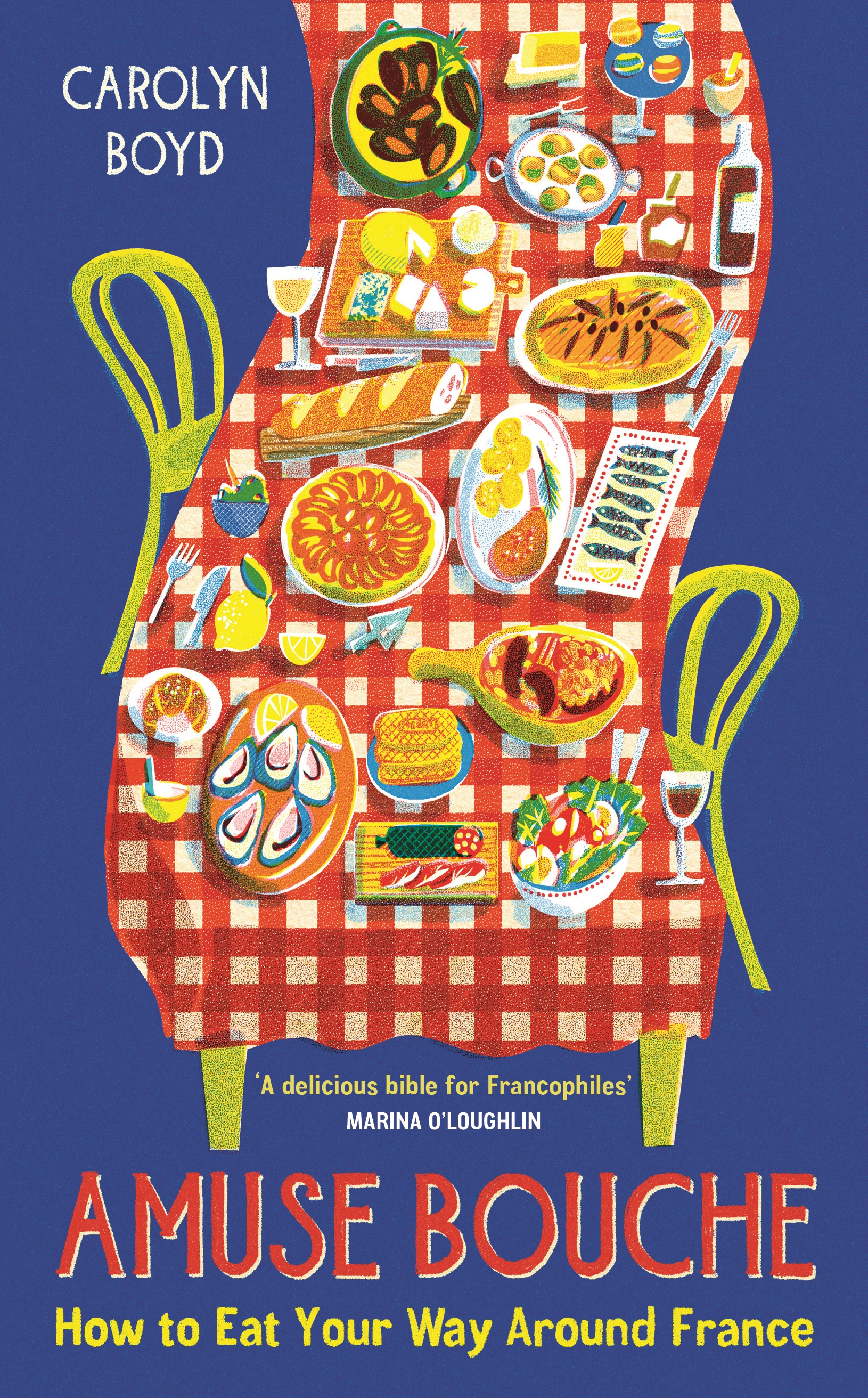
Review: Amuse Bouche. How to Eat Your Way Around France

by JOHN FRASER

Ask any foodie the best country in the world in which to stuff your face, and the chances are they will respond that it is France, especially if the respondent happens to be French.

There are other contenders. I would put Spain top of my list, and China, Italy, India and Thailand are also firm favourites. Malaysia and Singapore also merit a mention, and while SA cuisine is a bit of a mishmash (pun intended), bobotie and some other Cape Malay dishes are firm favourites. 

Carolyn Boyd, author of Amuse Bouche. How to Eat Your Way Around France, is a food and travel writer and has produced a mouth-watering, lip-smacking and often very funny guidebook.   This is a book about food in France by an author who seems to have explored every nook and cranny, chip stall, bistro and three-star Michelin joint.

Having just finished it, I can’t wait for my next trip to France. It’s a country I have visited often for work, but far too often I have hurtled along the highway, rarely stopping to sample the local delicacies.

This book contains some recipes, but it is not a recipe book. A quote on the cover describes it as a Bible, but that’s wrong too.

The author gives a good summary of her intentions: “The book is not a restaurant guide, though there are recommendations; nor is it a recipe book, though there are recipes and serving suggestions. It is a book that celebrates the joy of exploring France through its food and captures the many ways that dishes and ingredients came about, whether through the landscape and terroir, folklore and legends, in the kitchens of kings and peasants or as the innovations of modern chefs.”

This devoted francophone seems to have spent a lot of time in France, often on family trips, and her enthusiasm shines through on every page.

I tried one of her recipes, for a chicken in mustard sauce — poulet Gaston Gérard — which hails from Dijon. It was probably invented when a pot of mustard was accidentally tipped into the pan. It was good, but not magnificent.

The book is peppered with references to some of my favourite French dishes and ingredients. There is the Parisian delight of a simple baguette smothered with salty butter and filled with slices of ham, quiche Lorraine and the tarte flambee, a divine Alsatian pizza upgrade. Then there’s the world’s indisputably best chicken, the poulet de Bresse — and we cannot ignore the rich beef and wine stew that is boeuf bourguignon and, of course, bouillabaisse — that sumptuous fish soup from Marseilles.

Boyd’s light touch and cheeky humour are illustrated when she writes about the laborious process it takes to make this soup: “The effort bouillabaisse takes to prepare has made it something of a luxury, demanded more often by tourists than locals (who prefer pizza).” 

My favourite nuggets refer to the brotherhoods that proliferate across France, each devoted to a treasured dish or ingredient.

There is the cheese-loving Confrie des Compagnons du Brie de Meaux “whose crushed velvet robes are an appropriate shade of cream and their hats are topped by a marvellous hat: it’s a large, velvet-covered balsa-wood box, usually used for transporting the cheese”. 

Boyd writes of “Michel Théret, a diminutive, twinkle-eyed octogenarian who is both the Grand Master of the Brotherhood of the Saint-Omer Endive and the Grand Master of the Brotherhood of the Saint-Omer Cauliflower.” If only I could add those two distinctions to my own inadequate CV. 

I already knew the Belgians claim to have invented the misnamed French fry, and Amuse Bouche confirms this: “History points to Belgium for the origin of frites, with American soldiers discovering them there during the First World War (they gave them the moniker French fries thanks to the language, rather than the country). As northern France draws much of its culinary influences from Belgium, it’s little wonder the area is ideal for chip-lovers.” 

While Boyd adores French food, even she has her concerns and dislikes. For instance, she is no fan of the andouille de Troyes, a stinky sausage, which she diplomatically suggests gives off a farmyard fragrance. Needless to say, it has its own fan club: the Association Amicale des Amateurs d’Authentique Andouillette. 

She also gives her opinion on frog’s legs. “It remains a mystery to me that there is still such a high demand for les cuisses de grenouilles, or frog’s legs… There is just one element to bear in mind: in a nation where nose-to-tail eating has also come full circle to the luxury market, it seems bad form that, for the sake of two little legs, the rest of the poor creature goes to waste. For my part, I’m happy to stick to chicken.”

My favourite anecdote refers to the origin of crêpes Suzette, pancakes flamed in a boozy sauce. The future King of England, Edward VII, was dining at the Café de Paris in Monte Carlo in 1895.

“He asked the chef the name of the dish; the chef replied, ‘Princely crêpes, Your Royal Highness.’ The prince decided this title was a bit naff and declared that they should be named after his lady friend Suzette.

“Given Bertie’s penchant for the ladies, had this happened on another night with another copine (girlfriend) in attendance, the dish could easily have been named after Jennifer, Alison, Philippa or Sue,” Boyd writes.

While neither of us is hopping mad for frog’s legs, we both adore foie gras, the magnificent duck live pâté, but Boyd does note that there are animal welfare concerns over how the birds are force-fed to fatten them and enlarge their livers.

Her meticulous research shines through when, for example, she gives suggestions for ensuring a perfect boeuf bourguignon. She writes that some chefs insist that pinot noir is essential to the sauce and that some wines don’t work. 

“Chef Cécile Riotte from Le Vaudésir in the village of Thizy once told me she never tosses the beef in flour because that requires more oil to brown it; instead she browns the beef without it, then later purées the vegetables that have been stewing in the sauce. She then puts the purée back in to thicken the sauce; much more flavourful than flour. At The Cook’s Atelier … mother and daughter duo Marjorie Taylor and Kendall Smith Franchini advise to always use homemade beef stock and beef tenderloin, rather than other cuts, as it speeds up the cooking process and ensures a very flavourful and tender stew.

“Finally, Marie-Eugénie Dupuy first insists on using paleron, chuck steak, before giving the most unusual tip I’ve heard: a shot of crème de cassis (blackcurrant liquor) added 15 minutes before the end of cooking; she tells me it cuts through the acidity of the wine and gives it that special je ne sais quoi.”

Boyd details the uses of mustard, suggesting that “French cooks have long known that it is the most useful jar they can have to hand. Add a smear to a jambon-beurre (ham sandwich) for a piquant punch; stir a teaspoon into a cheese sauce for added richness; or mix with mayonnaise for a Dijonnaise dip or dressing.

“The French will often have a little pot of it on their dining tables instead of salt and pepper, and its use in recipes is so broad, and France’s dependence on it so heavy, that there was a major outcry when a drought hit production of the seeds in 2022 and shop shelves lay empty of Dijon mustard for months.”

For many (me included), snails are a gastronomic treat too far, but even these are the subject of Boyd’s wit when she recalls that “I once watched a man in paint-splattered overalls down a glass of red wine alongside a dozen snails for lunch in mere minutes. Who knew snails could also be fast food?”

Boyd’s book has chapters for each region, with bite-sized sections on each delicacy. She ends each chapter with cheeses — as one surely should in any gastronomic account of France. 

I loved this book and will return to it often. It will enhance my future trips to France — of which I hope to have many, until my liver takes on foie gras proportions and I am so full I couldn’t manage even one more diminutive frog’s leg.

Published in Business Day