Ask any foodie the best country in the world in which to stuff your face, and the chances are they will respond that it is France, especially if the respondent happens to be French.
There are other contenders. I would put Spain top of my list, and China, Italy, India and Thailand are also firm favourites. Malaysia and Singapore also merit a mention, and while SA cuisine is a bit of a mishmash (pun intended), bobotie and some other Cape Malay dishes are firm favourites.
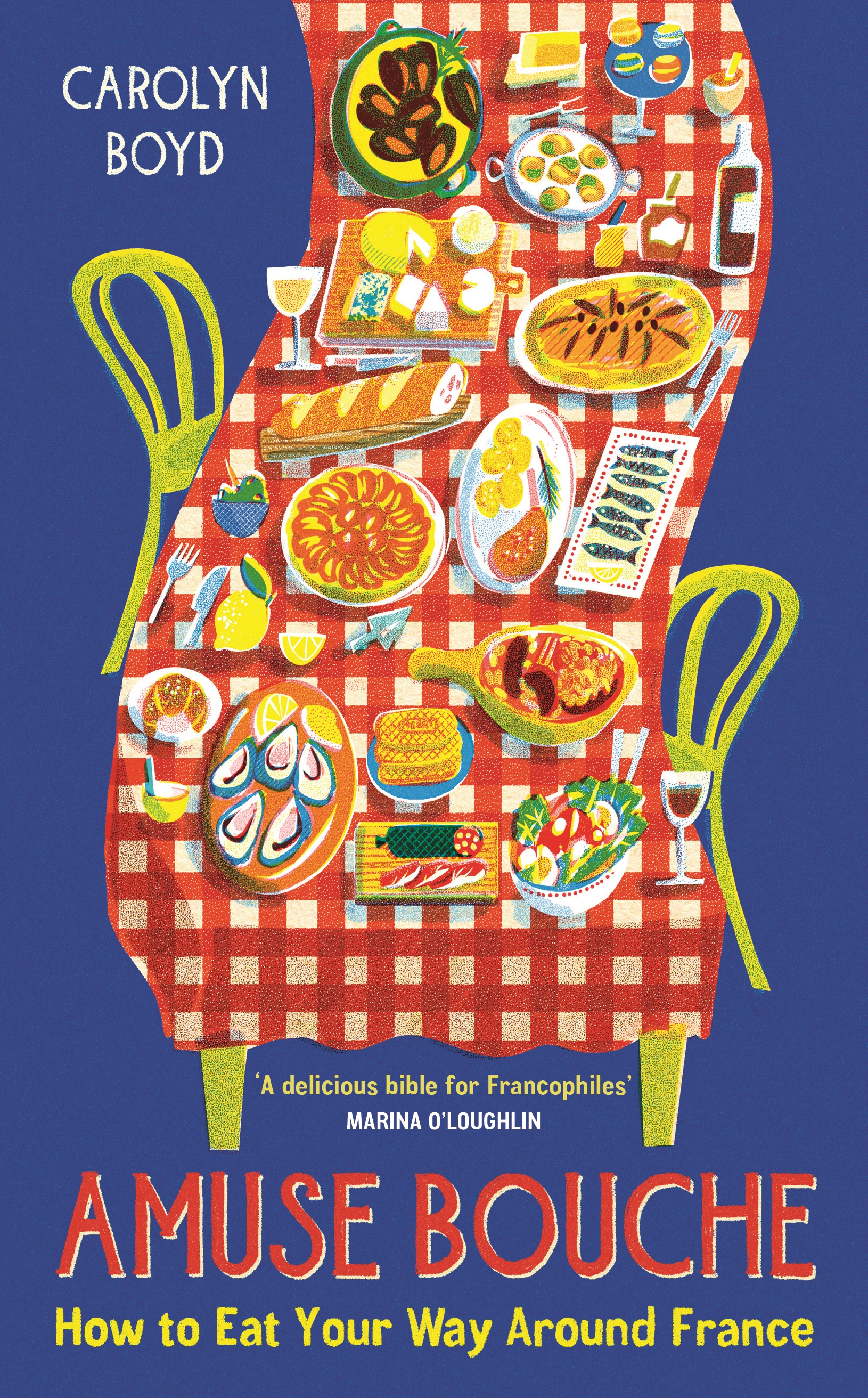
Carolyn Boyd, author of Amuse Bouche. How to Eat Your Way Around France, is a food and travel writer and has produced a mouth-watering, lip-smacking and often very funny guidebook. This is a book about food in France by an author who seems to have explored every nook and cranny, chip stall, bistro and three-star Michelin joint.
Having just finished it, I can’t wait for my next trip to France. It’s a country I have visited often for work, but far too often I have hurtled along the highway, rarely stopping to sample the local delicacies.
This book contains some recipes, but it is not a recipe book. A quote on the cover describes it as a Bible, but that’s wrong too.
The author gives a good summary of her intentions: “The book is not a restaurant guide, though there are recommendations; nor is it a recipe book, though there are recipes and serving suggestions. It is a book that celebrates the joy of exploring France through its food and captures the many ways that dishes and ingredients came about, whether through the landscape and terroir, folklore and legends, in the kitchens of kings and peasants or as the innovations of modern chefs.”
This devoted francophone seems to have spent a lot of time in France, often on family trips, and her enthusiasm shines through on every page.
I tried one of her recipes, for a chicken in mustard sauce — poulet Gaston Gérard — which hails from Dijon. It was probably invented when a pot of mustard was accidentally tipped into the pan. It was good, but not magnificent.
The book is peppered with references to some of my favourite French dishes and ingredients. There is the Parisian delight of a simple baguette smothered with salty butter and filled with slices of ham, quiche Lorraine and the tarte flambee, a divine Alsatian pizza upgrade. Then there’s the world’s indisputably best chicken, the poulet de Bresse — and we cannot ignore the rich beef and wine stew that is boeuf bourguignon and, of course, bouillabaisse — that sumptuous fish soup from Marseilles.
Boyd’s light touch and cheeky humour are illustrated when she writes about the laborious process it takes to make this soup: “The effort bouillabaisse takes to prepare has made it something of a luxury, demanded more often by tourists than locals (who prefer pizza).”
My favourite nuggets refer to the brotherhoods that proliferate across France, each devoted to a treasured dish or ingredient.
There is the cheese-loving Confrie des Compagnons du Brie de Meaux “whose crushed velvet robes are an appropriate shade of cream and their hats are topped by a marvellous hat: it’s a large, velvet-covered balsa-wood box, usually used for transporting the cheese”.
Boyd writes of “Michel Théret, a diminutive, twinkle-eyed octogenarian who is both the Grand Master of the Brotherhood of the Saint-Omer Endive and the Grand Master of the Brotherhood of the Saint-Omer Cauliflower.” If only I could add those two distinctions to my own inadequate CV.
I already knew the Belgians claim to have invented the misnamed French fry, and Amuse Bouche confirms this: “History points to Belgium for the origin of frites, with American soldiers discovering them there during the First World War (they gave them the moniker French fries thanks to the language, rather than the country). As northern France draws much of its culinary influences from Belgium, it’s little wonder the area is ideal for chip-lovers.”
While Boyd adores French food, even she has her concerns and dislikes. For instance, she is no fan of the andouille de Troyes, a stinky sausage, which she diplomatically suggests gives off a farmyard fragrance. Needless to say, it has its own fan club: the Association Amicale des Amateurs d’Authentique Andouillette.
She also gives her opinion on frog’s legs. “It remains a mystery to me that there is still such a high demand for les cuisses de grenouilles, or frog’s legs… There is just one element to bear in mind: in a nation where nose-to-tail eating has also come full circle to the luxury market, it seems bad form that, for the sake of two little legs, the rest of the poor creature goes to waste. For my part, I’m happy to stick to chicken.”
My favourite anecdote refers to the origin of crêpes Suzette, pancakes flamed in a boozy sauce. The future King of England, Edward VII, was dining at the Café de Paris in Monte Carlo in 1895.
“He asked the chef the name of the dish; the chef replied, ‘Princely crêpes, Your Royal Highness.’ The prince decided this title was a bit naff and declared that they should be named after his lady friend Suzette.
“Given Bertie’s penchant for the ladies, had this happened on another night with another copine (girlfriend) in attendance, the dish could easily have been named after Jennifer, Alison, Philippa or Sue,” Boyd writes.
While neither of us is hopping mad for frog’s legs, we both adore foie gras, the magnificent duck live pâté, but Boyd does note that there are animal welfare concerns over how the birds are force-fed to fatten them and enlarge their livers.
Her meticulous research shines through when, for example, she gives suggestions for ensuring a perfect boeuf bourguignon. She writes that some chefs insist that pinot noir is essential to the sauce and that some wines don’t work.
“Chef Cécile Riotte from Le Vaudésir in the village of Thizy once told me she never tosses the beef in flour because that requires more oil to brown it; instead she browns the beef without it, then later purées the vegetables that have been stewing in the sauce. She then puts the purée back in to thicken the sauce; much more flavourful than flour. At The Cook’s Atelier … mother and daughter duo Marjorie Taylor and Kendall Smith Franchini advise to always use homemade beef stock and beef tenderloin, rather than other cuts, as it speeds up the cooking process and ensures a very flavourful and tender stew.
“Finally, Marie-Eugénie Dupuy first insists on using paleron, chuck steak, before giving the most unusual tip I’ve heard: a shot of crème de cassis (blackcurrant liquor) added 15 minutes before the end of cooking; she tells me it cuts through the acidity of the wine and gives it that special je ne sais quoi.”
Boyd details the uses of mustard, suggesting that “French cooks have long known that it is the most useful jar they can have to hand. Add a smear to a jambon-beurre (ham sandwich) for a piquant punch; stir a teaspoon into a cheese sauce for added richness; or mix with mayonnaise for a Dijonnaise dip or dressing.
“The French will often have a little pot of it on their dining tables instead of salt and pepper, and its use in recipes is so broad, and France’s dependence on it so heavy, that there was a major outcry when a drought hit production of the seeds in 2022 and shop shelves lay empty of Dijon mustard for months.”
For many (me included), snails are a gastronomic treat too far, but even these are the subject of Boyd’s wit when she recalls that “I once watched a man in paint-splattered overalls down a glass of red wine alongside a dozen snails for lunch in mere minutes. Who knew snails could also be fast food?”
Boyd’s book has chapters for each region, with bite-sized sections on each delicacy. She ends each chapter with cheeses — as one surely should in any gastronomic account of France.
I loved this book and will return to it often. It will enhance my future trips to France — of which I hope to have many, until my liver takes on foie gras proportions and I am so full I couldn’t manage even one more diminutive frog’s leg.
Published in Business Day

 ZA Confidential