Review. Jamie Oliver. Easy Air Fryer.

By John Fraser

For a long time, I would scoff at the very thought of using an air fryer. I couldn’t understand why anyone would want yet another gadget cluttering up their kitchen. I had an oven and a microwave, a sandwich toaster and a slow cooker. I was content in my ignorance.

Then I stayed with a friend who cooked up a batch of bacon in his air fryer. It was fast, there was much less washing up, and the bacon was great. I was now sold on the technology, and my scoffing and sneering were replaced by a burning curiosity to fry my own air, with an urge to own one of these crafty kitchen toys myself.

I soon began browsing websites for an air fryer, pondering the benefits of a double drawer device or the space-saving benefits of a stackable version, and before long the Amazon delivery arrived. (I opted for a twin-drawer air fryer, which does restrict the size of the dish you can prepare, but also allows me to prepare chips with everything while keeping the other drawer for the meal itself. Each basket has its own timer, so there is more flexibility than you would find in a conventional oven).

To date, I have focused on the basics. An air fryer makes very acceptable chips — better than you are often served in restaurants. If you are lazy or rushed, frozen spuds work well, but it is worth cutting up your own chips. Meanwhile, you need far less oil in an air fryer than for the conventional way of preparing chips, so there is a health premium.

Other staples that I have cooked well in the hot air include steaks, chops, sausages, breaded fish fillets and toasted sandwiches — not to mention bacon and poached eggs. For Christmas dinner, the air fryer worked well for the sprouts and the pigs in blankets.

However, there soon came a time when I thought I needed to see whether this gadget could prepare more elaborate meals, and this is where Jamie Oliver’s Easy Air Fryer has come to the rescue. 

Oliver explains that his aim is not to treat an air fryer as a segregated, specialised, revered cooking tool, but as a versatile, flexible, accommodating everyday device.

“I knew I wanted to find out exactly why these machines are taking over our kitchens,” he says. “Writing cookbooks, for me, is all about responding to what you, the public, are asking for, so I’ve gone down a bit of an air fryer rabbit hole, experimenting at length with these convenient cooking machines to find out just what they can do.

“If air fryers are getting more people to give cooking a go, then that can only be a good thing. And believe me, they really are rather brilliant. They’re super-versatile … it’s not all just about crispy chips and spuds.”

The book begins with a mind-blowing statistic: half the households in Britain now own an air fryer. It has been reported that SA is not far behind, with about four in 10 households believed to be frying with air at least some of the time. And sales are climbing by about 10% a year.

Indeed, these gadgets have become so ubiquitous that in January this year, Stats SA added air fryers to its inflation-monitoring basket, displacing such dinosaurs as landlines, post boxes and condensed milk. 

Oliver, who is arguably Britain’s best-known TV celebrity chef, explains why he thinks the air fryer is such a useful addition to the kitchen: “You can often cook stuff in less time than it takes for the oven to heat up, and generally things cook a bit more quickly, or you can cook things you’d normally do on the hob in a much more hands-off way.

“Air fryers are quite compact and energy-efficient, so they’re ideal when you just want to cook a portion of something without turning the oven on, hopefully helping you to save a bit of money, too,” he explains.

One big benefit of this book is that Oliver, who is a campaigner for healthier eating — especially for schoolkids — has produced a bookload of recipes, most of which incorporate a healthy component of veg. There are stuffed mushrooms, stuffed squash and baked beans, sweet potato and black bean tortillas, roast carrot and goat’s cheese salad, and sticky aubergine noodles.

“We want to inspire a more sustainable way of eating, so 72% of the recipes are either meat-free or … contain at least 30% more meat than a regular portion size,” we read. “Remember, a nutritious varied and balanced diet and regular exercise are the keys to a healthier lifestyle.”

Rest assured, though, the book does also cater for those of us with a sweet tooth — with indulgent puds such as delicious doughnuts, mint choc chip whoopie pies, cherry chocolate pots and peach Alaska.

There are also main courses for those who don’t want healthy food (almost literally) rammed down their throats, such as BBQ chicken lollipops, gochujang chicken burgers, punchy Welsh rarebit and roast chicken dinner for one.

I often wonder why cookbooks continue to sell so well when there are so many recipes available free on the internet, and we couch potatoes have access to so many TV cookery shows — some of which don’t feature Oliver! However, I continue to buy these books, I prize my collection and find there is still a lip-smacking pleasure to be gained from reading a cookbook, even if you never try any of its recipes. 

It is also worth noting that Oliver does this for a living (a bloody good living), has written dozens of cookbooks. So he has a reputation to preserve and his recipes are likely to have a strong probability of guiding you towards an enjoyable meal.

It would be a challenge for a keen cook not to find several tempting, practical, often healthy and delicious recipes in Easy Air Fryer. It is reassuring, too, to discover that you can cook and eat so well with this cheaper, cleaner and faster technology. Don’t judge these devices by their names — they really aren’t just a load of hot air.

This review was first published in Business Day

Review: Charlie English. The CIA Book Club.

By John Fraser

This book proves the wisdom of the timeless adages that the pen is mightier than the sword and that the truth will set you free.

For three decades, the CIA ran a highly secretive operation to smuggle literature, magazines and art books across the Iron Curtain into the countries of the Warsaw Pact.

This was to stimulate thought and dialogue, and to provide ideas and inspiration to people who were trapped in countries where they were being force-fed communist ideology and were starved of free speech and debate.

“What some suspected, but very few knew for sure, was that the uncensored literature flooding the country wasn’t reaching Poles by chance,” Charlie English writes in The CIA Book Club.

“It was sent as part of a decades-long US intelligence operation known in Washington as the ‘CIA book program’, and part of the programme’s strategy was to build up circulating libraries of illicit books on the far side of the Iron Curtain.

“As well as glossy lifestyle magazines such as Marie Claire and Cosmopolitan, the CIA sent copies of the New York Review of Books and Manchester Guardian Weekly, works by the Nobel winners Boris Pasternak, Czesław Miłosz and Joseph Brodsky; philosophical texts by Hannah Arendt, Albert Camus and Bertrand Russell; literary fiction from Philip Roth and Kurt Vonnegut; writing advice from Virginia Woolf; the plays of Václav Havel and Bertolt Brecht; and the spy thrillers of John le Carré, to name a few.”

He suggests that the number of items smuggled into the Eastern Bloc over the 30 years was almost 10-million.

“Books arrived by every possible means: smuggled in trucks, aboard yachts, sent by balloon, in the post or in travellers’ luggage. Mini-editions were hidden in the sheet music of touring musicians, packed into food tins or Tampax boxes. In one instance, a copy of Aleksandr Solzhenitsyn’s The Gulag Archipelago was carried on a flight to Warsaw hidden in a baby’s nappy,” English informs us.

“From the late 1970s, banned books and pamphlets were also reproduced in huge quantities by underground printers in Poland, on presses smuggled in from the West, amplifying the literature’s effect.

“Increasingly, the underground would publish home-grown titles, too, and by the mid-1980s, the so-called ‘second circulation’ of illicit literature in Poland grew so large that the system of communist censorship began to break down.”

As the operation was most intense in Poland, The CIA Book Club gives a detailed insight into the lives of several Poles who actively countered the propaganda onslaught of their oppressors, with insightful accounts of those who assisted in the distribution of smuggled books as well as in carrying out illegal printing activities.

“By 1962, at least 500 organisations were sending books on the CIA’s behalf, including some of the most prestigious names in publishing: Doubleday, Barnes & Noble, the Oxford English Dictionary, Encyclopaedia Britannica, Allen & Unwin, Chatto & Windus, Faber & Faber, Macmillan, Gollancz, Bertelsmann and Hachette,” he records.

“No country responded with greater enthusiasm to these gifts than Poland, the largest of the ‘captive nations’ and the most liberal.”

Collection points in cities such as Paris were also arranged for the provision of books to visiting Poles, to be taken back to their native country, also funded by the CIA.

The period covered by The CIA Book Club was a turning point in Polish history, as it endured the depths of repression, followed by the emergence of Solidarity, then a new wave of oppression, before, finally, freedom.

English gives a detailed account of the organisation of the literature distribution operation from both sides of the Iron Curtain.

It was largely successful, but he also gives an account of one smuggling run that went badly wrong because the organisers had been infiltrated by the Polish secret police. The planners threw caution to the wind and weapons were included in a huge shipment, whose capture handed a propaganda victory to the Polish state.

However, the overall hit rate for the smugglers was high.

English counters the very valid concern that the programme to provide banned literature to people in the Eastern Bloc was an exercise in cultural imperialism — noting that in the later years of the programme, the most popular works that were distributed were often by Soviet or East European writers, chosen and edited by people who lived in the bloc, or by émigrés.

Decades after the fall of the Berlin Wall and the collapse of communism, almost all files about this clandestine operation remain classified, as do those documenting the CIA’s wider operation in support of the Polish opposition.

It is, of course, impossible to accurately quantify the impact of the CIA Book Club operation, but it surely must have helped to keep the flames of free thought alive in territories where the political classes did their very best to subjugate and subdue the masses.

“Some of the censor’s rulings made little sense even within the bizarre logic of the Party: an anthology of Grimms’ fairy tales could be published by one house but not by another, a book about growing carrots was destroyed for implying that vegetables could sprout in individuals’ gardens as well as in those run by collectives,” English notes.

He provides valuable insight into the sort of repressive society to which the CIA Book Club operation chose to send its eye-opening books and magazines.

Its focus on Poland means that we learn far less about activities in the other countries that were targeted, but this can be justified as Poland was the country where the most action seems to have taken place.

Above all, the book provides a valuable reminder of the power and importance of free thought and the flow of ideas, and that books matter.

This review was first published in Business Day.

Review: On Democracies and Death Cults. Douglas Murray

By John Fraser

Many will dismiss this book, rubbish its conclusions and berate its author. It is a book that provides a solid argument in favour of Israel and against Hamas, with the writer seeing Israel as a democracy and Hamas as the death cult.

Douglas Murray, a successful author and journalist, is no stranger to controversy. His previous books about the dangers of woke ideology and mass migration into Europe have won him praise from many but also made him enemies.

He has spent a lot of time in Israel since the Hamas incursions, massacre and kidnappings of October 7 2023, and he provides extensive and harrowing accounts of the barbarity that took place.

“Within hours the sheer scale of the assault started to become apparent. The terrorists had come into Israel not just by land vehicles and on foot but by boat and on hang gliders; perhaps as many as six thousand in total,” he writes.

“Wherever they arrived they brought death — with rifles, grenades, incendiary weapons, rocket-propelled grenades, machine guns, and more. It would take weeks — in fact months — to identify the number of people killed that day. The final body count was not identified until ten months later. The death toll turned out to be just short of 1,200 people.”

An underlying theme of this book — and it is an unapologetically controversial one — is that in the Gaza conflict, there is a fundamental difference between the Israelis and the Hamas fighters.

The atrocities of October 7 were well documented by those who enacted them, and Murray suggests that there was delight among the Hamas fighters in participating in the worst massacre of Jews since the Holocaust.

Murray gives an account of one Hamas invader who joyfully contacted his family to beam them the evidence of the killings he had just carried out and notes the enthusiastic praise and blessings he received from his relatives.

In contrast, Murray suggests that it is love — not hate — that motivates the Israelis.

“From the south of Gaza to the south of Lebanon and the West Bank, none take a joy or pleasure in the task they have to do. They did it not because they loved death but exactly because they love life. They fought for life. For the survival of their families, their nation, and their people.”

Critics of this book will counter that Israel has pummelled Gaza with great force over many, many months and that the death toll has been enormous — with Palestinian victims including women and children, doctors, journalists and aid workers.

It is instructive to read of the vast wealth accumulated by Hamas leaders — Murray suggests they became billionaires by pocketing international aid — and how aid to Gaza was also diverted into building a network of underground tunnels that are longer than the London Underground. Unlike the Underground, these tunnels have a primarily military purpose — enabling the stealthy movement of fighters and the concealment of weapons and hostages.

Another important theme of this book is that the backlash against Israel began not after it had launched its retaliatory attacks on Gaza and begun its efforts to secure the return of the hostages — but on October 7th itself.

“Within a couple of months of the war starting there was a narrative that went something like this: Israel had the world’s sympathy and support in the immediate aftermath of the 7th but had squandered it by prosecuting its war against Hamas in Gaza,” Murray suggests.

“I also wondered why the citizens of Israel seemed so unique among victims. Why they seemed to be the only people on earth who, when savagely attacked, either didn’t gain the world’s sympathy or gained it only for a matter of hours — if that.

“I also feared — correctly, as it turned out — that a great wave of denial would sweep across the world, that what turned out to be the biggest massacre of Jews anywhere in the world since the Holocaust would swiftly be denied just as surely as neo-Nazis and others chose to try to deny the Nazi Holocaust after it had happened.”

He argues this is because there is a seam of anti-Semitism running through Western society.

“As the late rabbi Jonathan Sacks, among many others, pointed out, Jews were once hated because of their religion. Then sometime after the Enlightenment it became hard to hate people because of their religion. At that point, the Jews were hated because of their race. Then, after the twentieth century, it became unacceptable to hate people because of their race. So, in the twenty-first century, when civilized people cannot hate the Jews for their religion or their race, Jews can be hated for having a state — and for defending it.”There is one important question Murray poses, but is unable to answer: How did Israel’s security services not predict and prevent the incursions of October 7?

This is the same highly sophisticated state apparatus that was able to place explosives into thousands of hand-held pagers and hundreds of walkie-talkies intended for use by Hezbollah — and then detonate them.

Murray recalls questioning Israeli Prime Minister Benjamin Netanyahu and receiving the lame response that what went wrong on October 7 would be determined later by an official inquiry.

He records that a watch post staffed by young female Israeli soldiers did report suspicious movements inside Gaza before the Hamas attacks, but the reports did not seem to have been taken seriously.

“From the moment the State of Israel was created there was one certainty above all: as embattled as Israel might be, and as hated as it often seemed to be from every side, at least this was a place where Jews could be safe and protect themselves. And then 7 October happened, and a doubt spread among Jews in Israel and around the world. What if we aren’t safe in Israel either,” Murray notes.

Just as opinions on the rights and wrongs of the Gaza conflict are polarised, so will opinions about On Democracies and Death Cults.

For some, it will be a naked and unconvincing exercise in pro-Israel propaganda.

For those with more open minds, it is a disturbing, distressing and thought-provoking analysis of a conflict that has brought suffering, misery and despair to so many. On both sides.

This review was first published in Business Day.

The braai gets a Michelin upgrade

Book Review by John Fraser

South Africans may have tragically diverse heritages, but if you go far enough back within this rainbow-anointed cradle of humankind, I suspect you will find early man (and woman, though the braai is a much more masculine affectation) hunting and gathering all day and braaiing up a feast after working hours.

Except for the vegetarians. They just gathered, poor sods.

I have always loved braaiing — though on one occasion I spent the whole afternoon exiled to my room after my brother and I thought up the fun idea of stuffing some firecrackers in with the charcoal. My dad was not amused. Please don’t try that one at home.

For me, a simple boerewors sausage in a deliciously unhealthy white bun, topped with mustard, is a feast for a king. On Saturdays in Pretoria, where almost every supermarket or butcher’s shop has its own boerie roll production line, you often have the added gourmet touch of a few dollops of delightfully caramelised onions.

A potato encased in foil and baked in the coals, or sometimes atop the braai — ideally sliced open and topped with artery-hardening lashings of butter and a generous heap of satanic salt — turns this simple feast into a banquet.

Reuben Riffel’s latest book, Braai, gives the humble braai a Michelin three-star upgrade. It is orgiastic in its illustrations of magnificent barbecued grub, with an impressive array of recipes. There are also recipes for your vegetarian chums, showing that braaiing is not just a carnivore’s recreation.

In his introduction, this gastronomic national treasure from Franschhoek explains his own delight in stepping out of the kitchen for the more primitive, but no less tasty, joys of the fire pit.

“A braai improves the day, let’s put it like that. Even if the day didn’t start well, as soon as you light a fire, there’s a camaraderie around you, whether it’s your family or your friends. Everyone wants to jump in, there’s chatter, there’s a sense of togetherness; the smells, the happiness, the freshness, the connection,” Riffel writes.

“There’s something about lighting a fire and cooking food over it that’s deeply primal. It’s in our genes, in our DNA.

“I like to see a fire as an extension of the kitchen, using the same spices and flavourings that I enjoy cooking with inside, but cooking over a fire for the extra flavour and a touch of smoke. It’s something to enjoy and relax over, whether you’re cooking with friends on the weekend or just making a weekday meal for the family.”

The blurb for Braai is a glam-fest of name-dropping, listing the celebs and world-class chefs with whom or for whom Riffel has cooked. This star-spangled who’s who (and who’s cooked for whom) includes Martha Stewart, Denzel Washington, Sean Connery, Nobu Matsuhisa, Paul Hollywood, Vineet Bhatia, Atul Kochhar and Marco Pierre White. Due, presumably, to constraints of space, my own name is glaringly absent.

On top of founding some of SA’s best restaurants, we read that Riffel has also “set up kitchens in a snowy base camp on Antarctica [and] on a ferry crossing Lake Kariba from Zimbabwe to Zambia, and served gourmet three-course meals on a bush trip through the Kgalagadi Transfrontier Park. In between, he’s found time to serve as a judge on MasterChef SA, star on CNN’s Culinary Journeys and host two TV series, 5 Sterre met Reuben and Recipe for Success”. And all that before lighting the braai.

Despite all this adventure, Riffel writes that his dream scenario is still cooking over fire.

“There’s a happiness that goes with cooking on a fire, a freedom and festive feel to it — that is what I love about it,” he writes.

“Growing up in Groendal near Franschhoek, a family braai was more about the kuier than the food. I remember chops, wors, chicken — always the same formula. It was never heavy on barbecue sauce or marinades, just seasoning and straight on the braai.

“My dad and uncles would be standing around the fire for hours, me and my cousins running around playing. Mom and the aunts shouting out from the kitchen door, ‘When are you going to be done with the meats?’ That’s basically how it played out. And then it’s a rush to get it done. Look, we had some really great braais, but also probably more with overcooked chops and dried-out wors. But it was always very simple.”

So, what of the recipes?

“The recipes in this book are the tried and tested ones that get the thumbs up from friends and family and range from incredibly simple to more creative. You’ll find different meats and seafoods, loads of vegetables and salads, and a good helping of quick and easy snacks to keep everyone happy kuiering by the fire while you cook the main event,” Riffel explains.

Just a few of these recipes to tempt your taste buds: sardines with spicy mint and cucumber, tuna fillet with Matsuhisa dressing, sesame and soy skewered sirloin, butterflied lamb shoulder, and brined chicken with peri-peri.

Of course, Riffel’s recipes are written for the braai, but if it is raining or snowing or there is a plague of locusts or taxmen on the way, they can all be adapted for an indoor kitchen. You won’t get quite the same smoky taste, but, on the plus side, there is less chance of getting the cooking times wrong.

I tried a few of these recipes, opting for the simpler stuff as I wasn’t entertaining. The smashed beefburger was excellent, with an oh so simple sauce that was oh so yummy.

The tandoori lamb chops were also impressive, but the first time I tried them I followed Riffel’s very brief cooking time, and they weren’t well enough done. If only one had a proper temperature control on a Weber.

Next on the list will be the chicken satays — one of the finest ways to cook chicken, even though Riffel’s ingredient list is long and there are quite a few exotic products that may be hard to find. My larder is not often crammed with kecap manis, or pastes of prawn and tamarind. But don’t be put off by this. There are several simpler dishes

Possibly the most value from this book comes from the way in which it can widen your horizons, offering set-in-their-ways, slightly boring braaiers the wings to aspire to more lofty culinary heights.

I remember being on a holiday in Spain in a seaside apartment block, which had a balcony with a braai. One morning, we all set off to the market, bought some swordfish steaks and cooked them atop the coals. I basted them with olive oil into which I added a small quantity of every herb in the cupboard. Served with a simple salad, it was an exceptional, memorable meal.

So, I can’t wait to try Riffel’s tuna with Matsuhisa dressing. Nothing elaborate. Just a dressing with a combination of onion, soy sauce, rice wine vinegar, sugar, mustard powder, ground black pepper, and vegetable and sesame oils.

They may be useless at rugby, but the Aussies have an exciting food scene, and Riffel writes that he found himself drawn towards Australian chefs for braai inspiration.

“Braaiing seafood in summer especially appealed to me. Australia is a melting pot of cultures, and so I read about the use of Asian or Italian and Greek ingredients. Back then, we didn’t even have things like soy sauce in the shops, so it was all new. But they’ve got a clean approach that I like. I was never trying to become a fire-cooking expert; I just wanted to go beyond the usual braai stuff … Simple flavours are what work so well with cooking on a fire.

“You really don’t have to get complicated when you’ve got quality fresh ingredients. Another food memory from my childhood is going to help my dad, who was a carpenter, on a job in Hermanus. My uncle went diving for abalone, then they tenderised it a little bit, quickly lit a fire and cooked it on a simple wire-mesh braai grid he’d made. The memory of that flavour is like a photo in my mind: the charred abalone on the mesh, deliciously sweet and tender.

“These are the flavours and thoughts that come back to me when I’m cooking over a fire. I often like to use fire for everyday cooking, instead of the oven or stovetop.”

The snow will melt, and summer will come a-knocking. When it does, arm yourself with this book and get a-braaiing.

The last word goes to Riffel: “Be more adventurous on the fire. Experiment more, have fun on the braai and relax into it. Sure, there’s a nostalgia about cooking over fire, but it’s also about evolving, trying new things and creating new food memories for the future.”

This review was first published in Business Day

Review: David Kilcullen and Greg Mills. The Art of War and Peace. Understanding Our Choices in a World at War. 

By John Fraser

This is a monumentally ambitious book, tackling what is probably the biggest challenge for global leaders: how to move from the conflict of war to a secure peace.

The book’s joint authors have certainly put in the time and travel to research their subject, globetrotting to some of the most wretched, dangerous and depressing parts of our troubled planet.

“This volume is based on several decades of work in various conflict settings, including Iraq, Congo, Somalia, East Timor, Colombia, Ethiopia, Afghanistan and, most recently, Ukraine and Israel,” David Kilcullen and Greg Mills note in The Art of War and Peace. Understanding our Choices in a World at War. If I were them, I would seek out a less sadistic travel agent.

The advantage of all this on-the-ground experience is that they can write with authority on several different instances of war and peace with shrewd insight and analysis. It is perhaps inevitable that it is easier to record what has been done badly, foolishly and greedily than to offer an easy solution to the formidable challenge of bringing warring factions to the peace table and then hammering out an enduring peace.

Mills has previously written scathingly, forcefully and convincingly on the panicked withdrawal of US forces from Afghanistan, but this remains an object lesson in how not to secure a noble peace, so it is sensible that it is returned to in The Art of War and Peace.

“The Afghan disaster was exacerbated by the complete absence of accountability: not a single elected leader, civilian official or military commander was asked to resign, or offered to do so. President Joe Biden went so far as to boast that the withdrawal was an extraordinary success, as if it were now a point of pride that nobody runs away better than the US and its allies?”

We are left with no doubt of the authors’ contempt for US leadership and strategy in so abruptly abandoning the people of Afghanistan to their fate. And Kilcullen and Mills are unflinching in pointing out the wider ripple effect of this loss of US credibility: “While some may question the direct link between the loss of US credibility in Kabul and Russia’s invasion of Ukraine six months later, what is less debatable is its impact on deterrence. Indeed, it takes wilful self-deception not to see the link between the collapse of the flagship 20-year Western effort in Afghanistan and the string of crises that followed in its wake — Russia’s invasion of Ukraine, China’s missile launches over Taiwan, Hamas’ attack on Israel, the Gaza war that followed, the Ansarallah attacks on Red Sea commercial shipping, Venezuela’s invasion threat against Guyana, and deadly attacks on US personnel across the Middle East.”

The authors are also critical of the US leader over his initial hesitancy in supporting Ukraine.

“On the threshold of Russian invasion, any deterrence offered by Ukraine’s international supporters was undermined by President Biden’s statement that putting US troops in Ukraine was ‘not on the table’.

“By removing this option from consideration, and not saying clearly that the US would supply Ukraine with funding and modern equipment as it has since done, Biden massively undermined the deterrent effect that he was (in theory, at least) seeking to achieve.”

They warn that if Ukraine loses the war, the long-term, strategic implications for the democratic world “would be both profound and negative”.

“There is a real chance of some or all of the following: damage to Western credibility, an impact on Nato, the cementing of an emerging coalition of authoritarian states, the diversion of spending from productive enterprise to defence, the tilting of the world’s economic and political centre of gravity towards China, damage to the US dollar’s standing as a reserve currency, and increased likelihood of conflict in the Taiwan Strait.”

While it is difficult to envisage a peaceful end to the Ukraine conflict, what of the complexities of the Israel-Hamas situation?

Kilcullen and Mills warn of a fundamental problem that there is no vision of an “advantageous peace, which could shape the pursuit of military goals”.

“Without such an object beyond war, battlefield success, even if it is achievable, can never lead to a successful war termination since there is no post-conflict objective to pursue.”

They argue that if there is to be any resolution to the Gaza conflict Israel will need to empower the Palestinian Authority to advance the cause of peace, to build the trust to produce that outcome, and to align the region as guarantors for any ceasefire and subsequent agreement.

If Kilcullen and Mills have little time for Biden, they are not pinning much hope on Israeli Prime Minister Benjamin Netanyahu either.

One strength of this book is that it does not confine itself to headline conflicts but delves into parts of the globe where there is less media attention.

“While the world has been focused on Ukraine and the Middle East, state-led violence continues elsewhere. In the Horn of Africa alone, the cost in human lives from conflict has topped at least 1-million since 2020. At least 150,000 troops were killed in the two-year war in Tigray starting in 2020, along with perhaps as many as 600,000 civilians,” they note.

There is extensive coverage of the Tigray peace settlement, and also a useful discussion of the Angolan civil war and of the failings of Zimbabwe since its independence. There is coverage of Columbia, too.

While there may be a valid semantic discussion of the degree to which the transition to democracy in SA represented the end of an actual war, this peace is also explored, with few plaudits for the ANC for presiding over such widespread corruption.

“The signs had been there earlier on that the ANC would engage in corrupt practices aimed at the self-enrichment of its leaders … such a redistributive process was legalised (and, indeed, legislated) through BEE, which was ostensibly aimed at improving the lot of the impoverished but, in fact, gave politically connected individuals stakes in large corporations based on government stipulations,” we read.

“But there were those in the ANC for whom this was never going to be enough. The 1999 arms deal provided further opportunities for illicit commissions, a deal that increased from R30bn to an estimated R142bn by the time it was finally paid off in 2020. Such commissions became common practice and were amplified during the Zuma era through so-called tenderpreneurship and other schemes that cut in middlemen (and middle-women) to government contracts.

“The Zondo public commission of inquiry into state capture estimated that one-third of SA’s R5-trillion GDP was squandered during this time.

“Unlike in India, say, where there is corruption but a thriving economy, peace in SA has been lost in the overwhelming urge to redistribute without controls and absent the underpinnings of governance necessary for sustained growth.”

This timely, agonisingly relevant and morbidly fascinating book proves convincingly that the art of peace is complex and challenging.

“A military solution is not enough. Above all, a political strategy is necessary to win any war, along with an operational-level plan to translate battlefield success into political outcomes. What is required for such a strategy is clear sight of an endgame, and of a final and sustainable peaceful end-state.”

Leadership is a necessary and vital ingredient in any peace process, which helps to explain the authors’ harsh criticism of the US.

“Across multiple examples, one constant is the need for thoughtful, firm, prescient leaders willing to lead by example.

“A clearly defined political aim and a unified system of command are also imperative for effective war termination, without which any combatant side risks overstretch, confusion and failure.

“Overall, to improve the chances for peace, states must put peace above their national interests, and leaders must put national above personal interests.”

Which, as this invaluable book demonstrates, is easier said than done.

Published in Business Day

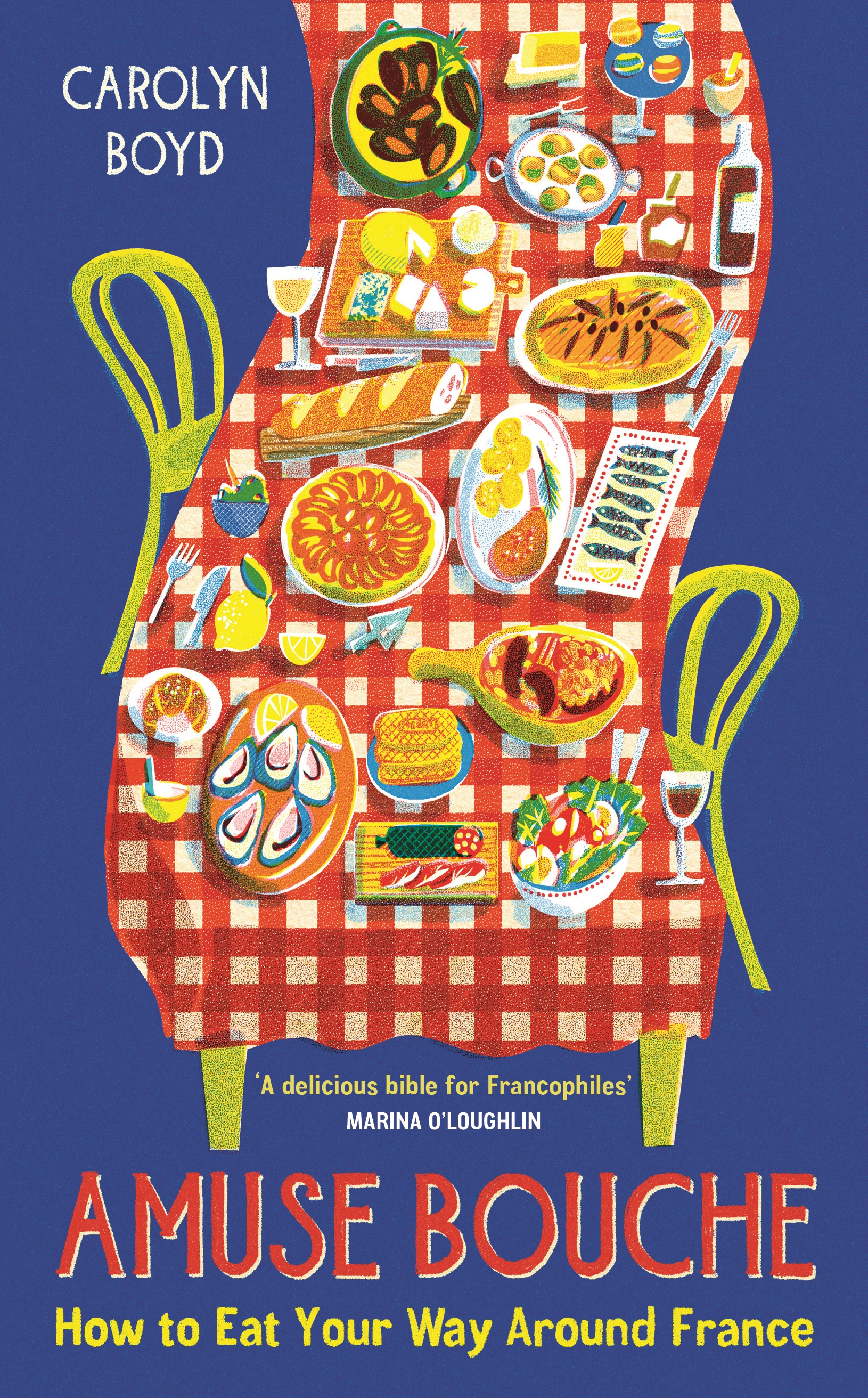
Review: Amuse Bouche. How to Eat Your Way Around France

by JOHN FRASER

Ask any foodie the best country in the world in which to stuff your face, and the chances are they will respond that it is France, especially if the respondent happens to be French.

There are other contenders. I would put Spain top of my list, and China, Italy, India and Thailand are also firm favourites. Malaysia and Singapore also merit a mention, and while SA cuisine is a bit of a mishmash (pun intended), bobotie and some other Cape Malay dishes are firm favourites. 

Carolyn Boyd, author of Amuse Bouche. How to Eat Your Way Around France, is a food and travel writer and has produced a mouth-watering, lip-smacking and often very funny guidebook.   This is a book about food in France by an author who seems to have explored every nook and cranny, chip stall, bistro and three-star Michelin joint.

Having just finished it, I can’t wait for my next trip to France. It’s a country I have visited often for work, but far too often I have hurtled along the highway, rarely stopping to sample the local delicacies.

This book contains some recipes, but it is not a recipe book. A quote on the cover describes it as a Bible, but that’s wrong too.

The author gives a good summary of her intentions: “The book is not a restaurant guide, though there are recommendations; nor is it a recipe book, though there are recipes and serving suggestions. It is a book that celebrates the joy of exploring France through its food and captures the many ways that dishes and ingredients came about, whether through the landscape and terroir, folklore and legends, in the kitchens of kings and peasants or as the innovations of modern chefs.”

This devoted francophone seems to have spent a lot of time in France, often on family trips, and her enthusiasm shines through on every page.

I tried one of her recipes, for a chicken in mustard sauce — poulet Gaston Gérard — which hails from Dijon. It was probably invented when a pot of mustard was accidentally tipped into the pan. It was good, but not magnificent.

The book is peppered with references to some of my favourite French dishes and ingredients. There is the Parisian delight of a simple baguette smothered with salty butter and filled with slices of ham, quiche Lorraine and the tarte flambee, a divine Alsatian pizza upgrade. Then there’s the world’s indisputably best chicken, the poulet de Bresse — and we cannot ignore the rich beef and wine stew that is boeuf bourguignon and, of course, bouillabaisse — that sumptuous fish soup from Marseilles.

Boyd’s light touch and cheeky humour are illustrated when she writes about the laborious process it takes to make this soup: “The effort bouillabaisse takes to prepare has made it something of a luxury, demanded more often by tourists than locals (who prefer pizza).” 

My favourite nuggets refer to the brotherhoods that proliferate across France, each devoted to a treasured dish or ingredient.

There is the cheese-loving Confrie des Compagnons du Brie de Meaux “whose crushed velvet robes are an appropriate shade of cream and their hats are topped by a marvellous hat: it’s a large, velvet-covered balsa-wood box, usually used for transporting the cheese”. 

Boyd writes of “Michel Théret, a diminutive, twinkle-eyed octogenarian who is both the Grand Master of the Brotherhood of the Saint-Omer Endive and the Grand Master of the Brotherhood of the Saint-Omer Cauliflower.” If only I could add those two distinctions to my own inadequate CV. 

I already knew the Belgians claim to have invented the misnamed French fry, and Amuse Bouche confirms this: “History points to Belgium for the origin of frites, with American soldiers discovering them there during the First World War (they gave them the moniker French fries thanks to the language, rather than the country). As northern France draws much of its culinary influences from Belgium, it’s little wonder the area is ideal for chip-lovers.” 

While Boyd adores French food, even she has her concerns and dislikes. For instance, she is no fan of the andouille de Troyes, a stinky sausage, which she diplomatically suggests gives off a farmyard fragrance. Needless to say, it has its own fan club: the Association Amicale des Amateurs d’Authentique Andouillette. 

She also gives her opinion on frog’s legs. “It remains a mystery to me that there is still such a high demand for les cuisses de grenouilles, or frog’s legs… There is just one element to bear in mind: in a nation where nose-to-tail eating has also come full circle to the luxury market, it seems bad form that, for the sake of two little legs, the rest of the poor creature goes to waste. For my part, I’m happy to stick to chicken.”

My favourite anecdote refers to the origin of crêpes Suzette, pancakes flamed in a boozy sauce. The future King of England, Edward VII, was dining at the Café de Paris in Monte Carlo in 1895.

“He asked the chef the name of the dish; the chef replied, ‘Princely crêpes, Your Royal Highness.’ The prince decided this title was a bit naff and declared that they should be named after his lady friend Suzette.

“Given Bertie’s penchant for the ladies, had this happened on another night with another copine (girlfriend) in attendance, the dish could easily have been named after Jennifer, Alison, Philippa or Sue,” Boyd writes.

While neither of us is hopping mad for frog’s legs, we both adore foie gras, the magnificent duck live pâté, but Boyd does note that there are animal welfare concerns over how the birds are force-fed to fatten them and enlarge their livers.

Her meticulous research shines through when, for example, she gives suggestions for ensuring a perfect boeuf bourguignon. She writes that some chefs insist that pinot noir is essential to the sauce and that some wines don’t work. 

“Chef Cécile Riotte from Le Vaudésir in the village of Thizy once told me she never tosses the beef in flour because that requires more oil to brown it; instead she browns the beef without it, then later purées the vegetables that have been stewing in the sauce. She then puts the purée back in to thicken the sauce; much more flavourful than flour. At The Cook’s Atelier … mother and daughter duo Marjorie Taylor and Kendall Smith Franchini advise to always use homemade beef stock and beef tenderloin, rather than other cuts, as it speeds up the cooking process and ensures a very flavourful and tender stew.

“Finally, Marie-Eugénie Dupuy first insists on using paleron, chuck steak, before giving the most unusual tip I’ve heard: a shot of crème de cassis (blackcurrant liquor) added 15 minutes before the end of cooking; she tells me it cuts through the acidity of the wine and gives it that special je ne sais quoi.”

Boyd details the uses of mustard, suggesting that “French cooks have long known that it is the most useful jar they can have to hand. Add a smear to a jambon-beurre (ham sandwich) for a piquant punch; stir a teaspoon into a cheese sauce for added richness; or mix with mayonnaise for a Dijonnaise dip or dressing.

“The French will often have a little pot of it on their dining tables instead of salt and pepper, and its use in recipes is so broad, and France’s dependence on it so heavy, that there was a major outcry when a drought hit production of the seeds in 2022 and shop shelves lay empty of Dijon mustard for months.”

For many (me included), snails are a gastronomic treat too far, but even these are the subject of Boyd’s wit when she recalls that “I once watched a man in paint-splattered overalls down a glass of red wine alongside a dozen snails for lunch in mere minutes. Who knew snails could also be fast food?”

Boyd’s book has chapters for each region, with bite-sized sections on each delicacy. She ends each chapter with cheeses — as one surely should in any gastronomic account of France. 

I loved this book and will return to it often. It will enhance my future trips to France — of which I hope to have many, until my liver takes on foie gras proportions and I am so full I couldn’t manage even one more diminutive frog’s leg.

Published in Business Day

Does SA really deserve another 30 years of rising unemployment?

By Chris Hart

As South Africans again head to the polls, it is worth reflecting on the achievements, and failures, of three decades of ANC government.

Will things get better, or is the electorate being asked to vote for more of the same?

Unemployment is THE biggest issue facing South Africa. More than 50 parties are promising jobs. Most are offering rubbish or wishful thinking.

Most parties are advocating more poverty alleviation while being clueless regarding what needs to be done to achieve poverty reduction.

Poverty alleviation involves shifting resources to consumption. (Perpetuates the problem); Poverty reduction, however, involves shifting resources to investment. (Reduces the problem)

The choices are stark.

For instance, the National Health Insurance (NHI) is a policy of poverty alleviation – shifting more resources to consumption. The NHI essentially means more unemployment, as investment is crowded out.

The Basic Income Grant (BIG) is also about more consumption and will also crowd out investment. Once again, we have a policy proposal that will create more unemployment.

To generate investment, South Africa must be an attractive country in which to invest.

Investors have a choice, and South Africa must compete for investment. The government should enact policies that encourage investment in the country. Its track record is exactly the opposite.

Several measures must be taken:

  • Lower taxes (both the tax rates and the number of taxes). If we are to become more investment-friendly, lowering taxes is key.
  • Slashing red tape is also essential.
  • Capital formation (savings) must also be supported and improved.

Unemployment will not be solved by what exists but by what needs to come into existence. That needs investment. The current economy is simply too small to absorb and serve all the people. We need a bigger economic cake, not merely to redistribute existing cake. A bigger cake needs investment; redistribution is about consumption.

The tax base is already exhausted. It is both narrow and shallow. It cannot bear the burden of additional consumption-driven poverty-alleviation measures. These have become poverty-perpetuation policies. Consumption-driven measures are crowding out investment.

The nature of investment is also important. If jobs are to be created, investment must be directed to SMEs and start-ups.

This is where the tax and regulatory burdens are extremely onerous. SARS extracts taxes out of SMEs before they have made a cent of profit.

The cost for SMEs of regulatory compliance is also huge – they face massive costs of compliance before they have made a cent of profit., Yet SMEs are the most important job-creating element in any economy.

The nature of taxes must be fully evaluated and reformed. South Africa is an emerging market with massive unemployment and a shortage of capital. Yet the tax system aggressively targets capital formation in the form of taxes like Capital Gains Tax and property taxes.

Taxes that target capital and capital formation act in the same way as eating the seeds that are needed for the next harvest.

Meanwhile, high personal taxes inhibit the ability to save and create the capital necessary for funding the structural expansionary growth required.

That is why South Africa struggles with unemployment.

South Africa’s extremely high unemployment is unusual in the global context. There are no external factors that we can blame for unemployment – however much our ministers may insist that there are. To assert the contrary is just gaslighting the electorate.

Unemployment is a problem inflicted on the country by our political elites. Bad policies implemented badly have caused this problem – directly causing job losses and unemployment.

In addition, the corruption that has descended into wholesale looting negatively affects investment attractiveness. Especially trust. No investor wants to invest in an untrustworthy jurisdiction.

The myriads of parties contesting the elections are all promising jobs.

So how can we tell if it is just wishful thinking jabbering and magic wand waving to the electorate? Or do they have an actual coherent plan to create jobs?

If a party is serious and credible in wanting to create jobs, it MUST have the following elements:

  • 1. Tax reform. SA must become more competitive. Parties must pledge to lower tax rates and the complexity of tax administration. They must agree to shift the tax burden onto consumption and away from capital formation.
  • 2. Regulatory reform. SA must become a cheaper – and easier – jurisdiction in which to do business. Especially for SMEs and startups.
  • 3. Create channels and mechanisms for SMEs and start-ups to access capital. They must provide regulatory and tax exemptions for SMEs and startups.
  • 4. They must have a commitment to a genuine crackdown on corruption. Trust must be restored to encourage investment in SA.
  • 5. They must undertake to get rid of exchange controls. These inhibit investment and only exist to shield bad policy. Good policy does not need the protection of exchange controls.

What we do know (from its actual track record) is that the ANC has created the unemployment problem we have today. The jobless rate stood at 22% 10 years ago (which was already extremely high) and has risen to 33% now. No external factors are to blame.

The ANC’s latest best ideas are the NHI and the BIG. More consumption. More unemployment.

There has been more and more poverty alleviation at the expense of poverty reduction. We have not seen a single idea or initiative on poverty reduction.

The MK and the EFF just mirror these ideas – they will merely implement the same mistakes, but bigger and more damaging than the ANC has done.

The DA’s record on governance is much better than that of the ANC. This has yielded better employment outcomes, but their direct policies on job creation are not well-founded. It is more hope than a plan, as the above elements are either not well developed or absent. There is also a heavy emphasis on poverty alleviation measures.

The PA’s plans sound good but their record is not great – having sided with the ruling party and having indulged in the delicious budgets.

On job creation, the FF+, the ACDP and the UIM seem to have credible, coherent plans.

Action SA also sounds promising, but its policies are still weakly formulated and lack coherence.

So, as the country goes to the polls, another reminder of the unemployment statistics:

South Africa’s official unemployment rate now stands at 32,9%. In 2008, the unemployment rate stood at 21.5%. 16 years of high and rising unemployment. Youth unemployment is an even bigger disgrace.

Does the electorate know that this situation has been delivered to it by the misguided policies of recent governments? The election promises come with an (unstated) caveat: vote us in again and we will ensure that more of you will become unemployed.

Unemployment is entirely avoidable. It just depends on the choices our elected officials make on our behalf.

Vote wisely!

  • Chris Hart is the executive chairman of the Impact Group

Why Reuben’s remains an uncontested favourite

Dishes are beautifully prepared by team that replicates Reuben Riffel’s high standard

by JOHN FRASER

When you fancy a bite of lunch in the Cape winelands, you are spoilt for choice. As well as an abundance of restaurants in the towns, there is something on offer on almost any wine farm — from fine dining restaurants to tasting rooms offering platters of cheese and other goodies.

However, few places offer the quality of food that you can find if you wander a few paces off the main drag in Franschhoek and visit the restaurant of one of this country’s finest chefs. I have been visiting Reuben’s restaurant for well over a decade and have found chef Reuben Riffel’s food consistently excellent.

Of course, you are paying winelands prices, which are more of a strain on the wage packets of South Africans than they are for those harder-currency tourists, who gasp in amazement at the superb value our restaurants offer when compared to those in their home countries.

Reuben’s has moved from its original home on the Franschhoek high street — that building has now been downgraded to a Woolworth’s store. However, the newer venue is light and airy, with a covered terrace at the far end, while inside there is a roaring fire in the cooler winter months. As the temperatures were in the 30s when I recently visited, no fire was on offer, nor needed, but the relaxed terrace was a sensible location.

When I discussed Reuben’s recently with two elderly Franschhoek residents, it was sad to hear that they don’t go there. They feel that as the chef has expanded, opening new restaurants beyond his hometown, and no longer confines himself to his founding Franschhoek kitchen, standards must have slipped.

Indeed, lovers of local TV food programmes will almost certainly have seen him judging or cooking on the small screen. His roots may be in Reuben’s, but he has spread his wings. So, are they right? Only one way to find out!

To my mind, Riffel has achieved what only the very best chefs are able to do — by training kitchen and front-of-house teams that meet the same standards of cuisine and service that one would expect when Riffel himself has not left the building.

On my most recent visit, my first to the winelands in far too long, I started my lunch at Reuben’s with one of the dishes that is rarely off the menu — the prawn tempura. Beautifully cooked prawns encased in batter, nestled on a chilli-coriander salsa, enhanced with a creamy sweetcorn velouté and small dice of pineapple. A stunner.

Also on offer was the chilli salted squid, a dish for which Riffel is rightly famous — and then there was a generous, well-flavoured beef tartare. The hand-chopped fillet was flavoured with an array of flavours, including tarragon, rocket, capers and Parmesan.

For the mains, my chums and I had a beautifully cooked pork belly, with melt-in-the-mouth meat and crispy, crackly, crunchy pancetta crackling. Skilfully cooked and flavoured with fennel seeds, cider, chilli and ginger.

The beef fillet with rosemary bone marrow bordelaise sauce was also excellent, and the tender, perfectly cooked juniper kudu loin was a revelation, enhanced with blueberry chutney and pepper jus. All a bit cheffy, I know, but all the flavours worked so well together.

The previous week I had also ordered a venison dish in a celebrated Mandela Square steak house, and in contrast to Ruben’s kudu, I had found it so bland, and boring, and the sauce so unpalatable, that I could only eat a few mouthfuls of it.

It takes skill to cook as well as Reuben’s team does, and the dishes Riffel has created are beautifully prepared by a team that is able to replicate his high standards. While relaxed, the service was efficient and attentive, even as the restaurant filled up.

Unfortunately, unless one is staying in Franschhoek, it can be a long drive home, so I had to modify my wine consumption. I had a (surprisingly generous) glass of the excellent and luscious AA Badenhorst, Secateurs chenin blanc, and followed this with (an equally ample) glass of Reuben’s own red. Both went well with the food, and it is good to see some effort had been made in assembling a wine list with a good selection of exceptional wines by the glass.

My only criticism was that the red wine was served a bit warm on what was a very warm day. However, not being as snobbish about doctoring my red wine as some, this was soon remedied with a couple of ice cubes.

I don’t often dig into a dessert, and I am annoyed that Reuben’s has stopped offering a few craftily chosen cheeses for those who wish to linger a bit but don’t go for the sweet stuff. There are far too few top SA restaurants that put in the time and effort needed to curate a good cheeseboard, and I think this is a betrayal of the many excellent producers whose produce deserves wider exposure. Though cheesed off, I have to accept that demand may be limited, hence the decision to remove it from Reuben’s restaurant menu.

In a 10-day visit to the winelands, I did not confine myself to Reuben’s restaurant, though I did go there three times, making up for the Covid-19 years when restaurant dining was a pleasure banned by our philistine politicians.

I had excellent, simple lunches at the Fairview wine farm in Paarl, which is a firm favourite, and in the Rose Garden cafe on the historic Vergelegen estate in Somerset West. Both are well worth a visit. I also lunched on two of our most prestigious wine farms, where you have to beg to secure a table, and I must confess that I found neither to be good value nor particularly impressive. Some chefs sadly seem to have abandoned flavour to focus on theatre and pretension. I won’t be back.

So Reuben’s, where there is consistency, and skill levels remain high, remains my uncontested winelands favourite. Not only is there great food, but it can’t just be my imagination that wine always tastes so much better when you are glugging it over a fine meal in the heart of the world’s most beautiful winelands.

Whatever happened to the business lunch?

By John Fraser and Chris Gilmour

“Let’s do lunch”…   It’s the most magnificent phrase in the English language. 

Lunch is not just about sharing good nosh and a few bottles of red nectar.   It is also good business.

On one’s arrival in the Business Day newsroom, the then editor Peter Bruce issued a command – that he didn’t want to see people sitting at their desks at lunch hour.

He wanted them out there, networking, getting scoops, building trust and relationships with the sort of people who would spill the beans. Fully baked and ready for the front-page splash.

And it wasn’t unusual to see Peter himself in the local steak and chips joint, hobnobbing with the great and the good, the influential and the mighty, captains and midshipmen of industry and political movers and shakers.

In the stockbroking world, too, lunches were de rigueur, at least in the days when stockbrokers were still stockbrokers and not just the securities divisions of investment banks.

Most stockbroking firms had their own dining rooms, which were used almost every day to entertain clients. Waiters wore starched uniforms, and the host had a little bell to let the staff know when to bring the next course. All very quaint.

And, of course, the booze flowed.   We can remember several occasions when these in-house lunches finished only at 6 o’clock in the evening.   There were probably later finishes as well, ones that we were incapable of remembering after all those brandies. 

Of course, the hedonistic side of a lunch is fun.  Those increasingly rare occasions when your corporate host, replete with expense account rands and on a mission to woo the humble hack or analyst, hands you the wine list, and suggests that you must choose the booze.

It works the other way as well.   One industry association chum we entertained would always go straight for the most expensive prawn starter when a humble hack was footing the bill.

A proper lunch involves more than one course, booze and an infusion of coffee. Then we sit, merrily belching as the barriers come down, the barricades are dismantled, and those gems of information flow.   

After scoffing a heaped pile of food, it is always great fun to see if we can get our host to offer a port (a double, of course) that is of considerably greater vintage than his guests.

Christ had the right idea about the benefits of breaking bread and sharing wine, although his choice of dining companions did prove fatal.  (And why on earth did they all sit along just one side of the table?). 

Fortunately, these days one can normally find more reliable dining companions, prepared to hand over a bag of silver when the bill arrives, rather than to indulge in ungrateful betrayal.

But the golden days of lavish lunches have largely gone now, swept away by the impact of de-regulation and the dead hand of investment banks.

To be fair, we started seeing the demise of the boozy lunch in all its former glory by the mid to late 1980s when the likes of Allan Gray analysts and portfolio managers would attend lunch grudgingly – and certainly wouldn’t touch alcohol.

This abstinence is a very American thing; our Yankee cousins eschew the idea of drinking at lunchtime, reserving this for after work. How sad.

These days, younger finance whizz-kids, in particular, tend to be a humourless bunch, and no amount of arm-twisting will persuade them to take you to lunch.

They fully subscribe to the view that all relevant information about a company is contained in the financial results and that anything else is peripheral. They don’t appreciate the benefits of social interaction and obviously don’t understand that it’s not what you know but who you know that matters.    

Especially when they enjoy a good, long lunch.

The Chartered Financial Analyst (CFA) qualification has a lot to answer for in this respect. There are massive sections in the CFA charter on ethics and doing the right thing – and this organisation seems to regard accepting a lunch…as being tantamount to succumbing to bribery.

And we won’t even go down the road of imagining what they would think of when it comes to alcohol. Shock, horror! Double the garlic and send for the exorcist!

It is all very well for journalists and analysts to attend results presentations or AGMs, to ask clever questions and then to interact with management over a sausage roll of two. 

But, as we have bemoaned before on these pages – to the deaf ears of so many corporate PRs, whose lack of understanding of the benefits of social interaction would lead to the speedy elimination of the human race – you just can’t beat a proper sit-down session.

It is all about trust. 

You don’t need to like your lunching companion, although many would be surprised by what really nice, charming and generous people do inhabit the financial world.

You need to build an understanding, a bond.    A lunch in the best of times may help in the worst of times.

Get the cell number of your dining companion.   It will be invaluable when the fertilizer hits the fan and the rottweiler PA tries to block all calls to her beloved boss.

An open line of communication is the saviour of the journalist and analyst.

And, of course, a sound relationship works both ways.   If your company is the target of a hostile takeover, if some unscrupulous rival has been leaking malicious material about your business, that’s the time for a call to a trusty journo or analyst, to provide the other side of the story.  Timely truths, and even a bit of crafty spin, can save your share price, your company and maybe even your job.

However, it can be useless to cold call someone, anyone from any side of the corporate equation, from out of the blue.  There will be suspicion, maybe hostility; maybe they will be in one of those meetings that last a lifetime, or getting down and dirty with Miss Moneypenny, and they just can’t come to the phone.     

Once an aviation company released its financial results in the early evening.   Everyone had left its head office.  The security guards couldn’t help, and nor could anyone at the call centre.

The next morning, once the vampires had all returned to their coffins, we finally got hold of the CEO.

Abject apologies followed, and while breakfast is no substitute for lunch, at least the hotel where we met for a mutual glaring session had some brekkie buffet bubbly on ice.

Cell numbers were exchanged, better transparency was promised, and the relationship was launched. 

Lunches were to follow.  Information was to flow. At the next lunch, a starter was born.

Of course, there are other, less subtle benefits of lunching in some of Joburg or Cape Town’s better restaurants.

Firstly, you often bump into someone you haven’t seen for a while.   A chance encounter with a former editor of Business Day once led to some useful and enjoyable writing work – and even a job offer.  

While there be the people whom you can greet, hug and to whom you can transmit transmit Covid, you will also be able to look around the room, to spot shadowy figures slipping into the discreet, private dining rooms, where the mega deals are made.

Just knowing that CEO X has been lunching with CEO Y could provide the first hint of the merger that will lead to the formation of a new corporation, let’s imaginatively call it XY.

Reading the room can prove almost invaluable, and it might even give you a premature indication of your paper’s next mega-scoop.

So don’t sit hunched over your desk, in solitary misery, blinking at your computer screen and dispiritedly munching on a stale sandwich.

Venture forth, and if that contact you really need to make has failed to send you an embossed invitation, contact them yourself and suggest a coffee.

When they agree, reject the suggested time and offer a better plan for the encounter with those magic words: “Let’s do lunch.”  

After all, man cannot live by stale sandwiches alone!  

John Fraser is a journalist and broadcaster, and Chris Gilmour is an investment analyst. Both are available for lunch.

SA’s auto industry must wait 2 years for the new electric vehicle incentive

Enoch Godongwana

By John Fraser

You might be forgiven for thinking that the SA government is in reverse gear when it comes to encouraging the country’s auto industry to go electric.

An announcement on this was expected in last year’s mini-budget, but that borefest came and went.

In today’s budget, we do have news of a new incentive – worth 150 per cent of a qualifying investment in production facilities for electric and hydrogen-powered vehicles in the first year of investment.

The bad news – it will apply to new investments ONLY from the 1st of March 2026.

So there will be a two year wait before it happens.

The tax loss to the fiscus is estimated to amount to R500 million for 2026/27.

Existing auto incentives will still be on offer to manufacturers, but one wonders why they will bother to go electric in SA when so many other countries offer speedier – and more highly charged – reasons to invest.

And as for the local market – barely a spark of interest in the new technology vehicles.

It seems that electricity isn’t the only thing in SA to lack the necessary energy.