Our constitutional democracy should not be placed at risk by the Covid-19 lockdown

Police
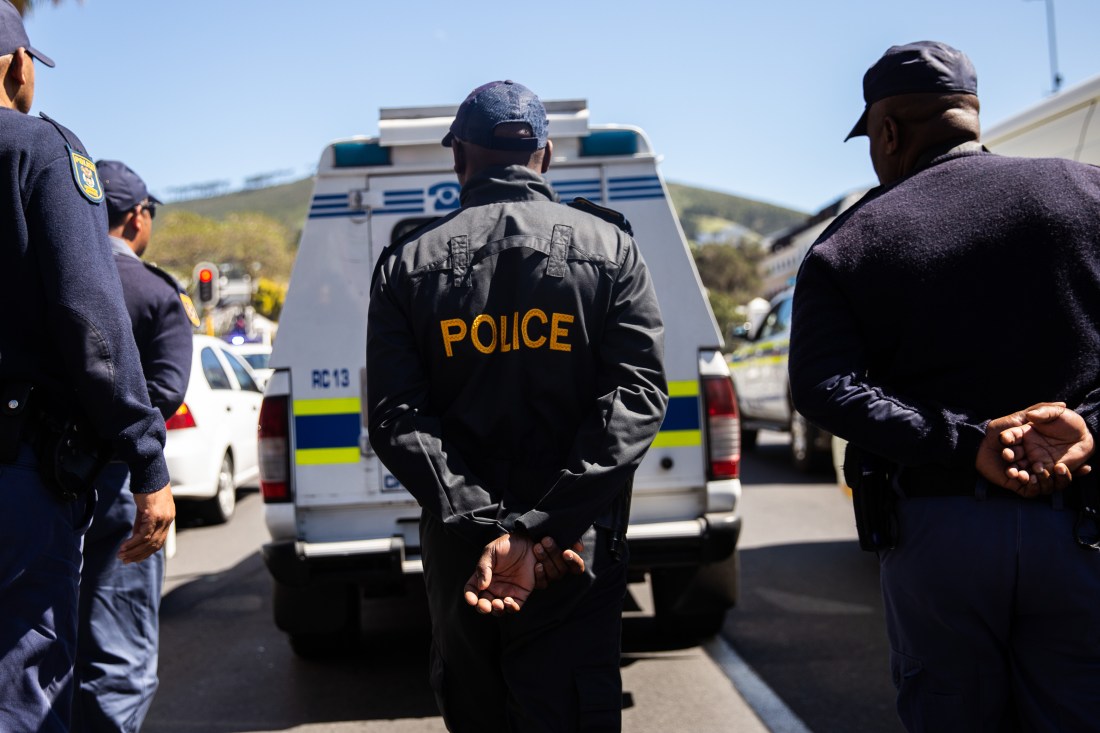
Photo: Ashraf Hendricks

26 March 2020   By GroundUp Editors

Police and soldiers will be deployed to enforce the Covid-19 lockdown. If they do so with a light touch, the lockdown is more likely to be respected.

For South Africans old enough to remember apartheid, the states of emergency of the 1980s and the pass laws, the possibility of being stopped on the streets by police officers or soldiers is a frightening prospect. This time, of course, our movements are being restricted for our own good, to fight off the Covid-19 epidemic, and we must all comply.

But, especially in a country with a history like ours, it is essential that police officers and soldiers enforce the lockdown with a gentle hand.

Remarks like those attributed to Defence Minister Nosiviwe Mapisa-Nqakula on Wednesday are not reassuring. Mapisa-Nqakula reportedly said soldiers would only resort to “skop, skiet and donner when circumstances determine that”, then added: “For now, we’re a constitutional democracy…”.

Let’s hope that the “for now” was a slip of the tongue or a misquote. We are indeed a constitutional democracy and the minister, who was part of one of the teams negotiating the democratic constitution, knows this very well.

But right now we are a constitutional democracy in a state of national disaster, and all of us, except essential workers, have been instructed not to leave our homes (except to do essential things like buying food and medicine or going to the hospital).

The police and the army have been mobilised to enforce that, for the good of us all. But it is essential that Mapisa-Nqakula and police minister Bheki Cele make it very clear throughout the army and police hierarchy, that police and soldiers must show restraint. They will be dealing with many frightened and confused South Africans and they must apply the law gently and with care.

There is no need, for example, to be draconian with a spaza shop-owner selling food without the required documents, a shepherd guiding his cattle, or a person doubling up a visit to the shop with walking their dog or jogging.

In informal settlements and rural areas, people will often have to go outside to meet their basic needs, even if it is just to escape cramped quarters for a few minutes. The police and army should help, not hinder, the efforts of people to get food and water, and to use toilets and taps; and they should help government and civil society efforts to get food, water and medicines to townships. They should work with, and not against, communities.

As the Civil Society VC-19 Coalition has said, “lockdown as a public health strategy cannot work unless it is led by the provision of a good safety net of services and resources which can allow people to remain safely at home”.

As for us, we should be mindful of what the police and soldiers are tasked with doing. They are likely to be tired, anxious about their own health and that of their families, and perhaps angry that they must be exposed to risk while others are safer at home. We owe them our thanks.

More about Covid-19

GroundUp is being sued after we exposed dodgy Lottery deals involving millions of rands. Please help fund our defence. You can support us via GivengainSnapscanEFTPayPal or PayFast.

© 2020 GroundUp.

Like this article? Subscribe to ZA Confidential to receive our newsletters.  Twitter:  @zaconfidential  


Panic buying in the wake of COVID-19 underscores inequalities in South Africa


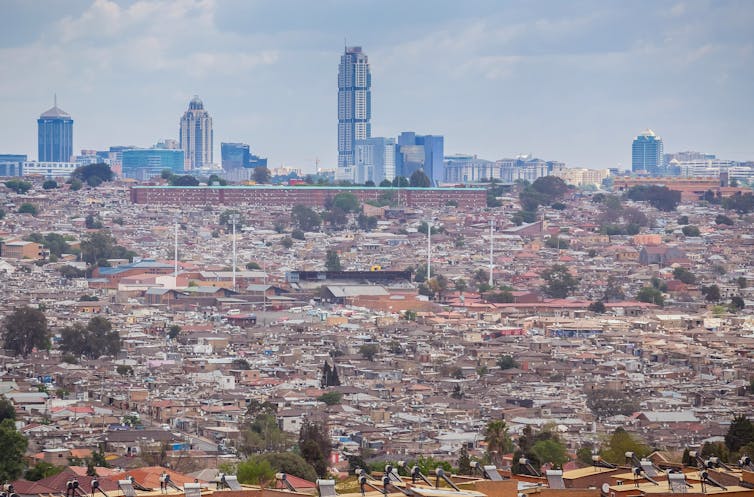
South Africa’s Alexandra township in the foreground, where the majority live in squalor, and Sandton in the background, representing the most privileged Shutterstock

James Lappeman, University of Cape Town

Pictures of empty shelves and long queues have pervaded all forms of media in South Africa over the past few days. These scenes are not unlike those in other parts of the world as many consumers succumb to panic buying, in fear of running out of toilet paper – among other essential items.

Many authors have covered the reasons for panic buying and all behaviourists would agree that this is not a new or unexpected phenomenon. But the way it plays out in a country as economically unequal as South Africa accentuates the gap between the haves and have-nots.

Who wins and who loses from panic buying?

Of course, there is a first-mover advantage in getting to the front of the line. This behaviour is what often triggers a rush on the stores in the first place. But in a country that is not actually experiencing a famine or toilet paper shortage, the losers are those who cannot afford to stock up should the need arise.

While inequality exists everywhere, wealthier economies have a population base that is generally more capable of stocking up their homes when needed. This is also true of South African households in the upper-middle class and at the top end.

The majority of consumers in South Africa are, however, unable to fill up a trolley in the best of times, let alone to finance a serious stockpile.

South Africa by numbers

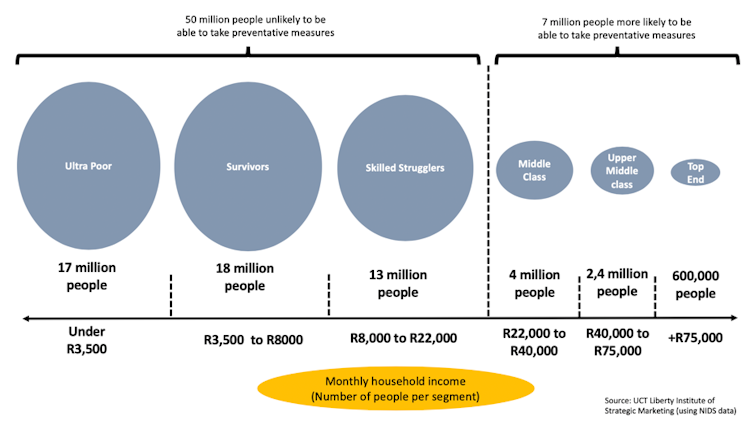
While there are different ways to segment a population of 58 million people, the UCT Liberty Institute of Strategic Marketing has used the National Income Dynamics Survey to paint a picture of the South African consumer landscape. The scope of this article does not allow a full explanation of how this segmentation was derived, but a few phenomena are notable from the graphic.

UCT Liberty Institute of Strategic Marketing

South Africa has roughly 58 million people living in 17 million households. About 1000 households are added to this number every day. South Africa has a very high number of young people – almost half of its population is under 24.

If we divide the country by household income (that is, all the earners in the household combined) as shown in the graphic, then 7 million would fall into the category of the middle class and above. That means 50 million people are living in households below the level needed to support a middle-class lifestyle. These 50 million people are likely to be using public transport and public health care and living with very little financial margin.

As one goes into the ultra-poor and survivor category, households regularly run out of food before the end of the month. A hallmark of living in this kind of household is a dependence on social grant income and a food shortage by the third week of the month. In addition, most poorer households live at least one taxi ride away from the closest supermarket and pay for extra seats on the taxi if purchasing more than a few bags of groceries. The one time of the year when stockpiling is more frequent is during the festive season (December) when carefully negotiated expenditure is made using savings from group schemes called stokvels.

When panic breaks out

Behavioural economists use many cognitive biases to explain why panic shopping occurs. Most commonly cited are phenomena like loss aversion, the bandwagon effect and probability neglect. These reactions to the initial run on essential groceries create a panic contagion that ignores logic. There is no food or toilet paper shortage and shopping is allowed to continue during this kind of state of emergency. Nonetheless, the week of 16-20 March 2020, saw a massive panic shopping spree marked by daily shortages in many categories.

Times of crisis accentuates the gap between the privileged and the rest. When the stock market dips, the wealthy have reserves to buy more shares and multiply their wealth in the long run. When a health crisis hits, the wealthy have access to medicine and private health care and can often navigate around work restrictions.

The poor, however, are not as fortunate. Even in the UK, the vulnerable are the losers as panic buying surged in early March. Workers on short term contract and freelancers globally are experiencing financial setbacks as this kind of work dries up. Germany has pledged 40 billion euros in aid to freelancers.

South Africa has freelancers in multiple industries but also the informal economy (and millions of households) hinging on micro-enterprises like street vendors, spaza shops and taverns. These enterprises (many based on commuter populations and school children as their markets) are not registered businesses and unlikely to get any financial relief from the government. This form of enterprise does not have a “work from home” option as proposed by employment experts. These features of the informal sector are the same globally.

The social media posts comparing wealthy consumers lining up outside wholesalers and the poor lining up to catch a taxi home are anecdotal, but also somewhat symbolic of the realities in South Africa. The pictures of panic buying don’t reflect the average South African. They depict the average wealthy South African.

Many in the middle class may say they too are under financial pressure. This is true. But they are still in the privileged minority.

What does this mean?

The COVID-19 pandemic will eventually pass, as have other flu pandemics in centuries gone by. The fact that we were able to monitor this one globally in real-time is a possible turning point for the way such events are handled in the future.

The exact outcome of the pandemic in terms of its duration, fatalities and impact on the South African economy will eventually unfold.

In the meantime, the country is once again faced with the reality that it has a long way to go before the edges of inequality soften and the ‘average’ household may also participate in the next spree of panic buying – whenever that may be.

Head of Projects, UCT Liberty Institute of Strategic Marketing, University of Cape Town

This article is republished from The Conversation under a Creative Commons license. Read the original article.

Like this article? Subscribe to ZA Confidential to receive our newsletters.  Twitter:  @zaconfidential  

Laughter in the time of a pandemic: why South Africans are joking about coronavirus

Humour is sometimes used as a coping mechanism in tragic situations.
Getty Images

Herman Wasserman, University of Cape Town

Almost immediately after the first case of COVID-19 was confirmed in South Africa, the jokes started. From memes featuring prominent politicians to bad puns, from TikTok video clips to pictures of people posing with silly home-made protective gear, South Africans took to Twitter, WhatsApp and Facebook to make fun of the virus.

It is not unusual for South Africans to make jokes about their many problems, from former President Jacob Zuma’s legacy of alleged grand corruption, known as state capture, to the regular power blackouts caused by ongoing crises at the national power utility Eskom. Cartoonists never seem to have a shortage of material.

Online jokes, memes and video clips are of course not peculiar to South Africa. The increased accessibility of a growing range of social media platforms and editing tools have made it possible for media users around the world to create and interact with news topics in ever more creative ways. Yet it is remarkable how, in a country like South Africa with its multitude of serious challenges, media users often take to jokes rather than despair when presented with a new problem.

Why is humour so often the first port of call when South African media users find themselves in stormy seas? There may be various socio-cultural, political and psychological reasons for this.

Socio-cultural reasons

There is an established body of academic literature about the important role of gossip, jokes, rumour and satire in African politics and societies.

In his landmark article, the historian and human rights activist Stephen Ellis described the phenomenon of “pavement radio”, or radio trottoir, that can be found across Africa. This phenomenon is underpinned by the widespread oral tradition characteristic of these societies.

Ellis defines this form of communication as

the popular and unofficial discussion of current affairs.

Unlike the press, television or radio, this

is not controlled by any identifiable individual, institution or group of people.

Pavement radio is not to be mistaken for ordinary, unverified rumours or gossip but performs a social and political function. Its subject matter is issues of public interest about which there has not been an official announcement, or where official information cannot be trusted.

Humour also helps build community. For example, popular South African tabloids have established a fiercely loyal readership with their stories of the supernatural, the silly or the absurd alongside a strong commitment to the community interest. Tabloid readers integrate their newspaper reading practices with storytelling, sharing and communal interpretation of newspaper content.

These practices illustrate how the conviviality of African societies also influences their media use. Similarly, joking about the coronavirus may be a way for people to say ‘it is all very absurd, but we’re in this together’.

Political reasons

Pavement radio thrives when the mainstream media are tightly controlled by the authorities, or where there is widespread distrust in official narratives.

South Africans enjoy a much higher degree of media freedom than they used to. But during apartheid, alternative media and underground information networks often provided more trusted channels of communication than the compliant mainstream media, or propaganda issued on the state broadcaster.

Widespread corruption in post-apartheid South Africa has not done much to improve citizens’ respect for official narratives. They know what it feels like to be lied to.

Research has shown that young South Africans, in particular, are distrustful of politicians and political institutions. And political disillusionment with the current government and feelings of frustration have also proven to be fertile ground for rumours and conspiracy theories that provide more plausible explanations of people’s current circumstances than political, economic or scientific authorities.

The “sceptical laughter” evoked by popular culture is a way of poking fun at authority, undermining the power of politicians or big corporates.

In some of the jokes about the coronavirus, it’s clear that South Africans are laughing – perhaps nervously – at the government’s promises that it has everything under control. The news that the first confirmed patient returned to South Africa from a ski holiday unleashed jokes about the racial profile of the disease. Joking about rich jetsetters becoming infected or making fun of African remedies and responses, may be a way to take the sting out of racial inequality and economic hierarchies.

Psychological reasons

Laughter and humour could be used as a coping mechanism. Media coverage of COVID-19 can stoke fear and panic through their choice of words (“killer virus”) or images (scary microscopic virus pictures, empty shelves in supermarkets). The sheer stream of reporting and the daily tally of the infected and the dead can also be overwhelming and confusing.

Given the various other risks that South Africans have to contend with on a daily basis, making jokes about this added thing to worry about may help to take the sting out of the new, unknown threat.

Several jokes on Twitter named these other threats, as a reminder that while COVID-19 is serious, the other concerns should not be lost from sight. For instance, a jibe about the coronavirus having to show its proof of residence at the port of entry hinted at the high levels of violent xenophobia in South Africa.

Humour in this context is a way of showing resilience and agency. Although some Twitter users remarked that the humorous tone might still change when the seriousness of the disease hits home, the jokes largely had an optimistic tone. As one person posted on Twitter:

We did it with Ebola, we did it with Listeriosis, we did it with Boko Haram, we definitely will did (sic) it with #CoronavirusinSA can I get an Amen!

Another was more fatalistic:

The Ronas is here to wipe us out but at least we will die laughing.

The downside

Unfortunately, the prevalence of jokes and satire can also spread misinformation, as audiences don’t always know what information to trust and what to just laugh about. Research in Africa shows very high levels of exposure to misinformation.

This is a cause for concern in the current COVID-19 epidemic.

And this is why it’s important to take popular culture seriously. If we understand how people use media in their everyday life, or how they use humour to allay their fears, it is easier to find appropriate responses to those concerns. The fight against the “infodemic” of misinformation cannot be won by only insisting on fact-checking and rational debate.

In Africa, the role of humour and jokes in everyday popular culture is deadly serious.The Conversation

Herman Wasserman, Professor of Media Studies and Director of the Centre for Film and Media Studies, University of Cape Town

This article is republished from The Conversation under a Creative Commons license. Read the original article.

Like this article? Subscribe to ZA Confidential to receive our newsletters.  Twitter:  @zaconfidential  


Some hopeful stats on endangered rhinos

Conservation efforts bring cautious hope for African rhinos – IUCN Red List

South-western Black Rhino


Gland, Switzerland, 19 March 2020 (IUCN) – The African Black Rhino remains Critically Endangered, but its population is slowly increasing as conservation efforts counter the persistent threat of poaching, according to today’s update of the IUCN Red List of Threatened SpeciesTM.

Between 2012 and 2018, the Black Rhino (Diceros bicornis) population across Africa has grown at a modest annual rate of 2.5% from an estimated 4,845 to 5,630 animals in the wild, respectively. Population models predict a further slow increase over the next five years, according to today’s update.

The IUCN Red List now includes 116,177 species of which 31,030 are threatened with extinction.

“While Africa’s rhinos are by no means safe from extinction, the continued slow recovery of Black Rhino populations is a testament to the immense efforts made in the countries the species occurs in, and a powerful reminder to the global community that conservation works. At the same time, it is evident that there is no room for complacency as poaching and illegal trade remain acute threats,” said Dr Grethel Aguilar, Acting Director-General of IUCN. “It is essential that the ongoing anti-poaching measures and intensive, proactive population management continue, with support from national and international actors.”

“These developments for African rhinos show the changes that can be achieved through committed conservation action,” said Dr Jane Smart, Global Director of the IUCN Biodiversity Conservation Group. “It is crucial that local people are increasingly involved in and benefit from conservation efforts. International, national and local actors need to work together to tackle the biodiversity crisis. It will be critical for the voices of those working in the field to protect threatened species such as African Rhinos to be amplified in the coming years as we set the conservation agenda for the next decade.”

The increase in Black Rhino numbers is mainly due to continuing law enforcement efforts and successful population management measures, including moving selected rhinos from established populations to new locations to keep populations productive and increase the species’ range. One subspecies of the Black Rhino, the South-western Black Rhino (D. b. bicornis) – previously assessed as Vulnerable – has seen sufficient population growth over the last three generations to be newly categorised as Near Threatened. The other two surviving subspecies, the South-eastern (D. b. minor) and Eastern (D. b. michaeli), both remain Critically Endangered following heavy declines between the 1970s and mid-1990s. While all three surviving subspecies are on a slow path of recovery, they remain dependent on continued conservation efforts.

Africa’s other rhino species, the more numerous White Rhino (Ceratotherium simum) continues to be categorised as Near Threatened on the IUCN Red List. Numbers of the Southern White Rhino (C. s. simum) subspecies declined by 15% between 2012 and 2017 from an estimated 21,300 to 18,000 animals, which largely cancelled out most of the growth in White Rhino numbers from 2007 to 2012.

This recent decline was largely due to the high levels of poaching in South Africa’s Kruger National Park, home to the world’s largest White Rhino population.

The other White Rhino subspecies, the Northern White Rhino (C. s. cottoni), remains Critically Endangered (Possibly Extinct in the Wild). The White Rhino is more vulnerable to poaching as it has larger horns, and favours more open habitats so is easier to find than the black rhino.

The poaching of African rhinos to supply the illegal international rhino horn trade remains the main threat to the two species. However, the strong counter-measures taken by range states, private landowners and communities in recent years are having a positive effect: recorded poaching of African rhinos has been declining at a continental level in recent years. After a peak in 2015, when a minimum of 1,349 rhinos was found to have been poached – an average of 3.7 rhinos poached per day – poaching numbers have decreased every year since. In 2018, there was a minimum of 892 rhinos poached – approximately 2.4 African rhinos poached every day, or one every ten hours. Preliminary data for 2019 indicates poaching levels have further declined.

“With the involvement of transnational organised crime in poaching, rhino crimes are not just wildlife crimes. A number of range States are to be commended for their efforts, elevating rhino crimes to a higher level and taking a more ‘whole of government’ approach to combat the organised crime behind the poaching. If the encouraging declines in poaching can continue, this should positively impact rhino numbers. Continued expenditure and efforts will be necessary to maintain this trend,” said Dr Richard Emslie, Red List Authority Coordinator for the IUCN Species Survival Commission’s African Rhino Specialist Group.

While conservation efforts have led to slightly lower levels of rhino poaching in recent years, the costs of keeping rhinos safe have risen greatly and live sale prices have significantly decreased over the last decade, reducing incentives for private landowners and communities to keep rhinos. With around half of White Rhinos and close to 40% of Black Rhinos now conserved on privately or community-managed land, the trend towards rhinos being increasingly viewed as costly liabilities could threaten to limit or reverse the future expansion of the species’ range and numbers.

Download photos and summary statistics here.

Supporting quotes: 

“We are pleased to have supported 65% of the species assessments in this IUCN Red List update,” said Masako Yamato, General Manager, Environmental Affairs Division of Toyota Motor Corporation. “This up-to-date information will be highly valuable to all of society for informing conservation commitments made this year as part of the Post 2020 Biodiversity Framework.”

Quotes from Red List Partners

“Even though black rhinos remain at high risk, it’s encouraging to see that their population has started to regrow,” said Dr M. Sanjayan, CEO of Conservation International. “Now, we must double down on the critical conservation work that governments and local communities have undertaken in recent years. Together, we can stop the tragedy of wildlife poaching and bring black rhinos back from the brink of extinction.”

“Protecting the planet’s precious biodiversity has never been more important. Every day, the obstacles to saving native species from extinction and preserving ecosystems are growing,” said Sean T. O’Brien, President and CEO of Nature Serve. O’Brien continued, “We must seek out opportunities to bring together data, science, and technology to help solve one of the scariest environmental challenges of our time, the mass extinction of untold numbers of species.”

“The Missouri Botanical Garden is delighted to join the IUCN Red List Partnership, which provides an unparalleled opportunity to link our diverse conservation activities to this globally important initiative and to collaborate with other partners by conducting conservation assessments and participating in coordinated conservation actions focused specifically on endangered plants,” said Pete Lowry, Director, Africa & Madagascar Program, Missouri Botanical Garden.

“The recent Red List assessment of the status of rhinos reveals the degree to which we have had to isolate them in order to conserve them. Movement is restricted to increasingly smaller enclaves, often under near militarized conditions. We intensively manage all aspects of their biology. In our efforts to recover populations, we are still far from restoring rhinos and other species without social fragmentation. Ranging free and wide on restored entire landscapes must be our goal,” said Dr Thomas E. Lacher, Jr., Professor, Ecology and Conservation Biology, Texas A&M University.

“A key lesson of the gradually improving status of African rhinos is that conservation works. We know what needs to be done, and must expand conservation action worldwide to continue to reverse the decline to these and other threatened species,” said Dr Jon Paul Rodríguez, Chair, IUCN Species Survival Commission.

“Thanks to the immense efforts and investment made into the protection of black rhino we are now witnessing populations recover. This is a great achievement, given the scale of the challenge. However, populations remain at a fraction of their historical level. We need to continue to promote wholesale recovery across their range. This is going to require innovative approaches to growing numbers, managing habitat and engaging stakeholders. Tools such as the Rhino Impact Bond were designed to facilitate just this sort of growth,” said Dr Andrew Terry, Director of Conservation & Policy, ZSL.

For more information or interviews please contact:

Harriet Brooker, IUCN Media Relations, +44 7960 241862, harriet.brooker@iucn.org
Matthias Fiechter, IUCN Media Relations, +41 79 536 0117, matthias.fiechter@iucn.org

Notes to editors

The IUCN Red List: The IUCN Red List of Threatened Species™ contributes to the achievement of Target 12 of the 2011 to 2020 Strategic Plan for Biodiversity. Target 12: By 2020 the extinction of known threatened species has been prevented and their conservation status, particularly of those most in decline, has been improved and sustained.

IUCN–Toyota Partnership: The five-year partnership between IUCN and Toyota Motor Corporation announced in May 2016 has been significantly increasing knowledge on the extinction risk of more than 28,000 species, including many that are key food sources for a significant portion of the global population. This partnership is driven by the Toyota Environmental Challenge 2050, which aims to reduce the negative impacts associated with automobiles to zero, whilst simultaneously making positive impacts on society.

The IUCN Red List

Global figures for the 2020-1 IUCN Red List of Threatened Species:

  • TOTAL SPECIES ASSESSED = 116,177
  • (Total threatened species = 31,030)
  • Extinct = 878
  • Extinct in the Wild = 75
  • Critically Endangered = 6,523
  • Endangered = 11,067
  • Vulnerable = 13,440
  • Near Threatened = 6,976
  • Lower Risk/conservation dependent = 190 (this is an old category that is gradually being phased out of The IUCN Red List)
  • Least Concern = 59,874
  • Data Deficient = 17,154

The figures presented above are only for those species that have been assessed for The IUCN Red List to date. Although not all of the world’s species have been assessed, The IUCN Red List provides a useful snapshot of what is happening to species today and highlights the urgent need for conservation action. Relative percentages for threatened species cannot be provided for many taxonomic groups on The IUCN Red List because they have not been comprehensively assessed. For many of these groups, assessment efforts have focused on threatened species; therefore, the percentage of threatened species for these groups would be heavily biased.

For those groups that have been comprehensively assessed, the percentage of threatened species can be calculated, but the actual number of threatened species is often uncertain because it is not known whether Data Deficient (DD) species are actually threatened or not. Therefore, the percentages presented above provide the best estimate of extinction risk for those groups that have been comprehensively assessed (excluding Extinct species), based on the assumption that Data Deficient species are equally threatened as data sufficient species. In other words, this is a mid-point figure within a range from x% threatened species (if all DD species are not threatened) to y% threatened species (if all DD species are threatened). Available evidence indicates that this is the best estimate.

The IUCN Red List threat categories are as follows, in descending order of threat:

  • Extinct or Extinct in the Wild
  • Critically Endangered, Endangered and Vulnerable: species threatened with global extinction.
  • Near Threatened: species close to the threatened thresholds or that would be threatened without ongoing conservation measures.
  • Least Concern: species evaluated with a lower risk of extinction.
  • Data Deficient: no assessment because of insufficient data.
  • Critically Endangered (Possibly Extinct): this is not a new IUCN Red List Category, but is a flag developed to identify those Critically Endangered species that are in all probability already extinct but for which confirmation is required; for example, through more extensive surveys being carried out and failing to find any individuals
Like this article? Subscribe to ZA Confidential to receive our newsletters.  Twitter:  @zaconfidential  

Why are people stockpiling toilet paper? We asked four experts

Shutterstock

Michael Lucy, The Conversation

As coronavirus continues to spread around the world, anxiety is rising in Australia. Shoppers fearful of quarantine measures have been stocking up on supplies to last out a week or two of isolation.

Recent days have seen reports of shortages of hand sanitiser and warnings that batteries and other electronic items could be next. However, the surge in demand for one particular commodity has seen supermarket shelves stripped bare: toilet paper.

It’s not just Australians. Shops in Japan, the US and New Zealand have also run low on the precious sanitary rolls. In Hong Kong, ambitious thieves held up a supermarket to steal a delivery.

But why toilet paper? The question has been in the air for at least the past month, but it’s now become hard to avoid. We asked four experts for their thoughts.


Read more:
Stocking up to prepare for a crisis isn’t ‘panic buying’. It’s actually a pretty rational choice


Niki Edwards, School of Public Health and Social Work, Queensland University of Technology:

Toilet paper symbolises control. We use it to “tidy up” and “clean up”. It deals with a bodily function that is somewhat taboo.

When people hear about the coronavirus, they are afraid of losing control. And toilet paper feels like a way to maintain control over hygiene and cleanliness.

People don’t seem interested in substitutes. Supermarket shelves are still full of other paper towels and tissues.

The media has a lot to answer for in regards to messages around this virus and messages to the public. While honesty about threats is critical, building hysteria and promoting inappropriate behaviours is far from ideal.


Brian Cook, Community Engagement for Disaster Risk Reduction project, University of Melbourne:

It’s an interesting question. My suspicion is that it is to do with how people react to stress: they want an element of comfort and security. For many Westerners there is a “yuck factor” associated with non-toilet paper cleaning.

I expect there is also a pragmatic element. Toilet paper is a product that takes a lot of space, and is therefore not something people have a lot of under normal circumstances.

A lot of people likely also use toilet paper as a tissue, and therefore imagine themselves needing a lot if they have the flu or a flu-like illness.

Stocking up on toilet paper is also a relatively cheap action, and people like to think that they are “doing something” when they feel at risk.


Read more:
High-tech shortages loom as coronavirus shutdowns hit manufacturers


David Savage, Newcastle Business School, University of Newcastle:

I think it is the perfect product. It is completely non-perishable and one of the few products that you can stock up on that you are guaranteed to use eventually.

I don’t know for certain but I suspect that most people only buy toilet paper when they just about run out, which could be a problem if you need to stay isolated for two weeks.

So I think this is just a preparation process, because we have seen that toilet paper has become a shortage item elsewhere.


Alex Russell, School of Health, Medical and Applied Sciences, Central Queensland University:

There are a few factors at play here. People aren’t only stockpiling toilet paper. All sorts of items are sold out, like face masks and hand sanitiser. Things like canned goods and other non-perishable foods are also selling well.

People are scared, and they’re bunkering down. They’re buying what they need and one of the items is toilet paper.

I think we’re noticing the toilet paper more than the other things because toilet paper packs are big items that take up a lot of shelf space. Seeing a small product sold out at the supermarket (such as hand sanitiser) is not that unusual, and it’s only a small hole in the shelf that is often temporarily filled with nearby products.

But if the toilet paper is gone, that’s a massive amount of shelf space that can’t readily be replaced with other things nearby.

A second reason we might be noticing it more is because there aren’t easy substitutions. If the supermarket is out of a particular ingredient for dinner, you can just get something else, or an entirely different dinner.

But if there’s not a roll of toilet paper, then that’s pretty frustrating for everyone. Sure, tissues or paper towels, but it’s not quite the same, is it?The Conversation

Michael Lucy, Deputy Science + Technology Editor, The Conversation

This article is republished from The Conversation under a Creative Commons license. Read the original article.

Like this article? Subscribe to ZA Confidential to receive our newsletters.  Twitter:  @zaconfidential  


Coronavirus has finally made us recognise the illegal wildlife trade is a public health issue

conversDisinfecting Wuhan, March 2020. Li Ke / EPA

Simon Evans, Anglia Ruskin University

There will be few positives to take from coronavirus. But the global pandemic may yet prove to be an important moment in the attempts to address the illegal wildlife trade.

The media has generally concentrated on effects rather than causes, in particular the global implications for public health and economies. But it is also vital to unravel the timeline of the pandemic and categorically determine its initial cause.

What we do know to date is that the epicentre of the disease was in the Chinese city of Wuhan, an important hub in the lucrative trade in wildlife – both legal and illegal. The outbreak is believed to have originated in a market in which a variety of animal-derived products and meats are widely available, including peacocks, porcupines, bats and rats. It’s also a market where regulatory and welfare standards are rudimentary at best.

Some of this trade is legal under Chinese domestic law but the existence of a parallel illegal trade – often within the very same market or stall – allows some traders to launder illicit wildlife products into the system. This situation is very difficult to regulate and control.

We are also reasonably certain that the spill-over event involved the crossover of the virus from animals to humans, similar to the situation with previous contagions like the Ebola and SARs viruses.

In each of these cases, the existence of large, unsanitary and poorly-regulated wildlife markets provided an ideal environment for diseases to cross over between species. In a country like China, where wildlife consumption is so deeply embedded in culture, such contamination can, and did spread rapidly.

The Chinese government has long advocated a “sustainable utilisation” approach to the country’s wildlife. It nonetheless responded to the current crisis by enacting a temporary ban on such markets, effectively closing down a significant sector of its domestic wildlife trade.

Biosecurity, public health and economic impact

In the longer term, the pandemic may provide the impetus to properly address the issue. This is because, while the illegal wildlife trade was once criticised almost purely in terms of conservation, it is now also being considered in relation to broader themes of biosecurity, public health and economic impact.

It is only in the wake of the COVID-19 outbreak that the full scale of China’s industry is emerging, with the temporary ban covering some 20,000 captive breeding enterprises and 54 different species allowed to be traded domestically. A report by the Chinese Academy of Engineering estimates the wildlife farming industry is worth around US$57 billion annually. These breeding centres are allowed to operate under loopholes in Chinese domestic law, arguably against the spirit of the Convention on International Trade in Endangered Species of Wild Fauna and Flora.

The parallel illegal trade is less easy to quantify, but globally it is valued by the UN at around US$23 billion. Given the resulting pandemic could cost as much as US$2.7 trillion, even on purely economic grounds there is a strong case for increased regulation.

There are compelling arguments for dismantling the trade anyway: animals are kept in abject conditions, and the trade hastens their demise in the wild. But in China, the temporary ban remains just that – temporary. Critics argue that we have been there before with SARS and once the dust settled on that particular outbreak, China resumed business as usual.

What would seriously tackling the wildlife trade actually mean in practice? First, breeding centres for endangered species like tigers or pangolins would be permanently closed. This would make it much harder for their products to be laundered through legal channels and sold as more valuable “wild-caught”. Enforcement agencies currently need to monitor these centres closely to check against laundering, and shutting them down would free up resources to disrupt the supply of illegal products entering China from outside.

Such a move would also help reduce demand. Public education campaigns tell people about how the wildlife trade (both legal and illegal) harms endangered species, but the message is mixed: the presence of a parallel legal market still provides such products with legitimacy and sends a message that it is OK to purchase them, thereby increasing rather than decreasing demand.

In any case, the new Chinese ban excludes products such as tiger bones that are used in traditional medicines. Some conservationists and activists are concerned that this exemption will lead to legalised trade under the assumption that better regulation will protect against future outbreaks. This argument is extremely difficult to validate and most conservationists continue to favour blanket trade bans.

Another worry is that given humans have short memories, once the danger has passed public concern will turn to the next big problem.

COVID-19 clearly represents an unparalleled opportunity to combat the wildlife trade and ensure that animal-borne diseases do not mutate and cross over to humans.

But only time will tell whether this opportunity will be taken or put off once again until the emergence of the next – perhaps even more virulent – pandemic poses an even graver global threat.The Conversation

Simon Evans, Principal Lecturer in Ecotourism, Anglia Ruskin University

This article is republished from The Conversation under a Creative Commons license. Read the original article.

Like this article? Subscribe to ZA Confidential to receive our newsletters.  Twitter:  @zaconfidential  


Homemade hand sanitiser recipes that could help protect against coronavirus

KSai23/Shutterstock

Shobana Dissanayeke, Royal Holloway and James McEvoy, Royal Holloway

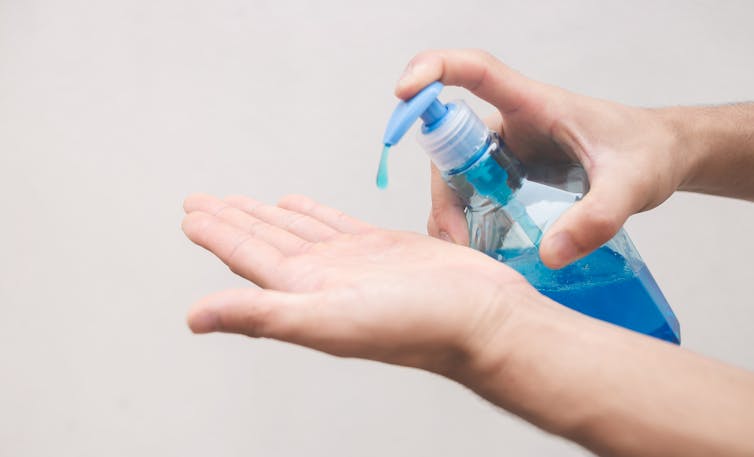
To slow the spread of coronavirus we’re being told to wash our hands more, preferably with soap and water, or failing that, with hand sanitiser. The resulting rush to buy hand sanitiser has led to empty shelves in supermarkets and chemists. But it hasn’t taken long for recipes for hand sanitisers to appear online. But do they work?

Let’s take a look at a popular one:

Combine in a bowl:

2/3 cups rubbing alcohol (99.9% isopropyl alcohol)

1/3 cup aloe vera gel

Stir. Decant into a soap or pump bottle

Give it a good shake every now and then.

Aloe vera is a moisturiser that will stop your skin drying out. That’s useful since cracks in the skin can increase the risk of bacterial infection. The main active ingredient in this sanitiser is isopropyl alcohol (isopropanol). Most commercial hand sanitisers contain either ethanol, isopropanol, n-propanol or a combination of any two.

Mixtures of 60%-80% alcohol by volume kill microorganisms, so the 66% alcohol concentration in the recipe looks about right if pure rubbing alcohol (also known as “surgical spirits”) is used. A quick look at Amazon, though, shows that it is usually sold as a pre-prepared working dilution between 50% and 70%, to be used directly on surfaces. Mixing even the 70% solution with the aloe vera will make the final alcohol concentration too low to be useful.

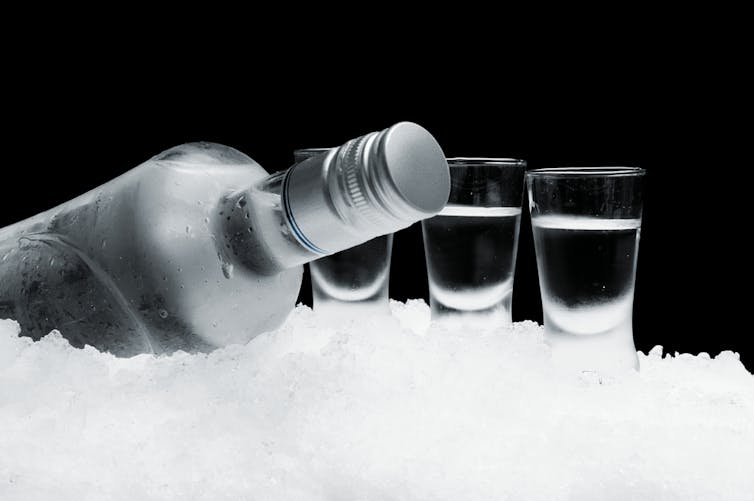
Although it’s hard to get hold of, pure ethanol could be used in the recipe instead of isopropanol. Ethanol is the alcohol found in spirits, and another homemade sanitiser that has gained some attention uses vodka.

Most vodka contains about 40% alcohol – not nearly enough for an effective hand sanitiser. But Balkan 176, the strongest vodka available in the UK, comes in at a staggering 88% ethanol. This could be used to make another 66% alcohol hand sanitiser with three parts vodka to one part aloe vera. At around £45 for 700ml it would make an expensive product, but since it was sold out on all the sites that we looked at, maybe there’s a market for it.

Not to be rubbed on hands.
Tadeusz Wejkszo/Shutterstock

A 2017 study showed that both ethanol and isopropanol preparations made to the official World Health Organization (WHO) formulations inactivate the Sars and Mers viruses, which are coronaviruses related to the one that causes COVID-19. These formulations contain final concentrations of either 80% ethanol or 75% isopropanol along with 1.45% glycerol and 0.125% hydrogen peroxide.

Everything in these formulations is mixed in distilled water or simply cold boiled water. The hydrogen peroxide is used to inactivate any contaminating bacteria in the mix but is not an active ingredient in the sanitiser. The glycerol is a humectant, a substance to help retain moisture, and can be replaced with any other emollient or moisturiser to help with skincare – including aloe vera.

Compared with WHO formulation

How do these homemade recipes compare with the WHO formulations? Well, not too bad since both contain the alcoholic active ingredient and an emollient. The problem might be that the 66% alcohol concentration is towards the lower end of the effective range.

Studies have shown that higher alcohol concentrations work better, and we know that the WHO 75% isopropanol or 80% ethanol formulations can kill other coronaviruses. The homemade products may not be strong enough to inactivate the virus quite as effectively as the WHO formulation. On the other hand, some commercial hand sanitisers contain as little as 57% alcohol, so these homemade products would be better than that.

In our opinion, if you want to make a homemade hand sanitiser you should go with a modified version of the first recipe, upping the rubbing alcohol to the WHO-recommended concentration: three-quarters of a cup of isopropanol and a quarter of a cup of aloe vera gel. You could even substitute glycerol for the aloe vera gel. It’s cheaper, but it won’t smell as nice.The Conversation

Shobana Dissanayeke, Senior Lecturer, Biological Sciences, Royal Holloway and James McEvoy, Senior Lecturer, Biomedical Sciences, Royal Holloway

This article is republished from The Conversation under a Creative Commons license. Read the original article.

Like this article? Subscribe to ZA Confidential to receive our newsletters.  Twitter:  @zaconfidential  


It’s always darkest before the dawn. The hidden gift of Covid-19

Covid-19-coronavirus-spc pacific community cps communauté du pacifique santé health jipé le bars

By the Council of Conscious Leaders

The undertones of fear and insecurity that permeated our everyday conversations of late had finally come to a head with President Cyril Ramaphosa’s declaration of the country’s National State of Disaster status. The potential magnitude and severity of the Covid-19 pandemic and the President’s timeous intervention have instilled the nation’s faith in his leadership.

Never before in our modern history have we been plunged into such uncertainty and pressure.  However, there is a profound opportunity to change the course and psyche of a nation that would hopefully usher in a new age of consciousness rather than an era of malevolence.

It is in the essential understanding of consciousness that changes the breadth and depth of a nation’s idea of itself with a morally untainted view to muster the courage to ‘do the right thing.’ In that rare spark of awakening, and in the actions and behaviour of human-beings lies the secret of our salvation to navigate this critical time.

The Conscious Companies Council of Conscious Leaders, that include: Brenda Kali (CEO: Conscious Companies); Merrick Abel (CEO: Primeserv); Luc-Olivier Marquet (CEO: Unilever); Adam Craker : (CEO: IQbusiness); Richard Firth (CEO: MIP Holdings); H.E. Jong-Dae Park (Ambassador to South Africa: South Korea); and Michael Judin (Chairman: Conscious Leadership Academy), collectively urge: In view of this global malaise, we need to heed the Dalai Lama’s appeal at the recent Conscious Leadership and Ethics Summit when he said:

‘Indeed, it is all too evident that while there has been much material development in the world, our moral and inner development has not kept pace. In organisations, despite working together, many people feel lonely and stressed. I believe that our strong focus on material development and accumulating wealth has led us to neglect our basic human need for kindness and care. As participants in the same global economy, we depend on each other. What’s more, as human beings, we are physically, mentally, and emotionally the same. I consider our tendency to see each other in terms of “us” and “them” as stemming from ignorance of our interdependence.”

The Council continued: “We live in extraordinary times…..and the disastrous economic repercussions of the Corona Virus (COVID-19) lockdown on business, big and small is yet to reverberate around the country. Amid the global panic, fear, confusion and lockdown, there needs to be a dramatic shift from the dominant ethos of power and profiteering to a balanced and conscious one. Ethical, conscious action by leaders to re-calibrate the social impact of business, who rally around and inspire their workforce to do things differently – will be the ones to emerge from all of this partially unscathed.”

Brenda Kali CEO of Conscious Companies says: “The emotional and psychological well-being of those affected and all of us in lockdown mode is of paramount importance. This is an opportunity to turn within and explore that missing element that is unquenchable in either the accumulation of wealth, status or the pursuit of positional power and the dissatisfaction in one’s existence. That is only possible in the sound of silence and reflection. Playing the witness to one’s own thoughts and life, to understand the meaning of inner peace, and to truly experience one’s authenticity and a flawless serenity of the mind is the hidden gift of COVID-19.”


Corona: The Virus That Might Save Eskom.

img_4142
Eskom: a national disgrace

By John Fraser

They say every cloud has a silver lining.    Well, Eskom could sure do with several hundred of those.

Corruption, incompetence, political ineptitude have all contributed to the power crisis which has recently meant rolling blackouts, often day and night, for we South Africans.

If you analyse this problem with basic economics, we have a crisis of supply and demand – far too often there is not enough supply to meet demand, so they turn the lights out.

We have a Department of Energy which could help to boost supply by unleashing a flood of renewables projects, but Minister Gwede Mantashe is a disgrace, occasionally spouting the right rhetoric, but doing bugger all in practice.

So, if supply can’t be boosted, how about demand?

Well, the stock markets have been plummeting, bans on travel are multiplying, and it looks as if the SA economy is sinking into an even deeper pothole of shit than had previously been thought.

Bad?  Not entirely.

If, as my primitive economics tells me, the economy falters, so will the demand for electricity.

The white knight of deeper recession rides to the rescue of Eskom.

Of course, this is not inevitable.   The virus could severely impact Eskom staff, further reducing the reliability (not often this word is associated with this cash-guzzling monster) of supply.

If, and let us hope this is so, curbed demand relieves some of the pressure, long, long, long overdue maintenance could be fast-tracked.  And that would be excellent in the longer-term.

Agreed, none of this compensates for the misery, loss of life, loss in prosperity, loss of liberty, which this virus will bring.

But it is nice to have a bright side.

Now go and wash your hands.

PS.  It may be in terrible taste but was never meant to cause undue offence:  our podcast tasting of Corona beer is lurking on the ZA Confidential website.   It was recorded just a few days ago, and how things have changed.   Put on a face mask, and give it a listen.

Like this article? Subscribe to ZA Confidential to receive our newsletters.  Twitter:  @zaconfidential  

Corona Beer. Is it nicer than the virus?

corona-on-d-beach
How is your beer?

By John Fraser

The Corona beer brand has taken a hammering because of the virus which bears a similar name.

Does it deserve such harsh treatment?   We found out in a tasting, introduced by Michael Olivier.  Guest tasters are analyst Chris Gilmour, brander Jeremy Sampson and IT superstar Malcolm MacDonald.

Click below to learn the worst…

Like this podcast? Subscribe to ZA Confidential to receive our newsletters.  Twitter:  @zaconfidential  

Do also check out:  http://www.michaelolivier.co.za