Whereas income tax or corporate tax have thresholds below which your earnings are not plundered, VAT applies to all purchasers of goods and services. There are a few ‘zero-rated’ exemptions for sanitary pads, bread flour, cake flour and a limited list of other necessities.
(Bizarrely, my own necessities of whisky, red wine and foie gras do not receive the same humane treatment.)
Rich or poor, black or white, male or female – paying VAT on most stuff is as inevitable as death. It is unfair but is seen to be a necessary instrument for topping up the government coffers.
Which is why Tito Mboweni’s looming budget – due to be inflicted on us all on the 26th of this month – is going to be a tough one.
Accountancy firm PwC believes that even with some spending cuts, and taking into account tax rises which are already in the pipeline, around R25bn more will have to be raised.
Some of this from VAT.
The only question is whether the Finance Minister Tito Mboweni will take VAT up from the current 15% to 15.5% or to 16%.
“There will be no option but to pull the VAT lever,” warned PwC tax supremo Kyle Mandy.
And his economist colleague Lullu Krugel agreed there are tough times ahead: “This is the toughest budget since 1994,” she argued.
These are not lone voices, crying in the wilderness. No one seriously believes that we can have a soothing, pain-free budget on the 26th.
Given the plague-like indiscrimination of VAT, this tax-hike which is so widely expected will hit customers in shabeens and in the plushest of restaurants, shoppers in Spaza stores and in Woolworths.
Like government corruption, it will be impossible to escape.
That’s VAT.
Enjoy this article? Subscribe for free to ZA Confidential to receive our newsletters: Click here. Twitter: @zaconfidential
With South Africans facing daily misery due to rolling power cuts, and power utility Eskom in the deepest financial doo-doo, it would be nice to think that our banks would be riding to the rescue.
Solar panels are one of the cleanest and greenest ways of energy generation – but where are the aggressive ads, the phone campaigns, the prompts every time you log-on to internet banking to see how broke you are?
The economic case for solar installation/conversion is increasingly compelling.
As the cost of Eskom-generated electricity shoots up in multiples of the inflation rate, the cost of solar installations is steadily falling.
Yes, there is a high initial outlay, but the business case for reducing your dependence on the grid is strong.
Add the bonus that home-generation reduces both consumption from, and reliance on, Eskom – and you have a winner.
In time we will be moving to more and more ownership of electric vehicles. These need charging, and what wonder if you can do this from the sun, instead of relying on the unreliable, and costly, Eskom.
Add a few storage batteries to your kit, and you can keep the lights burning and the TV blaring throughout the period in which Eskom decrees that you should sit in the dark.
But back to the financing…..
Banks and related institutions are falling over one another to offer (the solvent) loans to buy houses and cars.
These can be structured so that there are manageable monthly payments, and once the loan is paid off, the customer owns the asset.
But where are the finance packages for converting your home to solar?
They may exist, but they are bloody well-hidden.
What I want to see is a crusade by the banks to pour funds into lending cash for solar conversions – not just in homes, but for commercial buildings as well.
Just as you are steered towards financing when you buy a car, so there should be an oven-ready, simple and affordable finance deal on offer to every eligible home-owner with solar aspirations.
Solar is the future.
If only the banks would stop living in the past!
Enjoy this article? Subscribe for free to ZA Confidential to receive our newsletters: Click here. Twitter: @zaconfidential
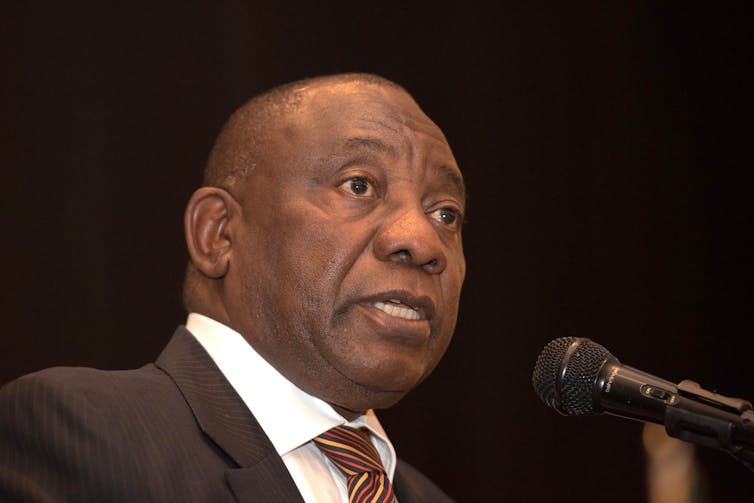
The spotlight will be firmly on South African President Cyril Ramaphosa as he runs the gauntlet of delivering the annual state of the nation address on behalf of the governing party, the African National Congress (ANC), and his government on Thursday.
This year’s speech is light-years removed from the promise of a new beginning he offered in his first state of the nation address in February 2018. This was delivered soon after he took over from Jacob Zuma. The hope then was that constructive new policy initiatives and definitive repair of damaged state institutions would emerge.
In contrast, all indications are that South Africa’s political and financial landscape is parched. Yet it is Ramaphosa’s job in the state of the nation address to highlight the silver linings. It is, after all, a pre-election year. South Africans go to the polls to elect a new local government in 2021.
Ramaphosa will undermine his own prospects as well as those of the ANC if he and the governing party cannot create reasons for voters to keep on believing that the ANC is able to bring change.
This won’t be easy given the odds are stacked against the government having what it takes to fix South Africa’s problems. There is growing cynicism among citizens – and a good reason for the despondency.
Many of the country’s problems have become intractable: political and economic conditions in the country remain stark. And the areas of action and hope identified last year have not responded favourably to the promises that were made and plans that were announced.
In fact, there has been a regression.
Despite this, the president needs to present new approaches and put a fresh spin on the ANC’s stabs at stubborn problems. He needs to offer assurances that the core problems are being addressed on a scale that will make an actual difference.
The list
The set of interrelated issues that beg to be addressed definitively in this year’s speech, Ramaphosa’s fourth, include:
poor economic growth that is draining jobs instead of creating new opportunities,
a handful of state-owned enterprises that continue to bleed the fiscus and sabotage the economy,
Unacceptably high levels of crime, femicide and general lawlessness,
an energy crisis that’s demoralising the citizenry and sapping business confidence, and
concerns that land reform proceeds haphazardly, torn between possible lapses in constitutionalism and an executive that wants to score political points – while many citizens remain deprived.
This set of problems, at a minimum, need definitive announcements that will show that the ANC government is capable of extracting South Africa from the quagmire.
Ramaphosa and his government need to reallocate funds to make the necessary interventions work and ensure improved state efficiency and effectiveness.
It is a tall order.
But who is in charge?
The challenge to deliver a persuasive speech comes firstly in the context of intense doubts as to whether Ramaphosa is truly in charge of the ANC. Or who else is, if he’s not.
ANC secretary-general Ace Magashule and his faction, acting as the actual political opposition, has only got a fraction of the popular support that Ramaphosa has. Despite agitation against Ramaphosa within the ANC, he remains the pull factor that brings the party more popular support than it would have without him. He helps the ANC retain its dominance.
The ANC’s factionally-indulgent policy wars, whether on land reform or stake-holding and mandate of the SA Reserve Bank, also advance the perceptions of ANC weakness and leadership indecisiveness.
Major surprises during the state of the nation address have also been minimised by the fact that the ANC has been through a thorough internal process to identify key policy areas, and what it wants to focus on.
This process started on January 8 when Ramaphosa delivered the ANC’s annual anniversary statement. It highlighted the priorities of the ANC-in-government for 2020.
This was followed by a meeting of the ANC’s national executive committee, the party’s highest decision-making body in between its five-yearly national conferences. Speaking on the outcome Ramaphosa assured South Africa that the party deliberations had
forged a clear and concrete programme to address the challenges the nation faces.
He admitted that the ANC had “fallen short” in implementing its policies and had “devised realistic measures to address these”.
The next step in the process was the adoption of a set of proposals by the ANC’s national executive lekgotla. This annual gathering precedes the cabinet lekgotla and informs the agenda of the government for the year ahead.
The plans that emerged were recognisable from previous plans. These included the proposal to rationalise state-owned enterprises. For example, the unbundling of Eskom, the troubled power utility, seemed to gain momentum from the national executive committee and lekgotla deliberations.
What exactly the outcome will be remains unclear, however, as the labour federation Cosatu, has tabled its own plan. This is against unbundling Eskom. Cosatu is the ANC’s governing alliance partner, along with the South African Communist Party. Its proposal for the power utility appears to be gaining momentum.
Further signs that the ANC is still not singing from one hymnbook came days earlier when Gwede Mantashe, the Minister of Minerals and Energy and in the top leadership of the ANC, floated the idea broadly of establishing a new government-owned electricity company and permitting businesses to generate power.
All this points to the fact that energy can be expected to be one of the state of the nation address pivots.
Limited options
Ramaphosa’s state of the nation address options are limited. Shrinking numbers of South Africans believe the ANC has solutions that would justify trust in the government.
A small way out for the ANC in 2020 going into 2021 will be to ensure that civil servants remain in their jobs. That will go a long way to ensuring that Cosatu remains a loyal governing alliance partner.
Another way out for governing party is to make sure that the social grant system, which benefits 17 million South Africans, remains lubricated and that Eskom keeps the lights on.
But given the enormity of what needs to be done, and what Ramaphosa can actually achieve, the state of the nation address is unlikely to confound the cynics.
Enjoy this article? Subscribe for free to ZA Confidential to receive our newsletters: Click here. Twitter: @zaconfidential
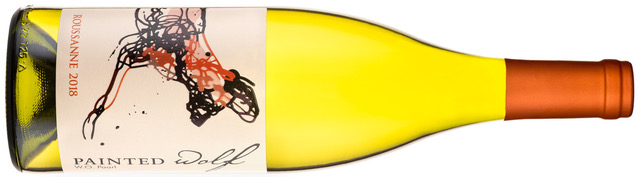
The podcast pack is back. Sampling a wine which honours the wild dog. It is a 2018 Roussanne from Painted Wolf – The Pack.
Guest tasters are economist Ian Cruickshanks, brander Jeremy Sampson, consultant Duane Newman, and IT superstar Malcolm MacDonald.
There is also an animated discussion of government support (hardly any) for the SA wine industry and some reflections on the too-slow transformation of the industry.
Click here to enjoy the fun:
Like this podcast? Subscribe to ZA Confidential to receive our newsletters. Twitter: @zaconfidential
Do also check out: http://www.michaelolivier.co.za
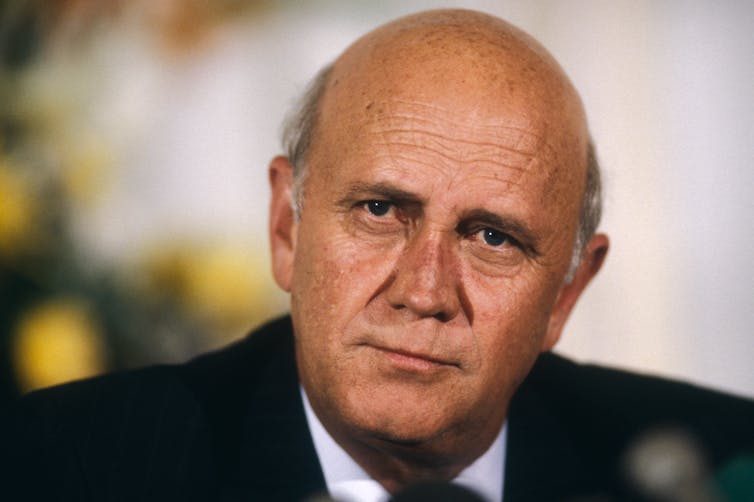
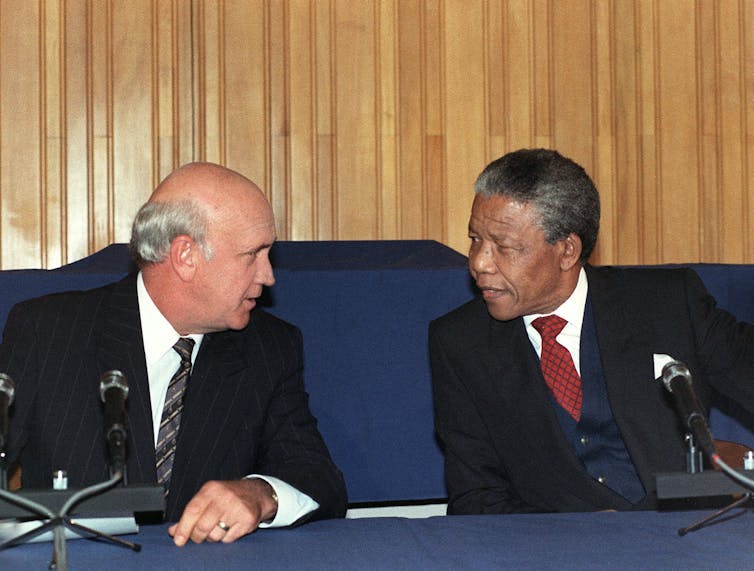
Thirty years ago, on 2 February 1990, a speech was delivered by then President FW de Klerk that marked the beginning of a radically new political landscape for South Africa.
In his opening address to parliament, De Klerk unbanned the exiled liberation movements, notably the African National Congress (ANC), Pan-Africanist Congress (PAC) and South African Communist Party (SACP). All had been embroiled in a fight against white minority rule. He also announced a moratorium on the death penalty, the end of the state of emergency – which had been in place for five years – and the release of political prisoners.
The speech set off a series of dramatic, and, until that point, unforeseen events. Nine days later Nelson Mandela was released from prison after 27 years. Within three months the first bilateral talks between the ANC and the De Klerk government happened.
De Klerk’s speech that day has often been portrayed as having happened because of a Damascene moment on his part: that is that he suddenly had a blinding insight that apartheid was bad.
My view is different: I believe that the speech was preceded by an array of developments that created an environment which either forced or encouraged him to make the epochal announcements.
Thirty years later, it is an opportune time to take stock of the historical significance of the 1990 speech. What insights can we gain from that single event, and what does it tell us about how history is made?
Apartheid was regarded as one of the most intractable international issues of the time. Hence its demise, to which De Klerk’s speech helped provide the impetus, shows that even the most seemingly intractable political problems can be resolved peacefully.
Impetus for change
The demise of De Klerk’s predecessor PW Botha, after suffering a stroke, on 18 January 1989, was a critical change in the dynamics. On 2 February 1989, De Klerk succeeded him as leader of the National Party (NP), which governed apartheid South Africa.
De Klerk immediately made changes to Botha’s military security paradigm by down-grading the State Security Council and its local structure staffed mainly by the military and police and restored civilian rule by the cabinet.
As the new party leader, he undertook an international tour after realising the extent of the international community’s abandonment of National Party rule. He met then UK Prime Minister Margaret Thatcher in 1989. She made the urgency of Nelson Mandela’s release clear to him.
In the ANC, too, changes were underway. The liberation movement took the initiative in the form of the Harare Declaration, its framework for a democratic transition in South Africa. It publicly showed the ANC’s willingness to negotiate and not to rely mainly on strategies like the “people’s war” and armed struggle to bring an end to apartheid.
The ANC wanted to take the initiative in moulding a transition framework. The declaration was adopted by the Organisation of African Unity in August 1989 and later by the Commonwealth in October 1991.
Prelude to change
Other developments in the background provided an impetus to De Klerk’s announcements. These included talks-about-talks in three separate processes between the NP and the ANC. South Africans knew nothing about these encounters.
The first was a series of meetings between Mandela and Justice Minister Kobie Coetsee and his team. It included talks about his release as well as Mandela’s views on a range of policy matters.
The second process was in the form of a number of meetings in Switzerland in the late 1980s between ANC leaders such as Thabo Mbeki, Jacob Zuma and Joe Nhlanhla, with senior officials of South Africa’s National Intelligence Service.
The talks explored the ANC’s thinking on important matters like the economy and the armed struggle. With these talks both sides could determine whether there would be sufficient common ground for a dialogue.
FW de Klerk and Nelson Mandela were awarded the Nobel Peace Prize in 1993 for their role in South Africa’s peaceful transition. Getty Images
The third process was a set of meetings in the UK between the ANC under Thabo Mbeki, and groups of Afrikaner intellectuals coordinated by the academic, Willie Esterhuyse. As a civil society grouping with direct access to the National Party government, they explored the same topics as the Swiss talks.
In hindsight, this process served to legitimise future dialogue, both for the National Party government once official dialogue was publicly announced, and for the Afrikaans community, which respected its intellectuals.
All these talks helped the leaders on both sides view one another as fellow human beings capable of working together. They also clarified their views and strengthened the credibility of dialogue as a way to break South Africa’s political stalemate.
Internal turmoil, external pressure
Domestic factors also played a big role in De Klerk’s decision to deliver his momentous speech.
But the heavy-handed approach failed to pacify the townships, leading to a stalemate that hurt both the apartheid regime and its opponents.
The other domestic development was the impact of the United Democratic Front formed in 1983, which united several anti-apartheid organisations, effectively under the banned ANC’s banner.
Public disillusionment with the state of emergency – and a general realisation that the National Party government had exhausted all its options – deepened the stalemate.
De Klerk responded by meeting leaders of the then Mass Democratic Movement, which brought together the United Democratic Front and the trade union movement, led by Bishop Desmond Tutu among others, in October 1989. He also announced the release of ANC leader Walter Sisulu and all the other Rivonia trialists, except Mandela whose turn would come four months later.
A huge welcome rally was held for the Sisulu group outside Soweto. The event amounted to a de facto unbanning of the ANC. All its banned symbols were on public display. Sisulu and others’ speeches were unmitigated renditions of the ANC’s message.
Final push
Two international moments served as the final push for De Klerk. On 9 November 1989, the Berlin Wall fell. De Klerk later explained that this signified the end of Soviet socialism and its influence on the ANC. That meant the ANC would be less ideological and more open for negotiated compromises, making it the opportune time to negotiate.
Four months later, Namibia became independent under the leadership of the ANC’s ally, Swapo. At the time of De Klerk’s speech, most of the negotiations for Namibia’s independence had been concluded – with South Africa’s support. To some degree, a free Namibia was, therefore, a precursor to a free South Africa.
Pensions in South Africa have been on the rise for six and a half years. In December 2019, banked private pensions increased by 3.9% year-on-year to reach R7 071 in real terms.
While this value may seem insignificant, it does show that pensions have performed well in a country with low overall market returns in the last 5-6 years.
We are not talking about the number of people on a pension or even the number of private pensioners.
We are discussing the trend of private pensions that have helped senior citizens survive the weak economy relatively well.
Since June 2012, the BankservAfrica Private Penson Index (BPPI) has been recording South African pensions that are paid to those people who are retired but who saved a large proportion of their salary in the decade before retirement.
We often hear that people have not saved enough for their pension and our data tends to agree with that – as private pensioners receive roughly half the money from their pension than they had received as take-home pay.
Nobody will argue with any of the above statements. But here is the strange thing: pensions have beaten inflation 94% of the time. This is far more than salaries.
When our measurement of private pensions started, it showed that pensioners only banked about 40% of the level that their take-home pay had been. Now, more than six years later, private pensions are very close to 50% of take-home pay.
While the equity market has been in the doldrums for most of the BPPI, one would have expected pensions to struggle to keep up with salaries. But perhaps pensioners and their fund managers knew something. and kept more of the investments in interest-bearing instruments.
So, despite the poor economy, pensions have done remarkably well.
Many funds are not performing much above inflation. Yet pensioners are receiving higher than inflation payouts year after year! In the context of a weak economy, this is astounding!
While a large segment of our pensioners are retired civil servants and they receive a pension based on their final salary rather than investment returns (and their increases are linked to civil servant salary adjustments unlike the rest, who depend on investment returns), the fact is that an estimated two-thirds of our pensioners are subjected to returns in their pension funds or retirement pots.
Yet the average increase over nearly 80 months and on an annual basis has been 2.9% higher than inflation. This again is incredible, as the private pensions we monitor are after reductions by fund managers and other expenses.
So the strange case of ever-increasing pensions rests partly on favourable real rates while it relies far less on the stock market. Did pensioners know that the Johannesburg Stock Exchange (JSE) would not be a good investment, or were they drawing down their money too fast?
The latter could be the case, but since June 2012 there has been no evidence of a crash in private pension payments, which is what one would have expected after five years or so of fast drawdowns.
Moreover, our previous and unpublished data suggest increases were lower than interest rates and did not experience the same level of growth as the JSE’s recovery after the great recession of 2009.
While we cannot answer the question thoroughly, it does appear that interest rates and yields play a far more critical role in helping pensioners receive faster-growing payments than the inflation rate.
The last six and a half years have seen real private pensions increase by 21% and the average private pensioner is 18% better off! This is a truly remarkable story if one considers that take-home pay has increased by less than 5% over the same period!
BankservAfrica has the only monthly pension time series in the world. This provides ample evidence that even in a relatively young country, pensioners have become a more substantial group to target.
This is due to two factors: private pensions are growing faster than salaries (or at least take-home pay, as tax rates have effectively increased in the last six years). The other is that the number of pensioners is increasing while the number of formally employed is stagnating (at least from what is evident in our data).
The number of people receiving social pensions from the government is also growing and therefore private pensions make an ever more critical part of the SA consumer market.
With retrenchments very likely in the years ahead, pensioners will play an ever more significant role in the South African economy.
Mike Schussler is the founder of economists.co.za
Enjoy this article? Subscribe for free to ZA Confidential to receive our newsletters: Click here. Twitter: @zaconfidential
One of the shameful achievements of the African National Congress (ANC) in its 25 years of governing post-apartheid South Africa is that it’s living up to the political stereotype of what is wrong with post-colonial Africa – unethical and corrupt African leaders who exercise power through patronage.
The widespread corruption in post-apartheid South Africa is epitomised by what is now referred to as “state capture”. The effects of entrenched corruption are exemplified by frequent power cuts devastating the economy. Another example is the government’s failure to keep the trains running.
Democratic South Africa appears to have morphed into a fully-fledged predatory state. The lobby group Corruption Watch reported last year that more than half of all South Africans think corruption is getting worse. They also think the government is doing a bad job of tackling corruption.
Characteristics include using public office and resources to promote the private interests of ANC politicians and those connected to them. It also includes an entrenched culture of being untouchable.
Events in South Africa have echoes in countries across the continent. These range from the Dos Santos family in Angola to Mobutu Sese Seko’s decades of thieving in Zaire. Mobutu is credited with the invention of modern African kleptocracy.
Of course, African leaders are not the only corrupt political leaders in the world. For example, Noah Bookbinder, a former trial attorney for the US Justice Department’s Public Integrity Section, recently argued that US President Donald Trump’s
increasingly egregious abuses made 2019 one of the most corrupt years in US history.
But the fact of the matter is that sub-Saharan Africa is in a league of its own. In the 2018 Corruption Perception Index, published by Transparency International, it appears at the bottom. The report released with the index stated that the region had “failed to translate its anti-corruption commitments into any real progress”. In 2019, the region again appears at the bottom. Transparency International remarked:
Sub-Saharan Africa’s performance paints a bleak picture of inaction against corruption.
Moral decay
The ANC once represented a political tradition of opposition to apartheid rooted in altruism. But the events that have unfolded since it took over running the government in 1994 suggest that it has become a corrupt machine.
It seems the party appears intent on following in the footsteps of the likes of the late Mobutu.
State corruption has taken hold with utter disregard for ethics and democratic norms in cynical exploitation of the post-apartheid transformation agenda. For example, large-scale corruption is often framed around the liberation struggle rhetoric of empowering black people.
The reality is that the black elite enriches themselves and their families through government tenders and other questionable and unethical means.
Former president Jacob Zuma is the “poster boy” for this black kleptocracy. He and his associates, the Gupta family, captured the post-apartheid state with the sole purpose of exercising power to shape policymaking, and to control political institutions to their own advantage.
Dishonest politics has become a defining feature of post-apartheid politics while the legitimate fight against corruption is being made analogous to racism. It is a politics that is characterised by a lack of ethics, morals, and logic and has no legitimate place in a democratic society.
Yet it continues to trickle down to other societal institutions. Transport minister Fikile Mbalula recently described the Passenger Rail Agency of the country as a
broken organisation, struggling to provide an efficient and committed passenger rail service.
Meanwhile, South African Airways has been forced into voluntary business rescue after its working capital dried up and the national treasury refused another bailout.
Of course, the private sector is not corruption-free. Corporate businesses that have been associated with state capture include Deloitte, McKinsey, KPMG, Bain & Company.
The breakdown in social order reveals a dysfunctional political system that rewards sycophants, con artists, thugs, greed, and antisocial attributes.
The development of this patronage network is the product of the ANC’s cadre deployment policy. This values party membership over ability and probity.
Lessons from history not learnt
The history of democratic South Africa shows that the ANC has failed to learn from the experiences of post-colonial Africa, and thus avoid its unsavoury parts.
Instead, it has chosen to walk in the footsteps of other corrupt post-colonial African leaders. Small wonder that its frustrated citizens have turned to the courts to force the government to govern in their interests.
The latest example of this the Makhanda High Court ruling that the Makana Municipality be dissolved and placed under administration for failing to carry out its constitutional obligations to its citizens. The court found that the ANC-run municipality had failed to “promote a healthy and sustainable environment for the community”, as required by the country’s constitution.
More such political collisions between the country’s cherished democratic norms and the corrupt post-colonial political elites are needed to change the current political trajectory of corruption and incompetence. That is the only antidote.
What are South Africans to make of the murmurs that its governing party, the African National Congress (ANC), plans to recall Cyril Ramaphosa as president of the republic at its next National General Council in June? That’s where the party will meet to review if the government has implemented its policies.
Apparently, the motivation for the removal will be that Ramaphosa has not implemented the party’s 2017 national conference resolutions.
The mere suggestion of a recall is not surprising. The ANC has recalled two of its four previous presidents, Thabo Mbeki in 2008 and Jacob Zuma early last year. And, like his predecessors, Ramaphosa has formidable detractors within the party who see him as a menace to their livelihood and freedom.
There’s no doubting their determination to throttle the success of this presidency. But Ramaphosa’s detractors are unlikely to succeed in their rumoured bid. And, their failure will not be because they’ve suddenly become weak within the administration.
On the contrary, ANC secretary-general Ace Magashule, Ramaphosa’s main nemesis, is much stronger now than he’s ever been. He has appointed multiple individuals to bolster his grip. These are all individuals who’ve been marginalised by Ramaphosa’s presidency on account of malfeasance and, as a result, are similarly opposed to his presidency. They include former cabinet ministers Nomvula Mokonyane, Malusi Gigaba and Des van Rooyen.
Conversely, Ramaphosa’s influence in the ANC’s administration has been weakened by the departure of Zizi Kodwa, Senzo Mchunu and Fikile Mbalula from the ANC’s headquarters to cabinet.
The odds against Ramaphosa’s removal lie in several factors. These relate to the weakness of the supposed gripe, its timing and the likely backlash.
Ramaphosa has been persistently vocal on the land question and parliament is currently considering a bill to give effect to the resolution. Deliberations on the bill consider both fair and reasonable compensation as well as expropriation in the instance of refusing a fair price. Both these considerations are in line with the caution of the resolution that the land question be handled in a way that redresses the injustice of dispossession, without disrupting food supply.
A similar commitment is evident on the central bank. Ramaphosa has reiterated the intention to put the bank under public ownership, but only if there’s money to buy out the private shareholders. For any criticism on this point to gain support within the rank-and-file of the ANC, it must make a case for urgency and identify funds that should be diverted from what most would view as more pressing matters.
This will be difficult. Firstly, it’s proving hard to show that public ownership of the bank will allow government to influence the bank’s decisions. Even under state ownership, the resolution insists that the bank should still remain independent, which is also guaranteed by the Constitution. This questions the rationale for insisting on ownership without influence.
The truth is that the idea had little to do with policy. It was originally mooted by those wanting to protect the Gupta family as allegations of state capture mounted. The family’s beneficiaries in the ANC sought to gain control of the central bank so that its regulatory powers could be used to punish commercial banks that were closing the family’s accounts.
These efforts backfired. The Gupta proxies could not mount a convincing argument for removing the independence of the central bank. Now they have a resolution that is meaningless, but are simply insisting on fake bravado.
Besides the weakness of their gripe, Ramaphosa’s detractors are vulnerable on the same point they wish to use against him. There’s little movement on organisational reforms. These relate to, among others, modernising registration for party membership by taking it online to minimise manipulation. Another is to bolster the powers of the party’s integrity commission by making its recommendations binding, as resolved by conference.
These are all administrative matters that are handled by the secretary-general, Magashule. He is actually guilty of the charge that he seeks to throw at Ramaphosa.
Bad timing
Nor is the timing for removing Ramaphosa suitable. Local government elections are scheduled for next year. Most ANC-controlled municipalities are plagued by maladministration, and corruption is rife.
The blame lies squarely with the ruling party.
Take the Eastern Cape’s Makana municipality, for instance. The party ran that municipality into the ground and the provincial government, which has the responsibility to intervene, did nothing. It took the High Court to stem the rot by ordering that the Council be dissolved and the municipality put under administration for “failing to promote a healthy and sustainable environment for the community”.
Ramaphosa is currently leading an initiative that involves all levels of government to aid struggling municipalities. This initiative will most likely become the mainstay of the election campaign next year. The ANC is desperate to improve on the lowly 54% it received in 2016.
The various steps he’s taken, combined with his broader reform agenda, makes anyone who suggests his removal look deranged. Most in the ANC may be wrongheaded, but still want to remain in power. To retain power, they accept that they need Ramaphosa.
That said, Ramaphosa’s reelection at the next ANC conference in 2022 is not guaranteed.
Big risks ahead
Prospects of Ramaphosa’s reelection hinge on his public ratings. He is more popular outside the ANC. That’s why the ANC elected him in 2017: to win the 2019 election.
Once it appears that Ramaphosa no longer enjoys better public ratings, he stands a high risk of not being reelected party president, especially if the membership system remains unchanged. Most current members are rented – paid by one faction or another – to vote in one way or another.
Given this risk, it goes without saying that Ramaphosa needs to accelerate reforms. Most urgent is improving operations at the power utility Eskom. Power blackouts are the biggest source of unhappiness, and are spoiling the public mood. More importantly, they disrupt economic activity, leading to retrenchments. This, in turn, stifles the major promise of his presidency – job creation.
Unfortunately, reducing unemployment will take a while to achieve. This then makes fighting corruption, and the actual conviction of those implicated, key issues that will retain public support behind him. And he needs to urgently to take drastic measures to strengthen law enforcement agencies. National director of public prosecutions Shamila Batohi continues to face resistance, for instance, from some prosecutors within the National Prosecution Authority. They are stifling attempts at prosecuting cases arising out of state capture.
Ultimately, though, it is critical that Ramaphosa appreciates that salvation lies outside the ANC rather inside. He has to please the public more than his party. Public approval is his defence against enemies within.
The author’s new book, Anatomy of the ANC in Power: Insights from Port Elizabeth, 1990 to 2019, will be published by the HSRC Press in March 2020.
When Cyril Ramaphosa took over as president of South Africa in early 2018, there was a great deal of talk about a “new dawn”. But his term in office has failed to deliver, raising the question: has the legendary deal-maker lost his touch?
When Ramaphosa replaced former president Jacob Zuma many South Africans believed he would usher in a new era after the disastrous reign of his predecessor. The country and the governing African National Congress (ANC) both urgently needed rescuing from the malaise.
Ramaphosa inherited an unenviable hand from Zuma – state institutions had been weakened, the economy was in a parlous condition, the ANC was in internal turmoil, and the political elite regularly exposed for fraudulent and corrupt activities, which culminated in “state capture”.
Ramaphosa promised to rectify the situation through a series of initiatives. These included reforms to state-owned enterprises, economic growth and job creation as well as an anti-corruption drive.
Yet, two years on, very little has changed. In fact, things have deteriorated markedly. Even Ramaphosa was forced to admit that any positivity he once stimulated is now over.
His legendary negotiating skills have been incapacitated in the face of South Africa’s current predicament.
Public frustration
South Africa’s current predicament is well documented. It is characterised by interlocking crises encompassing growing unemployment, negative growth and unsustainable national debt. State-owned enterprises such as South African Airways and Eskom, the power utility, are failing. And, a “junk status” rating is looming.
Factor into this scenario a renewed series of xenophobic attacks against foreigners, the military deployment in Cape Town to curb gang murders, and a half-hearted response to the #AmINext movement protesting against gender violence.
Add to these the ongoing conflicts within the ANC, with leading cadres taking to Twitter to express their divergent opinions, and it is abundantly clear why there is growing public frustration with the Ramaphosa administration.
It was not supposed to be like this. Ramaphosa was the president who would save South Africa. Almost universally revered, expectations were running high that he would make use of his impressive political credentials, not least his record of past achievements that bore testament to his success as a deal-maker.
Deal-making skills
Ramaphosa has a formidable political pedigree that stretches back to his struggle activities in the National Union of Mineworkers in the 1980s, through to his contribution to the constitutional negotiations to end apartheid in the early 1990s.
These different experiences forged his reputation as a wily, tough and pragmatic deal-maker. Over the last 40 years, he’s shown time and again his ability to broker major deals. Just look at the wage concessions he extracted for mine workers and how he helped establish the basis for the country’s new Constitution.
Ramaphosa’s negotiating style is based on debate, building trust between participants, manipulating proceedings to his advantage and reaching consensus through rounds of dialogue. Even those on the other side of the negotiating table recognised his skill. Former apartheid-era President FW De Klerk once described him as “coldly calculating” and silver tongue[d]).
Compromise based on a position of strength is integral to the success of his negotiating strategy. Most notably this came to the fore during the challenging constitutional talks.
Ramaphosa had established a close rapport with reformist MPs from the National Party, which ruled the country then, such as Roelf Meyer. These men were willing to negotiate with the ANC. More importantly, they were willing to make significant compromises to achieve an end to white minority rule.
Talks, debate, and compromise were the foundations for these negotiated outcomes.
Different times
Competing economic and social pressures, as well as the internal battles within the ANC, don’t allow for Ramaphosa’s preferred style of negotiation or leadership to succeed. In retrospect, the belief that he could address the challenges by finding a common position through a debate-led strategy seems naive at best.
A key problem is that Ramaphosa is constrained by his tenuous control over the ANC, while the party elite is locked in a factional conflict for power and influence. The historic “unity” of the party is disintegrating as rivals such as Secretary-General Ace Magashule, threatened by the promised reforms and anti-corruption initiatives, undermine Rampahosa’s leadership.
There is no room for debate in this febrile atmosphere, and definitely no appetite to seek common ground when disloyalty from within the party is so prevalent. When power and survival are at stake, compromise as a negotiating position goes out the window.
The upcoming National General Council of the ANC, scheduled for June, will only threaten Ramaphosa’s position further. The conference is held halfway between the party’s national conferences, to debate the “strategic organisational and political issues” it faces.
Meanwhile, the economic and social challenges require tough and decisive action. Yet, the ANC’s January 8 statement marking its birthday, repeated old adages of unity, growth, employment and transformation. It offered nothing new in terms of vision or solutions.
Ramaphosa’s favoured strategies continue to be through commissions and joint working groups. Yet a consultative approach is time-consuming and will simply not succeed when space for debate is marginalised and vested interests are at stake.
Is there a solution?
Tough choices
Fundamentally an immediate change to his negotiating strategy and leadership is required. Although decisive action is not in his playbook, Ramaphosa can no longer hope to appease everyone through consensus-based leadership. Structural reforms to prevent further economic decline are required quickly. These involve painful decisions and a stronger vision for the future, none of which are evident at the moment.
But, to implement economic reforms and to strengthen anti-corruption initiatives will be immensely unpopular, especially among the ANC hierarchy. Many don’t support Ramaphosa. Others fear the loss of their patronage.
Unless Ramaphosa can exert control over a recalcitrant ANC to make difficult decisions, he’ll stay stuck in a no-win situation, caught between the need to avert economic meltdown or keep the party intact.
The choice ahead for Ramaphosa lies between what is best for South Africa, or for the ANC.
Food and wine guru to the stars Michael Olivier introduces a highly unusual white blend – the Spice Route Obscura 2019 – a qvevri wine.
Our guest tasters are Cova Advisory’s Duane Newman, economist Ian Cruickshanks, Clientele’s Malcolm MacDonald, and the man with the brand Jeremy Sampson.
The panel also discusses the delights of the neighbouring farms of Fairview and Spice Route, and the importance of promoting wine tourism.
Click below to join in the fun.
Like this podcast? Subscribe to ZA Confidential to receive our newsletters. Twitter: @zaconfidential
Do also check out: http://www.michaelolivier.co.za







 ZA Confidential