South Africa’s stimulus package shows power is finely balanced in the ANC

File 20181005 72127 1d65knd.jpg?ixlib=rb 1.1
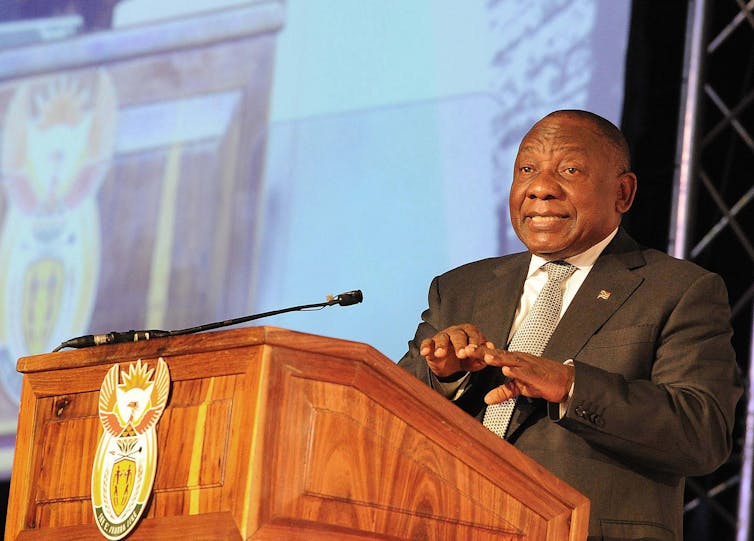
Cyril Ramaphosa’s economic stimulus package shows that he and his political allies are in charge of economic policy.
GCIS

Steven Friedman, University of Johannesburg

The economic stimulus package announced by South African President Cyril Ramaphosa shows that he and his political allies are, contrary to much analysis in recent months, in charge of economic policy.

Ramaphosa insists that it is a ‘bold’ attempt to initiate economic change which will particularly benefit youth, women and small businesses . It rests partly, he adds, on ‘significant regulatory reform’.

But the package is more interesting for what it says about the politics of economic decision-making in South Africa’s governing African National Congress (ANC) than for its likely impact on the economy.

Certainly, it does not signal readiness by Ramaphosa and his allies to use their power to introduce much-needed reforms. In an article in the financial press explaining the thinking behind the package, Ramaphosa acknowledged that it rested not on new ideas but on trying to get the government to do what it has already said it will do. He wrote that it was “tempting to unleash novel policy directions” but it was far more important “to build a track record of successful implementation.”

Much of the package depends, therefore, on trying to ensure that government lives up to commitments it has already made – on, for example, funding infrastructure and allocating broadband spectrum licenses – rather than striking out in a new direction.

It is hardly surprising, then, that critics to the President’s left complain that there is no change in the government’s market-friendly approach. Indeed, a business chamber noted that it repeated much that the government had been promising to do over the past five years. The package does not depart from the policy framework which has guided government thinking on the economy for more than two decades.

This might make it seem like a non-event. In reality, the background to the package means that it is politically important.

Timing

The package’s details were announced in late September two months after Ramaphosa first announced it was on the way. At the time, he also revealed that the ANC had changed its mind and would seek a constitutional amendment to allow it to expropriate land without compensation, having previously insisted that it did not need to change the constitution to do so. Both announcements followed a meeting of the ANC’s national executive committee which makes decisions between conferences. This strongly suggested that the national executive committee had insisted on both the land and the stimulus decisions.

This seemed to send an important message on the balance of power within the national executive committee on economic issues – that Ramaphosa and his allies had been caught off guard by supporters of former president Jacob Zuma.

Ramaphosa narrowly won the ANC presidency, whose leadership, including the national executive committee, is divided almost evenly between his supporters and those who backed Zuma. His backers, who are inclined towards a market economy approach, are opposed to the patronage politics of Zuma’s faction, which has come to be associated with corruption and ‘state capture’ (using government for personal enrichment).

Ramaphosa’s chief mandate was to tackle corruption and ‘state capture’ and it was assumed that the Zuma group would try to stop him. But his opponents seem to have shifted their strategy. Instead of, as expected, complaining that anti-corruption measures were doing the bidding of white-owned corporations, they demanded change on policy issues such as land. This seemed to have wrong-footed Ramaphosa and his supporters, forcing them to react rather than to steer the ANC’s agenda.

The stimulus package seemed to stem from the same source as the land announcement – a push by the Zuma group to shape economic policy. All of this suggested that the Zuma faction was successfully pushing ANC policy in a less market-friendly direction.

But the fact that the package is firmly within the current framework signals clearly that Ramaphosa and his supporters are, after all, in charge of economic policy. It shows that they decide the government’s response to economic challenges despite the Zuma faction’s strong presence.

This does not mean that they are directing the ANC and government economic agenda. They still seem to be reacting to pressures for policy change from their rivals.

This is not surprising. Poverty and inequality are still strong realities in South Africa and many black professionals and business people still believe that they do not enjoy equal opportunities. If Ramaphosa and those who agree with him simply dismiss the calls for change, they will appear to be defending the indefensible. This allows its opponents to insist on government action – but they do not control the details when the decision to take action is turned into a concrete policy or programme.

That they were able to decide the details of the stimulus package is important if we bear in mind that the economy is in recession, which should increase pressure for more government spending – a pressure which they resisted. And, if they are able to shape the details of the stimulus package, it seems likely that they are equally able to shape policy changes on land and other issues, such as national health insurance, which are likely to be sources of pressure for change in the near future.

What is not clear is whether they are able to decide what will change – rather than just react to what their opponents want. To do this, they need to move beyond their current framework and to seek to take the economy in a new direction, which would tackle the exclusion of millions from its benefits while preserving, and strengthening, its ability to produce.

Need for a new path

It is now widely agreed that a new path is needed. Ramaphosa’s group will, therefore, remain on the defensive as long as the voices insisting that change is needed are those of their opponents. There is no contradiction between taking seriously the need for growth and investment and steering the economy in a direction which will open opportunities for many more people. On the contrary, the one depends on the other.

Given this, the voices calling for change – as well as those deciding what form it should take – should be those of the faction which insists it wants to get the economy working for all. It should not wait for the group which sees calls for radical change as a means of siphoning off the public’s resources to a small group of connected people to place the need for change on the government’s agenda.The Conversation

Steven Friedman, Professor of Political Studies, University of Johannesburg

This article is republished from The Conversation under a Creative Commons license. Read the original article.

Like this article? Subscribe for free to ZA Confidential to receive our newsletters: Click here
We really can do without a Cyril Stamp

It is not often that we see an intelligent bloke associate himself with a bunch of idiots, but our President has done just that.

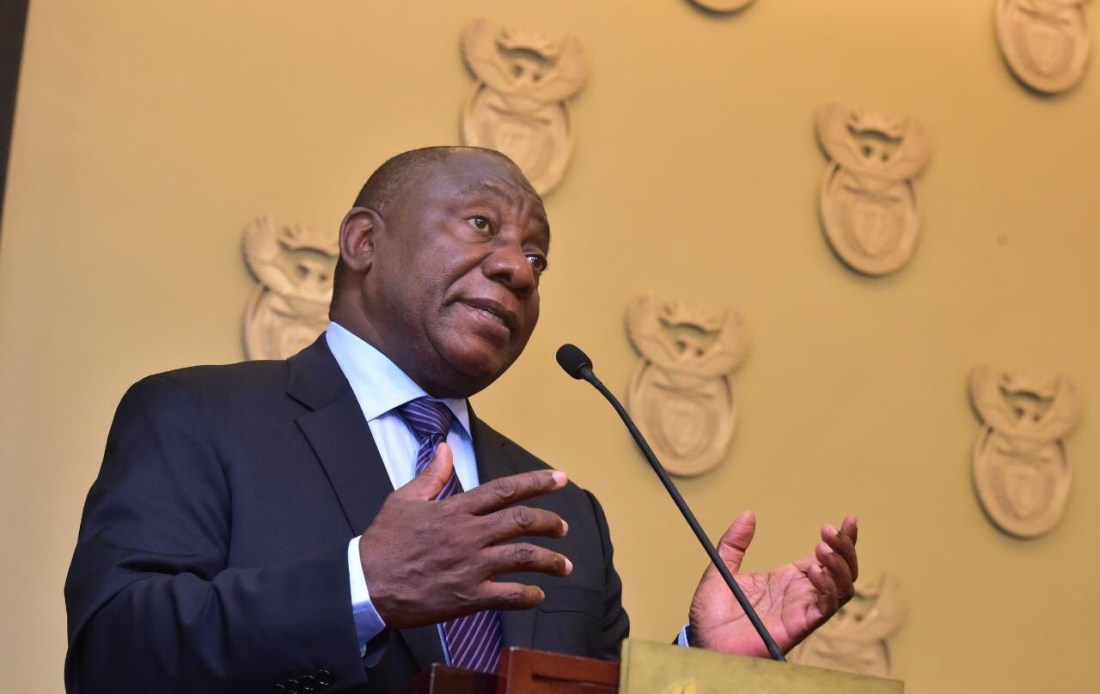
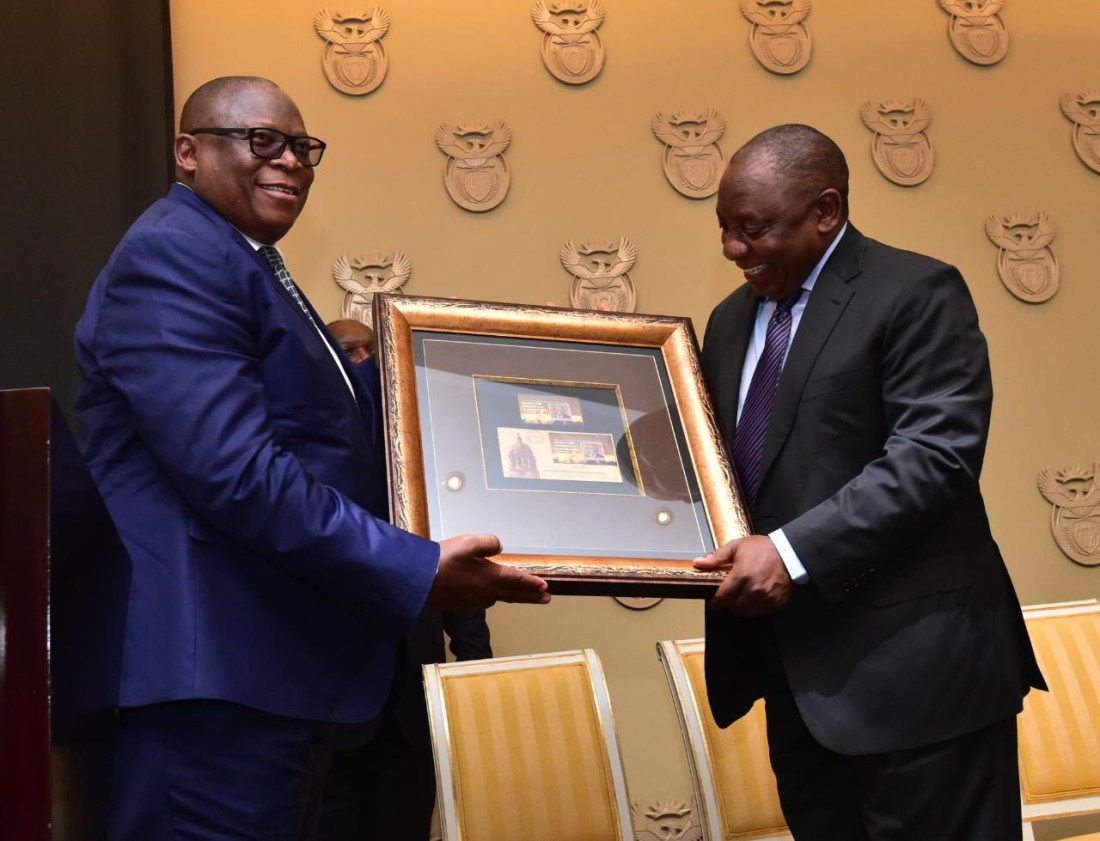
I am not referring to his Cabinet Colleagues, however tempting that may be, but to Ramaphosa’s participation in a ceremony to unveil the new Cyril Stamp.

Does he deserve a postage stamp displaying his image?

I don’t really care a lot, but I suppose so. At least it is one thing you can give to a billionaire, who can afford pretty much anything else.

But….. And it is a big but. I just cannot bear to see him sharing a ceremony with the Post Office.

It is not an institution which has the respect of many of us. Delayed home deliveries. Parcels going missing. And when you enter a Post Office branch, it has a Medieval feel. Judging from their disposition and manner, you wonder whether the staff have been employed…or enslaved?

And what can one say of a stamp? Pretty things. I once collected them.

But when did I last buy a stamp? Dunno. May have been a year ago; maybe longer.

The Post Office does efficiently hand out vehicle licence documents. And it has been given a vital role in the distribution of Social Grants. Which makes me very, very nervous indeed.

Possibly the one big benefit of the new Cyril stamp is that it will have so few using it to pay for postage that it may soon become a collectable rarity.

But to mingle the Ramaphosa Brand with the Post Office Brand?

Really, Mr President. What were you thinking?

I am afraid your latest association with the Post Office does not get the ZA Confidential stamp of approval.

Like this article? Subscribe for free to ZA Confidential to receive our newsletters: Click here

Five popular hangover cures, reviewed by experts

File 20180921 129871 ag7c7f.jpg?ixlib=rb 1.1
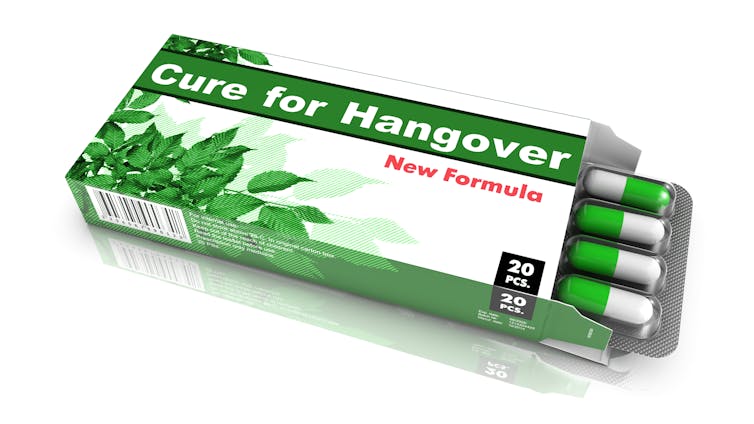
Ouch! Never again…
Shutterstock.

Sally Adams, University of Bath and Craig Gunn, University of Bath

It’s a common misconception that hangovers are mainly the result of dehydration. An evening of heavy drinking can lead to inflammation of the stomach and intestines, poor-quality sleep and the production of toxic substances that lead to vomiting, sweating and an increased heart rate. Research also suggests that hangovers can hamper the ability to concentrate and remember information.

What research has not given us, though, is credible evidence for a “hangover cure”. The revels of freshers’ week will have many bleary eyed students reaching for a remedy, so here’s the evidence behind what works – and what doesn’t.

1: Water

What have I done?
Shutterstock.

Dehydration is one of the most frequently reported symptoms of hangover. Alcohol is a diuretic – in other words, it makes us urinate more often. Having around four drinks can eliminate between 600 and 1,000mL of water from your body.

Heavy alcohol consumption can also cause sweating, vomiting and diarrhoea, which also cause the body to lose fluids. As a result, dehydration leads to symptoms including thirst, weakness, dry mouth and light-headedness.

Drinking water may relive some of these symptoms, but dehydration is also typically accompanied with electrolyte imbalance. A combination of water and an electrolyte supplement can therefore tackle some of the symptoms of your hangover – but by no means all of them.

2: The old-fashioned fry-up

Get in my belly.
The-E/Flickr, CC BY-NC-ND

Perhaps one of the most traditional remedies for a hangover is a plate of greasy bacon and eggs. But is the fry-up the holy grail of cures it promises to be? Foods such as bacon, eggs and even broccoli contain an amino acid called “cysteine”, which scientists claim can decrease the amount of the toxic chemical “acetaldehyde”, which is produced as your body metabolises alcohol.

Acetaldehyde contributes to hangover symptoms such as increased heart rate, nausea and vomiting, but there is very limited research supporting the benefits of certain foods as hangover cures. That said, eating a meal with protein, fat and carbohydrate before alcohol consumption has been shown to slow the absorption of alcohol, so as the old saying goes it may good to “line your stomach”.

3: Caffeine

When coffee doesn’t come through for you.
Shutterstock.

One of the reasons we feel so awful after drinking is down to the effects that alcohol has on our sleep. Alcohol-induced sleep can be shorter and poorer quality, but the tiredness you feel can be reversed by the nation’s favourite stimulant – caffeine.

Evidence suggests that people who regularly drink caffeine develop a physical dependency to the drug, which explains why some people need their morning fix. But for these people, a cup of tea or coffee during a hangover may not be enough to address the deficits in thought processes and reaction times.

There’s also evidence to suggest that people who don’t usually have caffeine do not have the same effects of improved performance and alertness seen in regular users.

4: Hair of the dog

Are you sure that’s a good idea?
Elsie esq./Flickr, CC BY

During a hangover, many people will say “I’m never drinking again” – but others swear by the “hair of the dog” to relieve their symptoms. The fact is, drinking during a hangover can be downright dangerous. Vital organs such as the liver need time to repair the damage caused by a session of heavy drinking. Government guidelines recommend that you should avoid alcohol for 48 hours after a heavy drinking session.

What’s more, using alcohol to “cure” a hangover could be indicative of an alcohol use disorder. Evidence suggests that getting more frequent hangovers is associated with an increased likelihood of developing problems with alcohol. It’s not clear whether the hangover itself is what causes the problem drinking, or repeated heavy alcohol use. Regardless, as far as hangover cures go, this one is not recommended.

5: Medicine

Yeah, no.
Shutterstock.

Recently it seems more and more pharmaceutical products are being marketed to drinkers which claim to relieve hangover symptoms. These products often claim to work by increasing the speed at which one’s body gets rid of the toxic chemical acetaldehyde. These cures also claim to reduce inflammation and address the chemical changes in our brain causes by alcohol that can impact our thought processes.

It should hardly come as a surprise that there is currently no evidence that any conventional or complimentary medicine can cure a hangover. It is unclear whether this is because these cures do not work or because their effectiveness has not been fully tested.

So, although these popular remedies may offer some relief from the symptoms of hangover, there’s no evidence-based treatment or “cure”. A hangover is a complex combination of physical and psychological symptoms, which are caused by several different processes in the body and brain.

What’s more, few hangover treatments address impairments in concentration, memory and reaction times, or the low mood and increased anxiety frequently reported by sufferers. The only surefire way to avoid “the morning after the night before” is to drink alcohol in moderation – or not drink it at all.The Conversation

Sally Adams, Lecturer in Health Psychology, University of Bath and Craig Gunn, PhD Candidate, University of Bath

This article is republished from The Conversation under a Creative Commons license. Read the original article.

Like this article? Subscribe for free to ZA Confidential to receive our newsletters: Click here
Social media is making it harder to protect the identities of suspects

File 20181005 72133 i0j15o.jpg?ixlib=rb 1.1
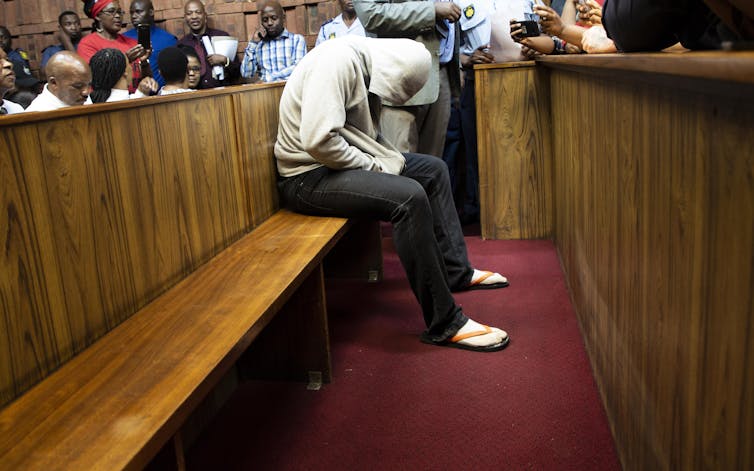
A man accused of raping a seven-year old child at a restaurant in South Africa makes his first court appearance.
Eyewitness News/Christa Eybers

Jameelah Omar, University of Cape Town

A controversy is raging in South Africa over the naming of a man accused of raping a seven-year old child at a restaurant in Pretoria before he had appeared in court. His name and photograph were widely circulated on social media. At least two major Sunday newspapers identified him. The Conversation Africa asked Jameelah Omar, a criminal procedure expert, to explain what is and isn’t allowed.

What does the law say?

The country’s Criminal Procedure Act of 1977 prohibits the publication of the identity of the accused before they appear in court and plead. This is to prevent undue prejudice to a person before the prosecuting authority decides to prosecute.

Some information can be reported before the accused appears in court and pleads. But this is limited to information about an alleged crime, such as where it allegedly took place.

The act also stipulates that the identity of the complainant in a sexual matter must always be confidential.

Generally, criminal trials are public. In some cases, however, a court can direct that a criminal matter be heard behind closed doors (in camera), and that any person whose presence is not necessary will be barred from attending the trial. This is common practice in sexual offence cases given the sensitivity of the subject and the vulnerability of the complainant.

Even if a case is heard in camera, the name and personal particulars of the accused, the charge against him, the plea, the verdict and the sentence (unless the court directs otherwise) can all be reported.

Another law that sets down conditions for what can and can’t be reported is the South African Police Service Act. This prohibits the publishing of pictures (photos or sketches) of someone who is in custody on suspicion of having committed an offence before a decision to prosecute has been made or criminal proceedings have started. But, in particular circumstances, permission can be sought from the national or provincial commissioner of police to authorise publication.

In the latest furore, both sets of laws were broken because people on social media circulated the name of the alleged rapist, as well as his photo before he pleaded in court. At least two major newspapers also broke the law by doing this.

Why is identifying suspects before they have pleaded a problem?

The rationale behind about banning the publication of details, particularly when it comes to sexual offences, is threefold.

Firstly, to (always) protect the complainant, secondly, to protect minors, and finally, to protect the accused (or any witnesses) if there is a likelihood that they may be harmed.

The prohibition of the accused’s identity before they plead has a slightly different rationale.

The logic here is that the prosecuting authority must be able to apply its mind as to whether there is, at face value, enough evidence. If there is sufficient evidence a prosecution should proceed. But this should happen without the pressure of a public outcry.

Should the prosecuting authority opt not to prosecute, the matter doesn’t go to trial? If the alleged perpetrator had already been named they would suffer reputational harm.

It’s of course frustrating if someone who people believe has committed a crime doesn’t get charged. But, the thing to bear in mind is that the law has to apply consistently for everyone. None of us would want our name to be spread through the media before we’ve appeared in court.

What about public figures and public interest?

The prohibition against identifying alleged perpetrators before they have actually appeared in court, and pleaded, doesn’t depend on who the person is. As soon as the accused has pleaded, their identity can be disclosed, regardless of the person’s public profile.

The prohibition applies to any person publishing details of a criminal allegation, not only the media. But media houses are more likely to be cautious about sticking to the law compared with ordinary people.

The rise of social media has brought about a whole new set of challenges. For example, it would be ridiculous to envisage charging every person who has shared the identity of an alleged perpetrator on Twitter or Facebook. Individuals are not bound by the same restrictions of ethical reporting guidelines as media companies are. Individuals could also possibly claim ignorance of the law as a defence, something media companies can’t do.

Having said that, I always make a point of warning my students to be cautious when they share information on social media, as we should all abide by an ethic of care when we communicate publicly.

What is the penalty for breaching the law or rules?

Contravening the Criminal Procedure Act by identifying alleged perpetrators before they have pleaded is a criminal offence. Those found guilty can be either fined, or jailed for up to three years. If the person who has been wrongfully identified is under 18-years-old, the imprisonment could be five years.

Violations of the South African Police Act involving the publication of a picture of someone in custody before criminal proceedings start carries a possible sentence of either a fine or a year in jail.

These laws have been applied in South Africa. But making them stick in the era of social platforms like Twitter and Facebook presents a whole new set of challenges.

Jameelah Omar, Lecturer in Criminal Justice, Department of Public Law, University of Cape Town

This article is republished from The Conversation under a Creative Commons license. Read the original article.

Like this article? Subscribe for free to ZA Confidential to receive our newsletters: Click here

Jobs Summit Discussion: Mike Schussler and Jeff Osborne

Top economist Mike Schussler and Gumtree Auto CEO Jeff Osborne have joined John Fraser for a timely and important chat on some worrying economic challenges.

In this podcast, they explored topics which included the unemployment crisis, fuel price hikes and the potential for the auto sector in Africa.

Click here to listen:

SAIRR slams Cyril over farm killing denial

President Cyril Ramaphosa

He must be tired, poor chap, delivering several speeches a day to drum up investment and support for SA.

But why, oh why, did he say there are no farm killings?   He cannot have meant it, but the damage is done.  Social media is frantic over the matter.   Our President has screwed up.

This is what the SAIRR had to say:

A video clip <https://www.bloomberg.com/news/videos/2018-09-26/-no-land-grab-in-s-africa-ramaphosa-video> has emerged of President Cyril Ramaphosa lying to a journalist in the United States about the murder of farmers in South Africa and violent land invasions in the country.

In the 1:23 minute-long clip, Mr Ramaphosa tells the journalist that ‘there are no killings of farmers or white farmers in South Africa’ and ‘there are no land grabs in South Africa’.

Both of Mr Ramaphosa’s statements are untrue.

Data produced by the South African Police Service shows that 62 farmers and farm workers were murdered in the country in the 2017/18 financial year. The same police data shows that 353 such murders occurred since 2012/13.

An analysis published by Dr James Myburgh, editor of Politicsweb.co.za, showed that the murder rate for commercial farmers and their families in South Africa was far higher than the national average. According to that analysis South Africa’s average murder rate was 34 per 100 000 in 2016/17, while that of commercial farming households was 52.8 per 100 000, and 108 for farmers.

IRR analysts have also demonstrated that a simple media scan will offer up examples of violent land and farm invasions across a number of South Africa’s provinces, including the Free State, Western Cape, and KwaZulu-Natal.

Mr Ramaphosa’s denial of farm killings and land invasions comes as his government is under growing pressure to abandon threats to seize private property without compensation. Those threats have done much damage both to foreign and domestic investor sentiment and contributed to tipping the South African economy into recession.

The IRR has long advocated for property rights to be extended to all South Africans and has lobbied the South African government to support emerging black commercial producers by providing them with title, cheap financing, and proper extension services.

IRR CEO Dr Frans Cronje said: “Mr Ramaphosa’s comments are offensive to the victims of farm murders – black and white – and to the millions of South Africans who live with insecure title to the properties they occupy.

“Retreating into the realm of fiction will not help to break the political and economic impasse that has been triggered by the government’s attempts to dilute property rights.

“What is necessary is to face the hard facts that the policy of expropriation without compensation has been a political and economic disaster, and to abandon that policy and replace it with new and effective models of land reform that secure and expand the property rights of all South Africans in order to stabilise the economy while at the same time ensuring that proper restitution takes place”.

Like this article? Subscribe for free to ZA Confidential to receive our newsletters: Click here

 

Government’s stimulus plan is vacuous, contradictory, and out of touch

SA’s stimulating President

By Frans Cronje

The stimulus package announced by the government today does not address the deeper reasons for South Africa’s economic malaise and will fail in positioning the country as a competitive emerging market.

The IRR has shown that emerging markets are set to achieve rates of economic growth of just under 5% this year and over 5% next year. By comparison, South Africa will grow at a tenth of those rates this year, while the government is forecasting GDP growth rates of under 2% of GDP next year.

The success or otherwise of any policy framework or stimulus package must be the extent to which it will allow South Africa to compete in time with rates of growth similar to those of comparable emerging markets – any lesser standard sells South Africa short.

What was announced today is vacuous in the sense that it fails to address the deeper policy underpinnings of South Africa’s sluggish economic growth. There was nothing fundamental on labour market reform, nothing sound on empowerment policy reform, no moves of any significance on education policy, and far from adequate assurances on property rights.

The broader policy environment central to the present crisis remains essentially unchanged.

The package announced today is more PR than actual stimulus and you cannot have a stimulus package without accompanying policy reforms.

This means that many of the internal contradictions in government policy remain unresolved.

The contradictions are numerous and absolute. The government wants to crowd domestic capital in but continues to threaten the security of that investment. There are demands for jobs maintenance and growth but also higher wage demands without any prospect of a more highly skilled workforce.

The deepening debt and deficit crises are matched with assurances that there will be no significant austerity measures in the civil service and parastatals. Spending promises on infrastructure in turn contradict the fiscal position.

Assurances that the private sector may plug the gap is contradicted by the fact that the policies that frighten investment away have been left essentially unchanged. Mining policy changes continue to place unnecessarily onerous conditions on mining investors. Skills deficits are set to be addressed but without removing demographic representivity edicts.

It just does not hold together and the stimulus package will therefore fail, as much as anything else, under the weight of its internal contradictions.

The stimulus proposals are also in the main out of touch with what polling shows South Africans to want.

Priority issues identified by recent IRR polling include jobs, better education, and higher levels of security. These demands could best be met by:

· securing property rights;
· deregulating the labour market to price the poor into jobs;
· repealing current empowerment rules and edicts and replacing them with a new empowerment policy framework that focuses on socio-economic disadvantage and rewards investor contributions to job creation and fixed investment; and
· allowing communities to take back control of schools and police stations from politicians and bureaucrats.  

Frans Cronje is CEO of the SAIRR

Like this article? Subscribe for free to ZA Confidential to receive our newsletters: Click here

Stimulating Cyril

President Cyril Ramaphosa

By John Fraser

They kept journalists outside for a while as they were preparing for President Cyril Ramaphosa’s announcement of his new stimulus package. Was it so they could install the smoke and mirrors?

While it may be fun to go for kinky stimulation with both hands handcuffed behind your back, it is more difficult to kick-start an ailing economy without much cash to help you.

We were told there will be R50bn, taken from underperforming programms and focused on agriculture, the township economy and rural areas.

The IDC is being told to boost its spending by 20%. There was talk of helping the ailing clothing and textiles sector.

The other big spending mechanism will be a R400bn Infrastructure Fund, with cash coming from several sources, including pension funds and bonds.

Said the President: “The private sector will be invited to enter into meaningful partnerships with government in this fund.

“The contribution from the fiscus towards the Infrastructure Fund over the medium-term expenditure framework period would be in excess of R400 billion, which we will use to leverage additional resources from developmental finance institutions, multilateral development banks, and private lenders and investors.”

There will also be efforts to improve the efficiency of municipalities, to relax visa red tape, to open up the spectrum so data becomes cheaper. The new Mining Charter was also described as a stimulating measure, although this might not be the view of all in the mining industry.

The President said the success of his new stimulus package can be measured in higher growth and more jobs.

We shall see.

Like this article? Subscribe for free to ZA Confidential to receive our newsletters: Click here

The rift between government and business threatens anti-corruption drive

President Cyril Ramaphosa. Is he listening?

By John Fraser

The Metals and Engineering Indaba in Johannesburg (Thursday) saw an unusually forceful attack against the government for failing to engage with business, accompanied in turn by attacks on business for failing to do more to speak out against corruption.

Kaizer Nyatsumba, the CEO of the SA Steel and Engineering Industries Federation (SIEFSA), led the charge, with a fiery blast against the President, his Deputy, and Trade and Industry Minister Rob Davies – saying he had “struggled” to get them to come along to the event.

“We are deeply concerned we have not seen a higher level of commitment from dti and the Presidency itself. They waited until the 11th hour to inform us they will not be joining us,” he complained.

“We are deeply concerned when elected officials do not take this sector seriously. In the past, some at the dti have wanted to lean on us to exclude members of the opposition from the programme.

“I have been deeply alarmed at such conduct. Some people in this ministry (the dti) tend to see themselves as deployed party apparatchiks. Not once in 4 years have we had the dti minister or the Director-General.”

He said that because of low backing from the ANC, DA leader Mmusi Maimane would instead be closing the conference.

He noted that there has never been an annual Mining Indaba without the presence of the Minister of Minerals and Resources.

“We need a serious change in attitude from the dti – and the provincial government to the metals and engineering sector,” he warned.

Ann Bernstein from the Centre for Development and Enterprise said “SA needs a new attitude to the role of business in national development; there is a pervasive anti-business sentiment in Government. This narrative has to change.”

But she also warned that business leaders have a vital role to play.

“At the moment they seem to be missing in action. I commend Kaizer Nyatsumba for being honest about the complete disdain politicians show to business.

“Organised business has said almost nothing in public about the budget and budget-busting wage settlements. Or the ANC’s efforts to amend the constitution. Where is the voice of business? We are concerned about business silence?

“The President is mainly subject to pressure from the bad guys. Business has failed to make a compelling, public case for higher prioritisation of economic growth – for key reforms to accelerate growth.

“Organised business has to be the voice of growth. Failure to do so in recent months is a wasted opportunity.

“Business leaders must play a strategic and public role to ensure we do not implement policies that will undermine investment, growth and jobs.”

Massmart and Aspen chairman Kuseni Dlamini said: “Business leaders should lead the charge and invest in our economy. We also need to embrace productivity in the marketplace.”

The call for business to be more outspoken was echoed by OUTA CEO Wayne Duvenage.

“We believe business is missing in action. They need to stand up more often. We see the Carbon Tax being pushed through. There is so much silence,” he warned.

“We need to be firm in standing up to the government. The government has a bullying approach to civil society. OUTA turned to the public and we receive funding of R4m a month. It is sad we have to say: where is business? Why are they leaving this work to civil society?”

Public Enterprises Minister Pravin Gordhan had been invited to participate with Duvenage in a discussion on corruption but did not attend.

Duvenage called on organised business to step out of the shadows.

“Industry associations are not doing enough. Government leans on them and they keep quiet. They should go and light some fires,” he said.

“Business says to us: we love the work you do, but we don’t want to cross swords with government.”

Meanwhile, Duvenage also called for auditing firms to be tougher with their clients in rooting our corruption.

“We would like to see auditing companies putting their foot down with business. To say: we want to look at corruption within your business. How much business do you do with governments? Show us the contracts: what are the facilitation fees? The auditing firms should find that stuff,” he said.

“If the auditing industry says there is a new normal, we will see more courage, and more boards asking for help to root out corruption.”

Like this article? Subscribe for free to ZA Confidential to receive our newsletters: zaconfidential@gmail.com.

Why inquiry into corruption in South Africa needs to act with urgency

File 20180917 158222 vs2515.jpg?ixlib=rb 1.1
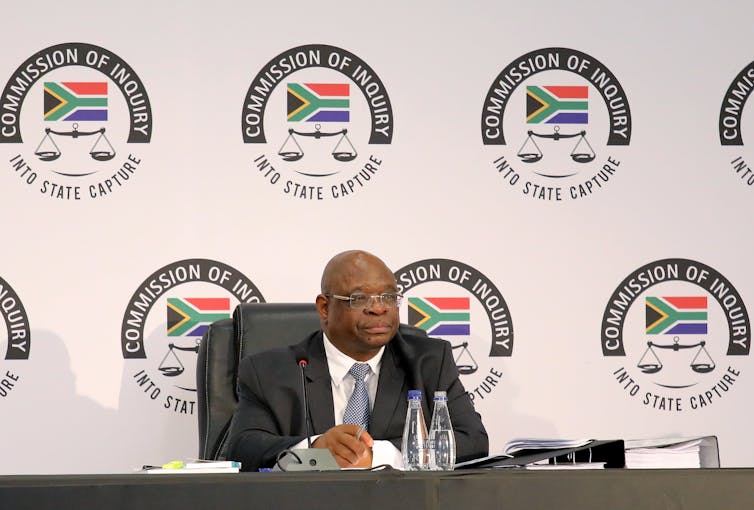
Deputy chief justice Raymond Zondo is heading up the inquiry into corruption in South Africa.
EPA-EFE/Kim Ludbrook

Richard Calland, University of Cape Town

A commission of inquiry into corruption in South Africa is underway. How it goes about its work, and delivers on its mandate, will have profound constitutional and political consequences. This is more so because it is clear that deposed former President Jacob Zuma, who is at the core of the allegations, has launched a fightback campaign that can undermine President Cyril Ramaphosa’s efforts to clean up government.

The remit of the commission, which is headed by Constitutional Court Deputy Chief Justice Raymond Zondo, is to establish the extent of what’s become known as “state capture” by rogue elements in government. Its findings will reveal how the country’s democracy was so imperilled within two decades of its founding election in 1994. It’ll also help ensure that the necessary remedial action is taken to prevent a repeat.

South Africa needs to find out how Zuma and his cronies, the Gupta family, were able to exploit weaknesses in the country’s governance system.

To perform its role effectively, a judicial commission must act as an inquisitorial inquiry whose job is to find out what happened and why. This requires it to refrain from acting like a normal (adversarial) court of law. The commission isn’t a substitute for criminal prosecution or, for that matter, civil litigation.

A great deal flows from this foundational point.

Zondo’s job isn’t to “follow the money” as some have suggested. Important features of the corporate labyrinth built by the Guptas and their allies and accomplices have already been uncovered, for example the property holdings of the Gupta family, or examined in court proceedings.

The commission’s job isn’t to track the flow of funds or any money-laundering machines. That will be the job of the criminal courts, as and when they get the chance.

Instead, Zondo should grapple with the politics of state capture. He needs to get under the skin of the politics of state capture; to get on record why and what happened; and to make clear findings of political accountability. Speed is of the essence. He needs to move fast enough that the commission maintains momentum and does not allow Zuma and other implicated parties to get out ahead of it, or to seek to tilt public opinion in their favour.

The urgency is underscored by reports that Zuma is plotting with others against Ramaphosa.

Process and powers

To evaluate the commission’s progress, it is important to keep in mind its terms of reference and its powers. What can Zondo investigate and what can the commission do about whatever it uncovers?

Firstly, its terms of reference are deep, but narrow. Seven of the nine elements of the terms of reference refer directly to the Guptas’ or Zuma’s interference with government decision-making and procurement. The remaining two invite a broader inquiry into state procurement.

So the terms of reference are essentially confined to the Gupta family and its relationship with the democratic state – from the presidency and the cabinet, down through state agencies and state-owned enterprises, and down deep into the executive arm of government.

In digging for the truth, those responsible for what happened will – or should – be identified by the commission so that they can be held to account.

But what powers does the commission have to take remedial action to address any wrongdoings it uncovers?

Very little. Certainly, far less than people seem to think. The commission’s task is to investigate and report back to Ramaphosa, which may include recommendations.

These recommendations are not, per se, binding. The commission is essentially a fact-finding mission and does not have the power to make orders.

So the report could say, for example, that criminal activity has been committed, and the commission may refer the matter for prosecution or further investigation.

But, the prosecutorial authorities don’t have to wait for the conclusion of the commission process. Indeed, they should be following the proceedings closely and initiating action wherever it suggests that criminality may have occurred.

Uncertainty about this point has led to some procedural confusion during the opening fortnight, particularly around whether those implicated would have an opportunity to cross-examine.

Unfortunately, Zondo let the matter fester unnecessarily before finally ruling on September 11. He had little difficulty dismissing the application of the Gupta brothers on the basis that they are, in essence, fugitives from justice who are unwilling to come back to South Africa to give evidence to the commission. In the case of Zuma’s son, Duduzane Zuma, he granted the application to cross-examine.

This may be justified. But it may also be a red herring. The best commissions of inquiry are those with strong “counsel for the inquiry” who don’t just lead evidence of one side of a story, but who test the evidence as they go along, adding to its weight and credibility, in pursuit of a robust version of the truth.

High stakes

There are anxieties about Zondo’s pace. It is worth remembering that this commission derives from the report on state capture by former public protector Thuli Madonsela. Because she had had neither sufficient time nor resources to complete her work, appointing a judicial commission of inquiry was the remedial action that had to be taken.

Madonsela wanted the commission to complete its work in six months. It was a rather optimistic target. But it wasn’t entirely unreasonable provided that the commission focused on the narrow scope set by the terms of reference, and organised its procedure in a lean and equally focused manner.

Zondo has asked for an additional two years. It very far from clear why he needs so long and has led the lobby group, the Council for the South African Constitution, to join the court proceedings to object to any extension.

Regardless, the commission needs to act as swiftly as it can. South Africans are being reminded daily that Zuma may have left office, but that he still is capable of muddying the waters. If it focuses efficiently on its core task, and evidence of the political conspiracy that underpinned the state capture project is adduced and tested, the proceedings of the commission may serve to keep a lid on Zuma’s fightback campaign.

The stakes are very high for all concerned – for Ramaphosa’s political future, and for the country he leads.The Conversation

Richard Calland, Associate Professor in Public Law, University of Cape Town

This article is republished from The Conversation under a Creative Commons license. Read the original article.

Like this article? Subscribe for free to ZA Confidential to receive our newsletters: zaconfidential@gmail.com.