Lunch with Michael Olivier: talking wine and victual woes over pub grub

08 JUNE 2022

by JOHN FRASER

April 26, 2022.Michael Olivier CEO and Founder of Michael Olivier Communications enjoys Squid Heads (grilled and dressed with lemon butter) and Prawn Augratin ( beshelled Prawns prepared in a ceamy cheese souce at Cesco’s Portuguese Pub & Restaurant in Randburg. Picture:Freddy Mavunda © Business Day

While fine dining can sometimes be fine, if oft unaffordable, there are times when a good pub lunch is just the ticket.

Bustling, welcoming and infested with TV screens, Cesco’s in Randburg is both a sports bar and a sit-down restaurant.

The food is hearty, a little hit-and-miss, but this is somewhere I love to go. If I lived in the neighbourhood, it would be my local: everybody would know my name and I would have a tab the length of James Joyce’s Ulysses behind the bar. But on to my guest.

Born on a wine farm in what was then the sleepy village of Durbanville, Michael Olivier rose to become one of SA’s top restaurateurs. He ran the damn good, reliable, top-rated Parks on the fringes of Cape Town. Now semi retired in Johannesburg, he continues to wine and dine, and to write and consult to a new generation of foodies and winies. 

Great company as always, he and I wedged ourselves into our seats, and got down to the serious business of the day — lunch. The menu is extensive, ranging from simple and excellent-value Prego rolls to steaks, seafood and tons of other stuff.

As he would only be tempted by a coke zero, about which I have zero to say, I went for a glass of the house red. It was too warm and bland and I surrendered after one sip. The replacement was a draft Castle lager, which was beautifully chilled, and a delight.

To start, Olivier had grilled squid heads, which he raved over, and I had the prawn au gratin, which was a few peeled prawns drowned in a pool of processed cheese. Nothing wrong with it, the prawns were beautifully tender, and I can see why it might be a big hit with the pub punters, but for me, it lacked a certain … everything.

Squid heads and prawn au gratin at Cesco’s Portuguese Pub and Restaurant in Randburg. Picture: FREDDY MAVUNDA

For the main course, he opted for eight prawns which he devoured with all the delight of a kid in a sweetshop, while I battled with a sole and chips.

We finished by greedily devouring a sticky toffee pudding (he) and ice cream and chocolate sauce (me). Both were much enjoyed.

Simple food, with no cheffy tweezers involved in plating it up. It had its low points, but we both had a fine time.   

While we munched away, Olivier recalled a happy childhood in the rural Cape. “My parents were wine farmers; they grew grapes and made wine. We also had a large olive grove. It was artisanal farming — my dad made good wine that was used by KWV. He was a member of KWV.”

After boarding school in Cape Town, he joined the hospitality industry as a trainee at the Lanzerac in Stellenbosch. He then went to London where he took two courses at Le Cordon Bleu cookery school. “The first was a basic one for Sloane Rangers who needed to be able to cook to get a good husband. The second was a professional chefs’ course.

“I was then head receptionist at the Mayfair Hotel in Piccadilly for six months and got to know some quite interesting people, such as Omar Sharif and Princess Lee Radziwill [the sister of Jackie Kennedy].

“I began my first marriage. It lasted about six months, but it was four years before I divorced.”

Back in SA, he worked for Tupperware (where he felt boxed in?) before returning to the Lanzerac as manager for three years. Then on to Boschendal for nine years — as public relations manager, though he was also responsible for the restaurant.

“We then started our own restaurants,” he recalls. This time with the current Ms Olivier, the lovely Madeline, who was often hidden behind the scenes in the kitchen while Olivier schmoosed the guests.

After Parks had to close — to my fury — because of a problem with the lease, Olivier became a food and wine writer and has been active in promoting wine farms. He was also a food and wine specialist at Pick n Pay for five years.

In 2013, he received the Eat Out Lifetime Achievement Award. He recalls: “I didn’t want to go to the function, but when I did get there, I discovered I was at the head table.

“The other awards had been made and, at the end, they were introducing the Lifetime Achievement Award. They started describing some person I didn’t know — and then they said it was going to someone who had started SA’s first online food publication — and then I knew it was me.”

What of the achievements of the SA wine industry in his lifetime?  

“It has been stratospheric in terms of quality. Since 1994, more young winemakers have been travelling overseas and bringing back new tricks from both the new and the old world.

“It has been amazing: I don’t think you will find an undrinkable bottle of wine these days.” (I was too polite to point to my untouched glass of rancid red.)

These have been a few tough years for the food and wine industry, though.

“Covid-19 ravaged our business — it destroyed the restaurant industry as we knew it. We now see less fine dining and more very casual food spots. Quality, in terms of training of chefs in restaurants, has certainly diminished, though there are still some very talented people out there.

“There was a skills depletion due to the lockdown. A lot of places are using the names of classic dishes and serving something that doesn’t remotely resemble the classic — such as Caesar salad with chicken or prawns.

“Beef carpaccio amuses me; it was named after the painter who used red and white as predominant colours. Now we have zucchini or fish carpaccio.” These may please the palate, but they are not faithful to the palette.  

“We also see a lot of outsourcing in restaurants where people buy in bread or desserts. I wish people would pay more attention to desserts — if they did, their sales would be up. I have no wish to be offered Italian kisses, or creme caramel which come out of a plastic container in individual portions,” he insists.

Olivier has an encyclopedic knowledge of the SA wine industry and seems to know everyone and everything. So, does he share some of my concerns about restaurants and wine?

“Many have wine because they feel a restaurant has to have wine, and they are happy to hand over their wine list to a big wine company that will give them umbrellas and TV screens in return.

“There are some people, though, who are interested in wine and will meet the makers. Some restaurants will have an evening for a winery, with the menu matched with the wines. Those are quite successful. They can be fun.”

I ask him about corkage — people bringing along their own wines to a restaurant, but being charged a bit for the privilege?  

“At Parks, we started charging no corkage, but then realised how much restaurateurs lose with this. Often people would say they had a special bottle, and it wasn’t special at all.”

And it is not just a wine issue. “People would come for a function and instead of going through the menu, they would order no dessert because ‘Tannie Tammy is baking us a cake’. We had to slice it up and serve the cake, and garnish the plates.

“Once when we served the coffee, a woman of a certain age brought out a clutch of miniature airline bottles of liquors from her handbag and expected us to provide the glasses.”

Olivier’s most recent achievement has been a book of recipes, based on SA culinary traditions: Friends. Food. Flavour: Great South African Recipes.

So, after this lifetime of achievement what would he want for his last meal?

“Just a wheel of real Parmesan cheese, with a really nice red wine or a good, wooded chardonnay. The older I get the more I think white wine is better with cheese than red.”

A classy choice for a classy chap.

ZA Confidential Wine Tasting podcast. Koelenhof Winery Koelenbosch Director’s Reserve Pinotage 2020.

Young, with plenty of Pinotage potential

By John Fraser

After more than a decade of wine-tasting fun, Michael Olivier and I are hanging up our corkscrews and shutting shop.

For our last adventure we recorded this podcast, featuring the Koelenhof Winery Koelenbosch Director’s Reserve Pinotage 2020.

The terrific tasters are economist and venture capitalist Chris Hart, branding boffin Jeremy Sampson, broadcasting superstar Cobus Bester, and IT executive Malcolm MacDonald.

We also chatted about the merits and social pitfalls of serving red wine with a handful of ice cubes.

And the panel was asked what a good glass of wine means to them.

Click below to share in the fun….

Like this podcast? Subscribe to ZA Confidential to receive our newsletters.  Twitter:  @zaconfidential  

Do also check out: http://www.michaelolivier.co.za

ZA Confidential Podcast. Bruce Jack Heritage Collection: Heartbreak Grape, Pinot Noir 2019

Classy, but still a bit young

By John Fraser

For our latest podcast, iconic food and wine expert Michael Olivier presents the Bruce Jack Heritage Collection: Heartbreak Grape, Pinot Noir 2019 – to a team of terrific tasters.

The superstar panel includes economist and venture capitalist Chris Hart, branding boffin Jeremy Sampson, broadcasting superstar Cobus Bester, and IT executive Malcolm MacDonald.

The panel later discusses the importance of the vintage and birthplace of a fine wine.

Click below to listen in and marvel at the magic….

Have you got yourself a copy of Michael Olivier’s brilliant cookbook, which is a wonderful celebration of South African cuisine? If you already have it, buy a few dozen more for all your friends.

An excellent choice for any time of the year

Like this podcast? Subscribe to ZA Confidential to receive our newsletters.  Twitter:  @zaconfidential  

Do also check out: http://www.michaelolivier.co.za

Artificial Stupidity foreshadows the dangers of AI

Artificial Stupidity in action

By Chris Gilmour and John Fraser

People are currently terrified of Artificial Intelligence (AI) – and so they should be, as we have seen and suffered from the impact of its forebear, Artificial Stupidity (AS).

The dangers of AS were brilliantly highlighted in the TV series Little Britain, now sadly regarded as very un-woke, which featured a series of sketches with comedian David Walliams in drag sitting in front of a computer screen.

In each sketch he would be approached with a simple request, the sort of thing a well-behaved computer could accommodate in nanoseconds.

And each time, he would type something, check the screen, and respond: “Computer says ‘no’”.

It was clear from these spot-on sketches that AS was in command, held all the cards, and was intent on being as difficult as possible.

On arrival at the offices of some of the country’s biggest firms, you may already be required to sign in via a computer screen.  In our experience, it is vital to have a human on hand as well.   You guessed it – because the computer loves to say ‘no’.

The theory is wonderful.  As these more and more intelligent devices extend their capabilities, they should be able to speed things up, save on labour costs, boost efficiency, and enhance our lives.

In reality, it just doesn’t work like that.

On a recent visit to a branch of PostNet, the aim was to courier some papers to a government office in Europe.     

Step one involved filling in a form.     Names, addresses, ID numbers, and contents of the envelope.   Had there been spare space on the form for inside leg measurements, no doubt those details would have been required as well.

The form having been completed, one should have been able to pay and go.   Not a chance.  Not without the computer getting in on the act. 

A PostNet person took the form and then proceeded to enter into the computer each and every detail that had already been written down, and not very speedily.   This gave the opportunity for some further complications.

What is the phone number of the recipient? No idea!

The computer said ‘no’.   It needed a phone number, or the package would not be accepted.     So, the computer (with a bit of human help) had to Google away to find the number.  This took more time.

Had there been a faster and more logical way of gathering the info, and loading it into the system, frustration levels would have been lower and far less time would have been wasted.  

Makes sense?   The computer said ‘no’.

Possibly the most annoying examples of AS come whenever you need to contact a call centre.

Instead of a human being speedily answering your call, finding out what the call is about and then putting you through to the right person, instead it is answered by a computer. 

You are guided (often unintelligibly) through a series of stages, each involving a series of choices.  Enter 1 for….  Enter 2 for…   And so on.

Then the concert begins.   As call volumes are high (are they ever not?)  the caller is forced to wait and wait while often unenjoyable, poor-resolution, music is played.

Possibly it is intended to calm you down.    It doesn’t.

Now and then there may be a recorded message, reminding you of those high call volumes, blaming Covid, the weather, God or Satan for your frustration.

Last year a call from Pretoria to the Virgin Atlantic call centre took one and a half hours of waiting, only for the connection to be severed by the airline.    

Another attempt was made, another hour and a half dragged by, and the call was disconnected once again.

It would be unfair to suggest that this customer disservice is unique to one virginal venture.  It happens almost everywhere, almost all the time.  

Try conversing with the robot-run WhatsApp service of Discovery Health.  A nervous breakdown may result.

Or how about the newspaper subscription you took out and now want to cancel? There are British publications that make the quest for cancellation more impossible to complete than their impenetrable crosswords.

Of course, machines can work wonders. If you are eventually put in touch with a health care provider, the scanners, X-rays and other hospital machines they can book for you may work brilliantly and can save your life.

AI will advance all this even further. Already, cancers can be speedily and much more reliably detected when computers are brought in to help.

When the tedious and time-consuming side of AI – the coding – has been achieved and all that is left to do is to sit back and enjoy the end result, the effect can be earth-shattering. 

Once you’ve entered your biometrics and financial data into the system via the app, shopping at an Amazon or Tesco cashier-less supermarket in the UK is effortless (or so we are informed).

Customers literally walk into these stores, choose what they want from the shelves and walk out. They receive an itemised bill via email shortly thereafter. 

The kind of AI technology used in these stores has leapfrogged the radio frequency ID (RFID) chip that was designed to gradually replace bar codes and scanners. 

RFIDs are still around but the relatively high cost to manufacture them has meant that they can’t be used cost-effectively in commoditised applications – so they have found their way into luggage tags and clothing applications, where the cost can be more easily absorbed.

RFIDs are incredibly useful for high accuracy stock control of high value-added goods. In a single scan, an operator can measure the entire stock each time, every time.  

The learning abilities of AI are astounding, and of course it has many, many benign applications.

However, it is already a concern that whereas some human beings can apply the brakes, make moral judgements and press the panic button when the danger zone is looming, machines may develop their own hostile agendas, and become a real threat.

When that happens, the brilliant humour of the Little Britain computer saying ‘no’ will be replaced by something a lot more menacing.

Combine AI with AS and we are all in big, big trouble.  

Chris Gilmour is an investment analyst and John Fraser is a journalist and broadcaster

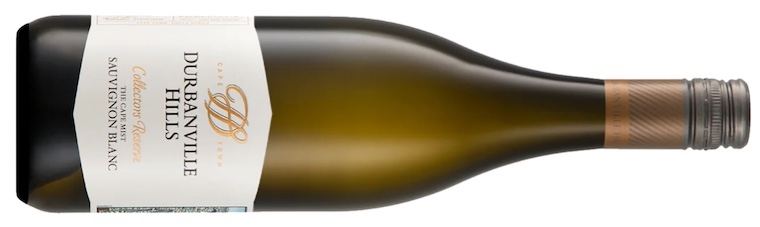
ZA Confidential Wine Tasting Podcast: Durbanville Hills Collectors Reserve Cape Mist SB.

A very classy Cape white

By John Fraser

We are back with a hiccough, tasting the Durbanville Hills Collectors Reserve Cape Mist Sauvignon Blanc 2022.

Food and wine legend Michael Olivier introduces the wine to branding expert Jeremy Sampson, economist and entrepreneur Chris Hart, broadcaster Cobus Bester and IT executive Malcolm MacDonald.

There is also an absorbing discussion on transformation in the wine industry, and how to attract more black South Africans to the delights of wine appreciation.

Click below and give it a listen….

Have you got yourself a copy of Michael Olivier’s latest cookbook, which is a wonderful celebration of South African cuisine? If you already have it, buy a few dozen more for all your friends, wives and mistresses.

An excellent choice for any time of the year

Like this podcast? Subscribe to ZA Confidential to receive our newsletters.  Twitter:  @zaconfidential  

Do also check out: http://www.michaelolivier.co.za

ZA Confidential Wine Tasting Podcast: Silverthorn Jewel Box

A classic Cape bubbly

By John Fraser

We are back with a pop. Popping the cork on a lovely Cape bubbly – so excellent the jealous French won’t let us call it Champagne, so it had to be christened a ‘Cap Classique’.

Food and wine legend Michael Olivier introduces the bubbly to branding expert Jeremy Sampson, economist and entrepreneur Chris Hart, broadcaster Cobus Bester and IT executive Malcolm MacDonald.

The panel chats about the naming of bubbly wines and how to get the consumer to fully appreciate our fine Cape wines.

Meanwhile, do seek out Michael Olivier’s latest cookbook, which is a wonderful celebration of South African cuisine. If you already have one, buy lots more for all your friends.

An excellent choice for any time of the year

Like this podcast? Subscribe to ZA Confidential to receive our newsletters.  Twitter:  @zaconfidential  

Do also check out:  http://www.michaelolivier.co.za

SA shouldn’t point its musket at Musk

By John Fraser

Were we to issue the South African Cabinet with weapons, the fear is that they would all shoot themselves, or each other, in the foot.

While some of the flipping and flopping over policy in Pretoria might seem amusing, it is imperilling foreign direct investment and risking both economic growth and job creation.

We are all painfully aware of the mixed signals that have been sent out over shining the spotlight on corruption in state power utility Eskom.

Ministers’ rhetoric speaks to the need to move on from the lost decade of state capture, but at the same time, we see our Finance Minister, Enoch Godongwana, suggesting recently that Eskom (and Transnet) should be exempted from disclosing irregular and fruitless expenditure. This suggestion was later withdrawn when the Minister appeared before angry MPs, but it was subsequently made clear that the intention remains. They are just a bit baffled over how to proceed.  

Meanwhile, in a bid to bring closer focus to the efforts to tackle South Africa’s crippling rolling blackouts, a new minister for electricity, Kgosientsho Ramokgopa, was appointed in the latest Cabinet reshuffle.

Instead of enhancing leadership, the appointment has led to a turf war between Ramokgopa and the two cabinet ministers who are also responsible for energy and Eskom, Gwede Mantashe and Pravin Gordhan.

The adage about too many cooks spoiling the broth comes to mind, although to be fair the broth was already pretty rancid before Ramokgopa’s arrival on the scene.

Given the government’s ham-fisted handling of the energy crisis, it is not altogether a surprise that it seems to be messing up a potential investment by the world’s richest man, Elon Musk.

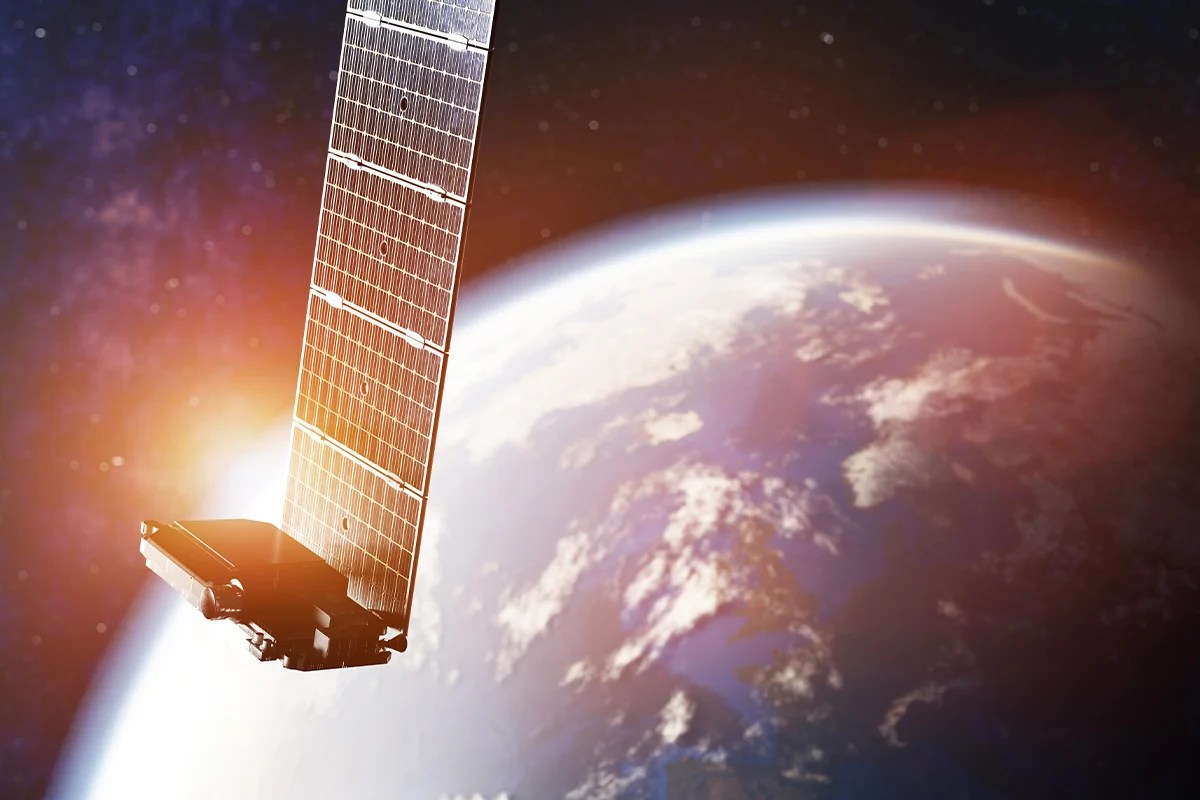
It has come to light through a parliamentary question that the launch of his SpaceX Starlink satellite internet service in South Africa has been blocked, pending regulatory approvals.

According to DA MP Dianne Kohler Barnard, this is because the ANC wants any lucrative internet work to go to its chums, with a demand that 30% of the equity for the SA operation should go to BEE partners. She has warned that because of BEE rules on inward investment, South Africa will be one of the only African countries not to roll out Starlink. 

This empowerment condition is not unusual. Similar requirements are routinely made of investors in SA, but there are always efforts to do a deal, to find a way to get the investment funds to flow.   We need it.

Trade and Industry Minister Ebrahim Patel and his predecessors have been open to waiving the local ownership rules, at a price – most notably for investors in the auto industry, which is SA’s largest manufacturing sector.

The car companies got around the BEE rules by agreeing to make equivalent investments in boosting local businesses through a development fund.

It is a tried and tested compromise formula and allows foreign companies which are unwilling to surrender equity in their SA operations to nonetheless still invest here.

It was therefore deeply depressing to read an unpleasantly bureaucratic statement by our unpleasantly bureaucratic Minister of Communications and Digital Technologies, Mondli Gungubele.

Instead of joyfully welcoming the prospect of investment by Musk in his ancestral homeland, he brought out the rulebook and projected it at rocket man Musk.

“The Department wishes to place it on record that to operate an electronic communications network such as satellite to offer a service in South Africa, an individual Electronic Communications Network Service (iECNS) license and an individual Electronic Communications Service (iECS) license that are used in conjunction with a Radio Frequency Spectrum license are a requirement. These are obtainable on application from the Independent Communications Authority of South Africa (ICASA). The Minister wishes to state categorically that the custodian of the licensing process is the Authority, (ICASA),” was his department’s unenthusiastic response to the investment. 

That’s it then.   There is a process to be followed.

However, instead of jetting off to Musk’s Texas or Twitter HQ to urge the boykie from Pretoria to bring us jobs and investment, the department chose instinctively to adopt the tone of an irascible schoolmaster.

“Any interested party wishing to apply for a license, including Starlink, may through appropriate channels, approach the Authority with its application and comply with the prevailing legislation in the country,” it announced.

Hold on, though.  The news of Musk’s snub by Pretoria comes in the same month that President Cyril Ramaphosa hosted his fifth investment conference.

His rhetoric, and that of Trade, Industry and Competition Minister Ebrahim Patel, is so clearly at odds with the bureaucratic hostility of the clumsily communicating communications department.

Were government departments all singing from the same hymn sheet – a Utopian dream, I know – they would take their cue from the President, and rush to facilitate this Starlink deal.  If form filling is required, and there is no suggestion it should be waived, then South African officials should be instructed to assist with the process, not to block it.

If Musk has no pen on him, they should lend him one.  Even let him keep it. 

The Starlink shambles is so unnecessary.

If the President can set and then exceed his five-year target of R1.2 trillion in new investment, he can surely bang a few heads together.

After all, Musk is a leading player in the rollout of electric vehicles, and South Africa is planning to surf this excitingly lucrative technological wave, if Minister Patel ever takes his foot off the policy brake and locates the accelerator.

A son of Africa, and despite some reported misery during his schooldays here, Elon Musk could certainly easily match the over R1.5 trillion raised through Ramaphosa’s investment drive if he were to bring us production of his Tesla vehicles and a few other job-creating investments.  

But he won’t if our government’s addiction to red tape, lack of policy coordination between departments and narrow vision send him on his way.

Brussels’ concerns may sprout wider problems for SA

By John Fraser

Given the Belgians’ track record in Africa, with King Leopold II having been responsible for as many as 10 million deaths in the Congo, it was perhaps a tad ironic that the recent official visit of the Belgian King involved a broadside against our own government.

Last month’s state visit by King Philippe (cruelly demoted to Prince Philippe in tweets by both the Presidency and the DTIC) was, on balance, highly successful and will no doubt boost trade relations between our two nations.

However, President Cyril Ramaphosa was reportedly rattled when the Belgian Foreign Minister Hadja Lahbib, who accompanied her monarch, lashed out at South Africa over its love affair with Vladimir Putin, whose human rights breaches in Ukraine have triggered an international arrest warrant.

It was reported that the President hurriedly evicted the media from his meeting with the belligerent Belgians, but the Presidency denied this.

In a visit to Congo last year, King Philippe apologised for his country’s colonial record of “paternalism, discrimination and racism” but there is no doubt that the Belgium of today has nothing in common with the country ruled over by Leopold II, the brother of King Philippe’s great-great-grandfather.

What is not in dispute is that the Belgians are concerned about South Africa’s failure to publicly condemn Russia’s war crimes in the Ukraine conflict.  As are the other Western nations.

There have been the predictable defensive mumblings about SA having a constructive role to play in leveraging its relationship with Moscow to put gentle pressure on Putin to deflate the Ukraine conflict, but we all saw the futility of this tactic with SA’s impotent pressure on Robert Mugabe’s vile regime.

Indeed, it may well be that the Belgians did President Ramaphosa and his lily-livered cabinet colleagues a big favour by pointing out that our Western allies are frowning upon SA’s romance with Moscow.

SA’s awkwardness was cranked up by the news of an international arrest warrant against Putin, who is due to be hosted by President Ramaphosa at the BRICS summit later this year. 

It will be interesting to see whether SA will be able to welcome the Russian leader in defiance of the warrant, which was issued by the International Criminal Court (ICC) in The Hague.

If they let him come and go, this will further discredit our country in the eyes of the civilised world.

However, there is a good chance that SA will wave two fingers at the West, but not in a Churchillian sense.

Another reported solution will be that the BRICS Summit will be a hybrid event, as South Africa can’t be compelled to arrest a video image of the modern-day Tsar.

I have argued elsewhere that the widespread corruption and human rights abuses within the BRICS nations make it very hard for South Africa to retain its membership, especially now that there is talk of expanding the club to include more pariah nations, like Saudi Arabia, Iran and Afghanistan.

It is surely time to go one step further now and shut down the BRICS club in its entirety.

While there were some valid arguments for its initial formation, as a counter to the geopolitical dominance of the West, this informal alliance contains two of the least democratic nations on the planet – the Russians and Chinese.  And they are tainting the other members.

Putin’s annihilation of his political opponents, and his war crimes in Chechnya, Crimea and now his troops’ barbarity in the Ukraine War made him an undesirable member of any club – and that was before the ICC arrest warrant was issued. 

The human rights crackdowns in their own country, and in Hong Kong, which was meekly returned to them by Margaret Thatcher on a day when her iron lady armour was being polished, also make the Chinese unsavoury BRICS buddies.   

Of course, this is not the first time that South Africa’s international relations have raised concerns.

Because of our kowtowing to China, we refused the Dalai Lama (hardly a dangerous terrorist, but recent reports suggest you should keep an eye out when he is around children) a visa to travel here to meet the late and much-missed Archbishop Desmond Tutu.

Religious scholars are best placed to say whether they will eventually have their catch-up in heaven, as the Tibetan leader may not get to spend much time there before his next reincarnation.   Just no tongues, please.

However, it was a revelation to many South Africans at the time that our foreign policy was being crafted in Beijing. 

Others have already written extensively of the massive potential economic consequences if the West decides to withdraw favourable trade terms and all the other benefits that have been bestowed on Pretoria.   

And while this month’s Presidential Investment Conference demonstrates that there is still some appetite to do business in South Africa, there are grave risks if we allow the diplomatic dunces in DIRCO (SA’s foreign affairs department) to continue to flout our country’s commitment to human rights, democracy and freedom.

Of course, Brazil and India must also make hard choices about the BRICS alliance, as their turn will come to host the killer in the Kremlin and his Chinese chum.

In dissolving the BRICS, South Africa and the other democratic forces in this awful, awkward alliance would be sending a powerful message both to their Western critics and to Vladimir Putin and Beijing’s Xi Jinping – the despots to whom they are giving undeserved credibility.

Just don’t hold your breath.

Like this article? Subscribe to ZA Confidential to receive our newsletters. Twitter: @zaconfidential

Disgraceful timekeeping, but at least they saved my bacon.

What Minister Patel looks like when things go badly wrong

By John Fraser

How long does it take you to eat breakfast? Having been to a boarding school where if you didn’t shovel it down, you might be too late to get seconds, I can eat fast. I really don’t need an hour to scoff down a fry-up.

So it was frustrating when today’s breakfast briefing with tardy Trade, Industry, and Competition Minister Ebrahim Patel started over an hour late.

The invitation had been for 8.30. It kicked off just after 9.30. Lots of journalists, business leaders, and my new chum – the Norwegian Ambassador – were left kicking our heels.

The Minister himself didn’t pitch. Instead, he turned up on a wobbly video link from Cape Town. And, boy was it wobbly. He came and went. We may be in the 4th Industrial Revolution, but these technicians hadn’t reached the first.

The event’s aim was to give some flavour of the preparations for the President’s Fifth Investment Conference, which is due to take place next week.

Ramaphosa has been seeking a total of R1.2 trillion over 5 years, and he will probably get there next week when the current cycle ends.

He has done reasonably well in previous conferences, and it seems investments are still taking place – including some from state organs that would have happened anyway, but are likely to inflate the total.

The catering at the far-from brief briefing breakfast at the Maslow Hotel was not the finest I have eaten, but it was OK. To my relief, there was bacon. A bit dry, but better dry than never.

I find the efforts to appease the pork-hating Muslims an affront to those of us with a Christian heritage and always look out for the bacon.

So while you could have tried a bit harder to serve really appetising food, at least you were able to appease my dietary requirements, Mr Maslow.

Shame there was no wine list, but I accept that public money should not be squandered before noon on damaging journalists’ livers.

Patel’s message was a positive one – previous investment pledges are now coming on stream, and it won’t be hard to crash through the target at the investment conference.

In his hide-and-seek video appearance, the Minister accepted the damage that SA’s power crisis is having on investments – and noted that Covid hasn’t helped much either.

However, he suggested that most investors are accepting assurances that the government is sorting out the mess.

And with every cloud having a silver lining, there will be a surge in green energy investments in the next five-year cycle – where the total target will be doubled.

Despite efforts by a government communications official to disqualify me from asking a totally legitimate question, I asked when Patel will be announcing his plans to support efforts by SA’s auto industry to transit to Electric Vehicles (EVs).

While failing to answer the question (at great length) the minister noted the EU has been buggering about on its own targets, and as this is an important export market for SA, he is following suit.

One wonders, though, what is happening behind the scenes. There does not seem to be much appetite by the Treasury to incentivise production, and Patel warned that even if there is a desire to produce more EVs for the SA market, this might boost demand for electricity and make SA’s current electricity problem even more problematic.

As I suggested to my Norwegian chum, a few solar panels on the roof of your garage, linked to some storage, and maybe also using the car’s battery as part of the mix, might facilitate Eskom-free charging.

In response to another question, Patel voiced his concerns about SA’s inefficient visa regime. We tend to show the red card rather than the red carpet – even to top executives seeking to work here.

He said his own officials will try to help to sort this out, which is to be welcomed. As with so much else, the government has been pretty useless, over an incredibly long period, in resolving this problem.

So, it is on to next week’s Presidential Investment Conference, where one can only hope the audiovisual technicians will be less useless.

Expect a catwalk of pledging investors, lining up to have their pictures taken shaking hands with our President.

Will they save the country’s bacon? Will the conference sizzle with excitement?

Watch this space.

Like this article? Subscribe to ZA Confidential to receive our newsletters. Twitter: @zaconfidential

A visit to the forbidden factory

Gauteng Economic Development MEC wondering whether she can afford supper. (Pic from GGDA)

By John Fraser

I have just been on a factory tour…where we didn’t tour the factory.

The event was one of the run-up attractions ahead of next week’s Presidential Investment Conference, where despite corruption, power cuts, a hostile visa regime and uncontrolled crime, Cyril Ramaphosa is expected to announce he is still succeeding in attracting new companies to set up in SA.

Today’s event was organised by an arm of the Gauteng Government and involved a visit to the OR Tambo Special Economic Zone (SEZ), right next to the airport.

The factory we had been invited to tour belongs to In2Food, a facility that makes sandwiches, ready meals, soups, pizzas and a vast array of other fresh grub.  

It is large, the second-largest CO2 refrigeration facility in the world (whatever that means?)

It supplies Woolworths in SA, Britain’s M&S and customers in Australia and the Middle East.  Next stop the USA!    Export growth was slowed by Covid, but the aim is to really ramp up exports.

The media mob had the option of a ride to the event from the government’s communications HQ in Hatfield, Pretoria, but some of us wanted to make our own way there.   As any bank robber will tell you, it is always wise to plan for a speedy escape.

Arriving at the precinct of the SEZ, I queued for a while to get through security and was then directed to the factory, where the extremely hostile security guard barked at me to wait.

Eventually, I and a few other media visitors were directed to the reception.

The bloke who (almost) greeted us (and later turned out to be the factory manager) advised we were in the wrong place, and then sent us off to a building site…which was also the wrong place.

I phoned a Gauteng media minder, who eventually directed us back to the entrance to the factory – the first place I had gone to, and she then pitched up in a commuter taxi to collect us.

We were taken to the very plush offices of the SEZ, where it was easy to see that those in charge of procurement had not been watching the pennies, and were taken to a boardroom, where a briefing had already started.

No effort was made to welcome us or to recap what we had missed, but mercifully it was over quite soon.

The speaker whose address I had largely missed turned out to be MEC Tasneem Motara of the Gauteng Department of Economic Development.  This big cheese was also on our food factory tour. 

We were then shoehorned back in the taxi, and then driven back to – you guessed it – the factory reception.

The MEC, clearly being a more pampered guest, took her own chauffeur-driven limo between the two venues, thus avoiding the need to be squashed up close to any of the unwashed media.

On the way, when we got back to the entrance of the SEZ precinct, the security guard refused to allow us in, and our hosts were forced to get on the phone, while we waited, cramped and incredulous.

After a few minutes and frantic negotiation, the barrier went up and on we went.    Fort Knox had been penetrated!

Our Gauteng hosts had warned us how busy they all were at the factory, and how lucky we should feel that we were being admitted at all.    If the place has a red carpet, it must have been at the cleaners.    

Finally, inside a meeting room, we had a presentation by two food factory folk, including the bloke who had first misdirected me, and a few questions were allowed before the tour itself began.  We were shown a video of the factory’s operations, which was the closest we were to get to properly seeing them for ourselves.

I never did get the name of either of our hosts, which is fine, as they don’t seem like the jolly bunch I normally follow on Twitter.

We went nowhere near the factory floor but were allowed to peer down at it from windows in the upstairs offices and in the staff canteen.   We could also peer through into the food development lab, but no developing food samples were provided, and there was no insight into what they do and how or why they do it.   A shame. 

Then we were shown a range of the grub they make, but no samples, no insight into the logistics for getting this food from the factory to foreign supermarket shelves.    A newly developed Mexican ready meal for Woolworths was waved at us, but that was as much excitement as we experienced.

The reason for the media visit and our whistle-stop tour was that this factory had been subsidised by the SA taxpayer to the tune of R145 million, and the decision to build the factory had been announced at one of the President’s Investment Conferences.

This is clearly a welcome investment, directly employing more than 2 000 people and processing tonnes and tonnes of SA produce.

A few random numbers:  They can make 2 000 litres of soup an hour and can get through 40 tonnes of veg a day.  My dietician would be in rapture.  

They also process meat, bake bread, and make salads – and the video had shown them filleting fish. 

When the underwhelming factory tour (such as it was) had ended, we were all offered a sandwich, from the rather limited range they make for Woolworths.

What a revelation!  Succulent fillings, brilliantly fresh bread.  A far cry from the almost dried-out sandwiches I tend to find on the shelf of my local Woolworths. 

This begs a question:  this factory is half an hour’s drive from that store.   Why is Woolworths’ supply chain so dysfunctional that a truly impressive sandwich can deteriorate so noticeably between the factory where it is made and the store where it is sold?

I am not saying the sandwiches I buy at Woolies are awful or unsafe (a less diplomatic chap might suggest they are overpriced!) – but they are a far cry from the quality of the product I grabbed for lunch in the factory.

Just to check I was not mistaken I tried two different sandwiches – a chicken mayo and an egg mayo – both superb.  (On this occasion, the chicken came before the egg).

We were told that if we made yet another Toyota taxi trip back to the SEZ office, there would be more food on offer.  

The folk in the factory were seemingly too challenged or indifferent to showcase more than their sandwiches to this unruly media mob.  Or to graciously offer us a few takeaway samples of their goodies.   RIP PR.   

Having seen how the SEZ bunch had organised the tour, I decided to make my escape, mumbled my excuses and left, grabbing a short and cramped taxi trip from the reception to where my car was soaking up the sun.

I spent two years in corporate communications for a JSE-listed company and during that time, I had to organise several site visits, media briefings and other events.

They all required a lot of planning and immense effort.  It was bloody hard work.

I know how these things can and should be done, and, boy, was I underwhelmed today?

Like this article? Subscribe to ZA Confidential to receive our newsletters. Twitter: @zaconfidential